
 13 Oct 2026









The End of the Minsk Group: A New Diplomatic Map of the Caucasus
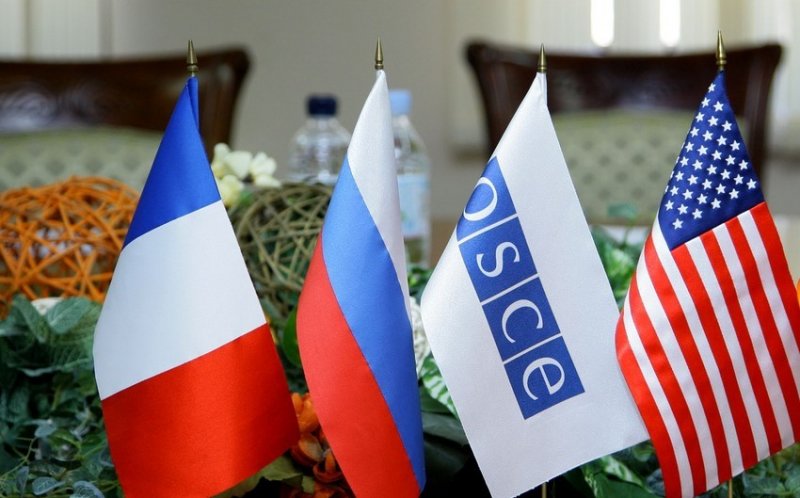
The OSCE Ministerial Council has officially decided to terminate the activities of the Minsk Group and related structures, which previously dealt with the settlement of the Nagorno-Karabakh conflict. This was announced on September 1 by the Ministry of Foreign Affairs of Azerbaijan.
The official representative of the Russian Ministry of Foreign Affairs, Maria Zakharova, stated that the dissolution of the Minsk Group is an “objective and justified step”. According to her, in recent years there have been “radical changes in regional realities”, making it impossible to continue the previous negotiation format.
Moscow emphasizes that the group’s main task – to facilitate the peaceful settlement of the Armenian-Azerbaijani conflict over Karabakh – lost relevance after the signing of the peace declaration in August 2025. The Azerbaijani MFA also welcomed the decision, noting that the Minsk process “no longer corresponded to modern realities and could no longer serve as a tool for settlement”.
The OSCE Minsk Group, established in 1992, remained for decades the main international negotiation format on Nagorno-Karabakh. Its co-chairs were Russia, the United States, and France. However, after the 2020 war and especially following the events of 2023-2025, its effectiveness was increasingly questioned.
The dissolution of the structure symbolizes the end of nearly 30 years of international mediation. Now, the focus shifts to bilateral and regional mechanisms. Armenia and Azerbaijan are building direct dialogue with the support of the EU, the US, and Turkey, while Russia and Iran insist on strengthening the “3+3” format (Azerbaijan, Armenia, Georgia + Russia, Turkey, Iran). At the same time, Western states are seeking to consolidate their presence in the region through new security and economic projects.
Analysts note that the liquidation of the Minsk Group paves the way for the emergence of new centers of influence in the South Caucasus. For Russia, this is an opportunity to emphasize that “frozen conflicts” are not eternal and can be resolved through force and political agreements, while for Azerbaijan it marks the final consolidation of its diplomatic victory and recognition of the new status quo.
Political expert Ruben Megrabyan observes:
“Armenia has lost an important channel of pressure on Azerbaijan. This forces Yerevan either to accelerate integration with the West or to seek new regional alliances to compensate for the diplomatic vacuum”.
For Armenia, the dissolution of the Minsk Group has become a painful signal. Yerevan traditionally viewed this platform as a way to draw the international community’s attention to the rights of Armenians from Nagorno-Karabakh. Now, according to experts, Armenia finds itself in a situation where its ability to rely on old diplomatic mechanisms has been reduced to a minimum.
Caucasus expert Thomas de Waal believes:
“The dissolution of the Minsk Group is a symbolic end of an old diplomatic era. Now the fate of the region will be decided not in Vienna or New York, but in Baku, Yerevan, Moscow, and Brussels”.
Thus, the dissolution of the Minsk Group has definitively marked the end of the old system of international mediation in the Caucasus, paving the way for the emergence of new regional and global formats of influence. In addition, the continuation of direct Armenia-Azerbaijan dialogue becomes inevitable.
Expert Group CCBS


 Latest news
Latest news
Latest newsGeorgia’s Constitutional Court Continues Case on Banning Opposition Parties: Political Pluralism at Stake
12.Oct.2026
Azerbaijan and Iran Step Up Security Contacts Amid Hijab Protests
12.Oct.2026
Personnel Shortages Complicate Ukrainian Forces’ Rotation: Ukraine Faces Long-Term Challenges on the Front Line
11.Oct.2026
Trump Eases Sanctions on Russian Fuel After Talks with Putin: Kyiv Fears Boost to Moscow’s War Revenues
10.Oct.2026
Putin Seeks to Strengthen Russia’s Influence in the Post-Soviet Space Through the CIS
10.Oct.2026
Russia and the South Caucasus: External Pressure, Political Competition and a Crisis of Trust
10.Oct.2026
Peaceful Settlement Between Armenia and Azerbaijan: Moving from Declarations to Implementation
10.Oct.2026
Moldova Ready to Accept as Many Ukrainians as Necessary if Situation Worsens This Winter
09.Oct.2026
Turkmenistan Turns Avaza into a Regional Diplomatic Hub as Caspian, Central Asian and CIS Agendas Converge
08.Oct.2026
Romania Scrambles Spanish F-18s After Aerial Targets Detected Near Ukrainian Border
07.Oct.2026
Berlin Deepens Defence Partnership with Kyiv: Germany to Provide Ukraine with €1 Billion in Military Aid
07.Oct.2026
European Parliament Against Georgian Dream: EU Prepares New Response to Tbilisi
06.Oct.2026
Bulgarian Foreign Minister to Discuss European Security and International Law in the Netherlands
05.Oct.2026
Rheinmetall in Bulgaria: Sofia Emerges as a New NATO Defence-Industrial Hub in the Balkans
05.Oct.2026
The Cost of a Long War: Moscow Expands Spending Plans Through 2029
05.Oct.2026