
 13 Oct 2026









India, Iran, and Armenia Strengthen Cooperation within the “North-South” Transport Corridor
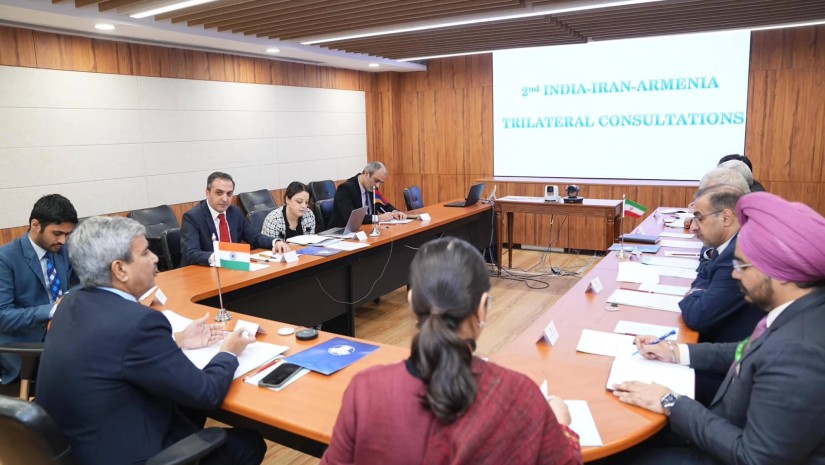
The third trilateral
consultations between India, Iran, and Armenia were held in Tehran, focusing on
the development of cooperation within the framework of the International North-South
Transport Corridor (INSTC).
According
to participants, the parties discussed accelerating the integration of
transport routes, simplifying customs procedures, and expanding logistics
capabilities. Particular attention was given to the development of the Armenian
section of the corridor, which is expected to become a key link between Iran
and the Black Sea region.
Experts
note that this route could significantly reduce both the time and cost of
transporting goods from India to Europe and Russia, bypassing traditional
channels through the Suez Canal. In the long term, it may become an alternative
to western routes, which is especially relevant in the context of geopolitical
instability.
Armenia
views its participation in the INSTC as a strategic opportunity to strengthen
the country’s transit potential and diversify its foreign economic ties. Iran,
in turn, seeks to turn its Persian Gulf ports into a powerful logistics hub,
while India is interested in accessing European markets through a reliable and
shorter path.
Political
analysts emphasize that deeper cooperation of this kind could shift the balance
of power in the region, enhancing the role of the South Caucasus as a transport
hub. At the same time, challenges remain – such as the need for major
infrastructure investments and political competition surrounding regional
transport projects.


 Latest news
Latest news
Latest newsGeorgia’s Constitutional Court Continues Case on Banning Opposition Parties: Political Pluralism at Stake
12.Oct.2026
Azerbaijan and Iran Step Up Security Contacts Amid Hijab Protests
12.Oct.2026
Personnel Shortages Complicate Ukrainian Forces’ Rotation: Ukraine Faces Long-Term Challenges on the Front Line
11.Oct.2026
Trump Eases Sanctions on Russian Fuel After Talks with Putin: Kyiv Fears Boost to Moscow’s War Revenues
10.Oct.2026
Putin Seeks to Strengthen Russia’s Influence in the Post-Soviet Space Through the CIS
10.Oct.2026
Russia and the South Caucasus: External Pressure, Political Competition and a Crisis of Trust
10.Oct.2026
Peaceful Settlement Between Armenia and Azerbaijan: Moving from Declarations to Implementation
10.Oct.2026
Moldova Ready to Accept as Many Ukrainians as Necessary if Situation Worsens This Winter
09.Oct.2026
Turkmenistan Turns Avaza into a Regional Diplomatic Hub as Caspian, Central Asian and CIS Agendas Converge
08.Oct.2026
Romania Scrambles Spanish F-18s After Aerial Targets Detected Near Ukrainian Border
07.Oct.2026
Berlin Deepens Defence Partnership with Kyiv: Germany to Provide Ukraine with €1 Billion in Military Aid
07.Oct.2026
European Parliament Against Georgian Dream: EU Prepares New Response to Tbilisi
06.Oct.2026
Bulgarian Foreign Minister to Discuss European Security and International Law in the Netherlands
05.Oct.2026
Rheinmetall in Bulgaria: Sofia Emerges as a New NATO Defence-Industrial Hub in the Balkans
05.Oct.2026
The Cost of a Long War: Moscow Expands Spending Plans Through 2029
05.Oct.2026