
 13 Oct 2026









Armenia and Azerbaijan Discuss Peace in New York as EU Steps Up Support
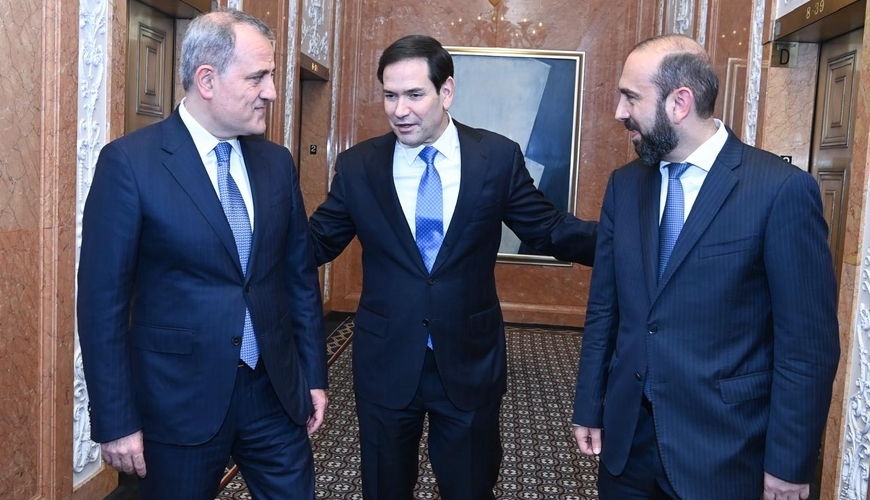
On the sidelines of the 80th session of the UN General
Assembly in New York, the foreign ministers of Armenia and Azerbaijan – Ararat
Mirzoyan and Jeyhun Bayramov – held a meeting. This was the first encounter
between the diplomats since the August summit in Washington, where the
prospects of signing a peace treaty were discussed.
The parties reaffirmed their readiness to continue dialogue,
focusing on steps that could bring closer the conclusion of a comprehensive
agreement. Although no concrete arrangements were announced, experts view the
very fact of the meeting as a signal that diplomatic channels between Baku and
Yerevan remain open.
At the same time, the European Union is taking an active
role in the process. During her visits to Azerbaijan and Armenia, EU
Commissioner Marta Kos stated that Brussels intends to support normalization
not only politically, but also materially. The EU is prepared to finance
infrastructure projects under the Global Gateway initiative, promote the
opening of regional trade routes, and allocate up to €23 million for
humanitarian demining of affected territories.
In Armenia, the EU is launching a new format of “High-Level
Policy Dialogue” to monitor reform progress and is providing €202.5 million
under the “Resilience and Growth Plan”. In parallel, a high-level working group
on economic cooperation is being established in Azerbaijan to accelerate
investment projects.
Analysts note that Brussels seeks to consolidate its role as
a key mediator in the region by offering not only diplomatic facilitation but
also tangible economic incentives. This approach is intended to ease tensions
and give the normalization process a practical dimension.
At the same time, serious challenges remain: deep mutual distrust, security concerns, as well as the influence of external actors – primarily Russia and Turkey. The coming months will show whether Yerevan and Baku, with EU support, can turn cautious diplomatic contacts into a concrete peace document.


 Latest news
Latest news
Latest newsGeorgia’s Constitutional Court Continues Case on Banning Opposition Parties: Political Pluralism at Stake
12.Oct.2026
Azerbaijan and Iran Step Up Security Contacts Amid Hijab Protests
12.Oct.2026
Personnel Shortages Complicate Ukrainian Forces’ Rotation: Ukraine Faces Long-Term Challenges on the Front Line
11.Oct.2026
Trump Eases Sanctions on Russian Fuel After Talks with Putin: Kyiv Fears Boost to Moscow’s War Revenues
10.Oct.2026
Putin Seeks to Strengthen Russia’s Influence in the Post-Soviet Space Through the CIS
10.Oct.2026
Russia and the South Caucasus: External Pressure, Political Competition and a Crisis of Trust
10.Oct.2026
Peaceful Settlement Between Armenia and Azerbaijan: Moving from Declarations to Implementation
10.Oct.2026
Moldova Ready to Accept as Many Ukrainians as Necessary if Situation Worsens This Winter
09.Oct.2026
Turkmenistan Turns Avaza into a Regional Diplomatic Hub as Caspian, Central Asian and CIS Agendas Converge
08.Oct.2026
Romania Scrambles Spanish F-18s After Aerial Targets Detected Near Ukrainian Border
07.Oct.2026
Berlin Deepens Defence Partnership with Kyiv: Germany to Provide Ukraine with €1 Billion in Military Aid
07.Oct.2026
European Parliament Against Georgian Dream: EU Prepares New Response to Tbilisi
06.Oct.2026
Bulgarian Foreign Minister to Discuss European Security and International Law in the Netherlands
05.Oct.2026
Rheinmetall in Bulgaria: Sofia Emerges as a New NATO Defence-Industrial Hub in the Balkans
05.Oct.2026
The Cost of a Long War: Moscow Expands Spending Plans Through 2029
05.Oct.2026