
 13 Oct 2026









- Shakhty — a coal-mining city where the closure of mines has led to a catastrophic social and infrastructure crisis.
- Vorkuta — a polar city severely affected after the reduction of mining activities; its population has sharply decreased, and infrastructure is deteriorating.
- Astrakhan — a historically rich city that, according to the authors, is experiencing “decline”: worn-out housing, employment problems.
- Makhachkala — the capital of Dagestan, where rapid population growth is not matched by adequate development of utilities and transportation infrastructure.
- Novocherkassk — once an industrial pride of the Rostov region, now suffering from business closures and resident migration.
- Economic stagnation: with the closure of enterprises and reduction of jobs, residents lose the incentive to stay.
- Social and infrastructure challenges: aging utilities, housing problems, and a degraded urban environment exacerbate the feeling of hopelessness.
- Outflow of skilled professionals: young people and active workers leave for larger cities, further weakening the economic potential of these areas.
Mass Outflow of Population from Five Depressive Cities in Russia
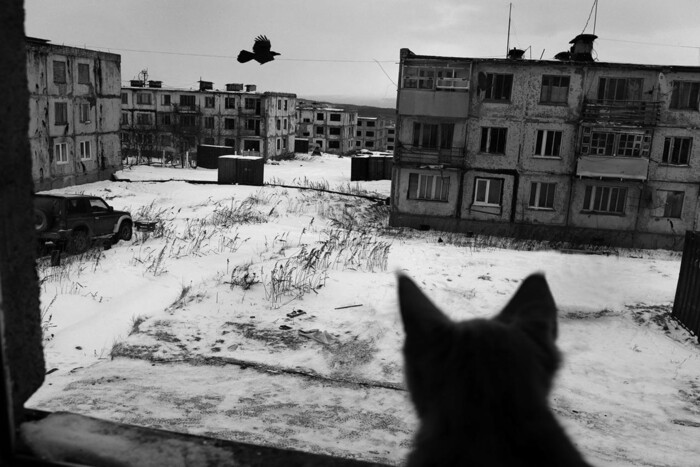
Russia is experiencing a significant outflow of residents from several mono- or semi-mono-industrial cities that were once major industrial centers. Five cities with a population of over 50,000 have been identified as places from which “everyone is fleeing”. The most “depressive” cities abandoned by their residents are:

There are several key systemic problems that unite these cities:
The trend described points not merely to temporary difficulties but to deep structural problems within Russia’s regional economy. These cities are not just “depressive spots” on the map, but clear examples of how mono-industrial models are increasingly unable to adapt to modern challenges.
Without targeted support programs (infrastructure investment, economic diversification), these cities risk falling out of Russia’s active economic landscape altogether. If systemic issues are not addressed, the population outflow from the regions may continue at an accelerated pace, leading to further social and economic inequality between central and peripheral areas.


 Latest news
Latest news
Latest newsGeorgia’s Constitutional Court Continues Case on Banning Opposition Parties: Political Pluralism at Stake
12.Oct.2026
Azerbaijan and Iran Step Up Security Contacts Amid Hijab Protests
12.Oct.2026
Personnel Shortages Complicate Ukrainian Forces’ Rotation: Ukraine Faces Long-Term Challenges on the Front Line
11.Oct.2026
Trump Eases Sanctions on Russian Fuel After Talks with Putin: Kyiv Fears Boost to Moscow’s War Revenues
10.Oct.2026
Putin Seeks to Strengthen Russia’s Influence in the Post-Soviet Space Through the CIS
10.Oct.2026
Russia and the South Caucasus: External Pressure, Political Competition and a Crisis of Trust
10.Oct.2026
Peaceful Settlement Between Armenia and Azerbaijan: Moving from Declarations to Implementation
10.Oct.2026
Moldova Ready to Accept as Many Ukrainians as Necessary if Situation Worsens This Winter
09.Oct.2026
Turkmenistan Turns Avaza into a Regional Diplomatic Hub as Caspian, Central Asian and CIS Agendas Converge
08.Oct.2026
Romania Scrambles Spanish F-18s After Aerial Targets Detected Near Ukrainian Border
07.Oct.2026
Berlin Deepens Defence Partnership with Kyiv: Germany to Provide Ukraine with €1 Billion in Military Aid
07.Oct.2026
European Parliament Against Georgian Dream: EU Prepares New Response to Tbilisi
06.Oct.2026
Bulgarian Foreign Minister to Discuss European Security and International Law in the Netherlands
05.Oct.2026
Rheinmetall in Bulgaria: Sofia Emerges as a New NATO Defence-Industrial Hub in the Balkans
05.Oct.2026
The Cost of a Long War: Moscow Expands Spending Plans Through 2029
05.Oct.2026