
 13 Oct 2026









The War Reaches the Caspian: Ukraine Strikes Russia’s Oil Infrastructure
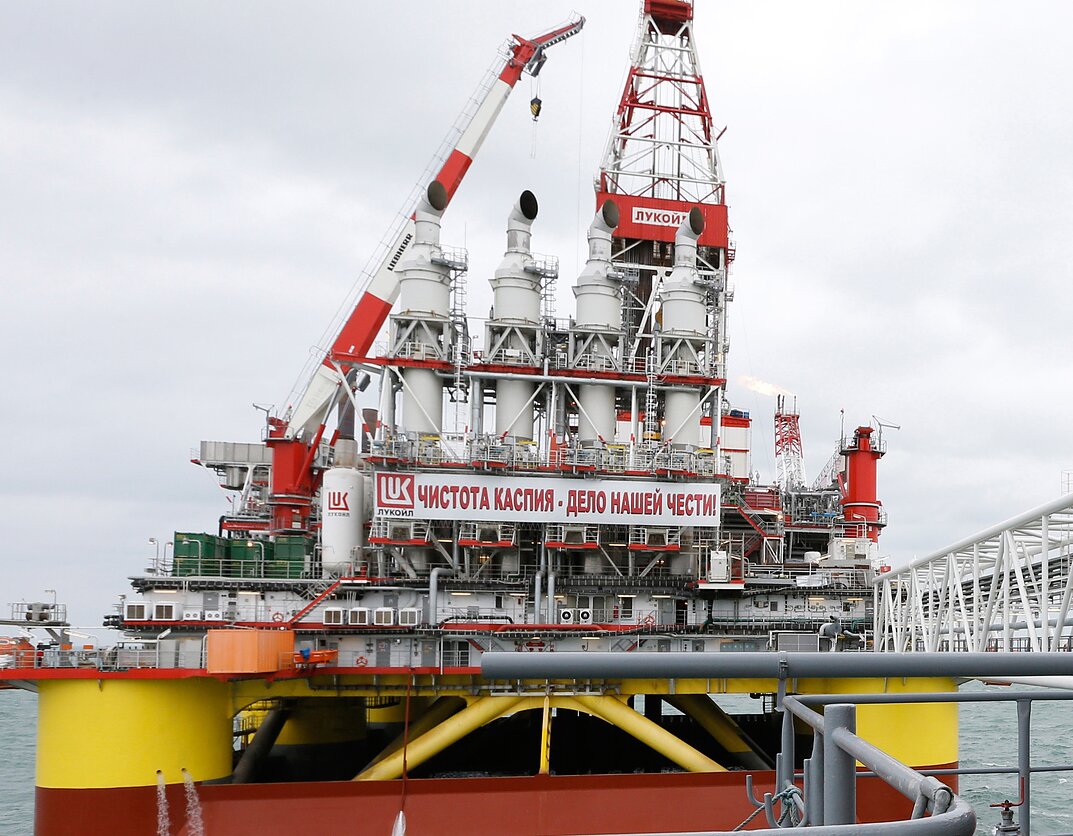
Ukrainian
forces have carried out one of the most high-profile strikes in recent months,
hitting the Russian oil platform Filanovsky in the Caspian Sea — a strategically important
asset belonging to Lukoil-Nizhnevolzhskneft. The attack was conducted using
long-range drones, and according to sources, several precise strikes were
recorded on the platform, causing severe disruptions to its operation. The
Ukrainian side states that the damage is so significant that oil and gas
production on a number of wells has effectively been halted. This makes the incident
the first successful strike on Russian extraction infrastructure in the Caspian
region since the beginning of the conflict.
The Filanovsky platform is one of Lukoil’s largest offshore
facilities and an important link in Russia’s energy system. It plays a role not
only in regional but also in export logistics: part of the crude extracted here
is supplied to the Caspian Pipeline Consortium, which provides Russia with
access to global markets. Therefore, the strike has both military and economic
significance. Given that a substantial portion of the Russian budget is formed
through energy revenues, any damage to such facilities is perceived as an
attempt to undermine the country’s financial sources.

The attack on the platform also demonstrated the expanding geography
of Ukrainian operations. Until recently, strikes were concentrated mainly on
targets in western and central Russia, as well as military infrastructure. Now,
objects located far from the front line and previously considered secure have
come under threat. This indicates that Ukraine is increasing its capabilities
in long-range systems and drone technologies capable of operating hundreds of
kilometres away. Experts note that such operations may influence Russia’s
strategic planning, forcing it to strengthen security and air-defence systems
even deep inside its territory.
Russian official structures have so far refrained from
detailed comments, limiting themselves to statements about attempts to
intercept the drones. However, the very fact of the attack has generated
significant discussion among analysts. It is noted that Russia will be forced
to reallocate resources to protect extraction and processing facilities,
creating additional pressure on military and economic mechanisms. At the same
time, such strikes increase the risk of further escalation: the Caspian region
— where a balance of interests between Russia, Azerbaijan, Kazakhstan, Iran and
Turkmenistan has traditionally been maintained — may face growing tensions.
The incident has already triggered a response on
international energy markets: although price fluctuations remain moderate for
now, analysts do not rule out that a series of attacks on energy infrastructure
may raise risks for Russian oil supplies. In a broader context, the strike on the
Filanovsky platform can be viewed as part of Ukraine’s strategy to pressure the
Russian economy through its key export sectors. The Ukrainian side stresses
that such operations will continue if Russia does not stop shelling Ukrainian
territory.
Thus, the attack on the oil platform has become a notable episode that may change the character of the conflict: confrontation is increasingly moving beyond the front line, affecting critical components of Russia’s energy and export infrastructure.


 Latest news
Latest news
Latest newsGeorgia’s Constitutional Court Continues Case on Banning Opposition Parties: Political Pluralism at Stake
12.Oct.2026
Azerbaijan and Iran Step Up Security Contacts Amid Hijab Protests
12.Oct.2026
Personnel Shortages Complicate Ukrainian Forces’ Rotation: Ukraine Faces Long-Term Challenges on the Front Line
11.Oct.2026
Trump Eases Sanctions on Russian Fuel After Talks with Putin: Kyiv Fears Boost to Moscow’s War Revenues
10.Oct.2026
Putin Seeks to Strengthen Russia’s Influence in the Post-Soviet Space Through the CIS
10.Oct.2026
Russia and the South Caucasus: External Pressure, Political Competition and a Crisis of Trust
10.Oct.2026
Peaceful Settlement Between Armenia and Azerbaijan: Moving from Declarations to Implementation
10.Oct.2026
Moldova Ready to Accept as Many Ukrainians as Necessary if Situation Worsens This Winter
09.Oct.2026
Turkmenistan Turns Avaza into a Regional Diplomatic Hub as Caspian, Central Asian and CIS Agendas Converge
08.Oct.2026
Romania Scrambles Spanish F-18s After Aerial Targets Detected Near Ukrainian Border
07.Oct.2026
Berlin Deepens Defence Partnership with Kyiv: Germany to Provide Ukraine with €1 Billion in Military Aid
07.Oct.2026
European Parliament Against Georgian Dream: EU Prepares New Response to Tbilisi
06.Oct.2026
Bulgarian Foreign Minister to Discuss European Security and International Law in the Netherlands
05.Oct.2026
Rheinmetall in Bulgaria: Sofia Emerges as a New NATO Defence-Industrial Hub in the Balkans
05.Oct.2026
The Cost of a Long War: Moscow Expands Spending Plans Through 2029
05.Oct.2026