
 13 Oct 2026









“Muslim NATO”: Turkey’s New Strategic Vector
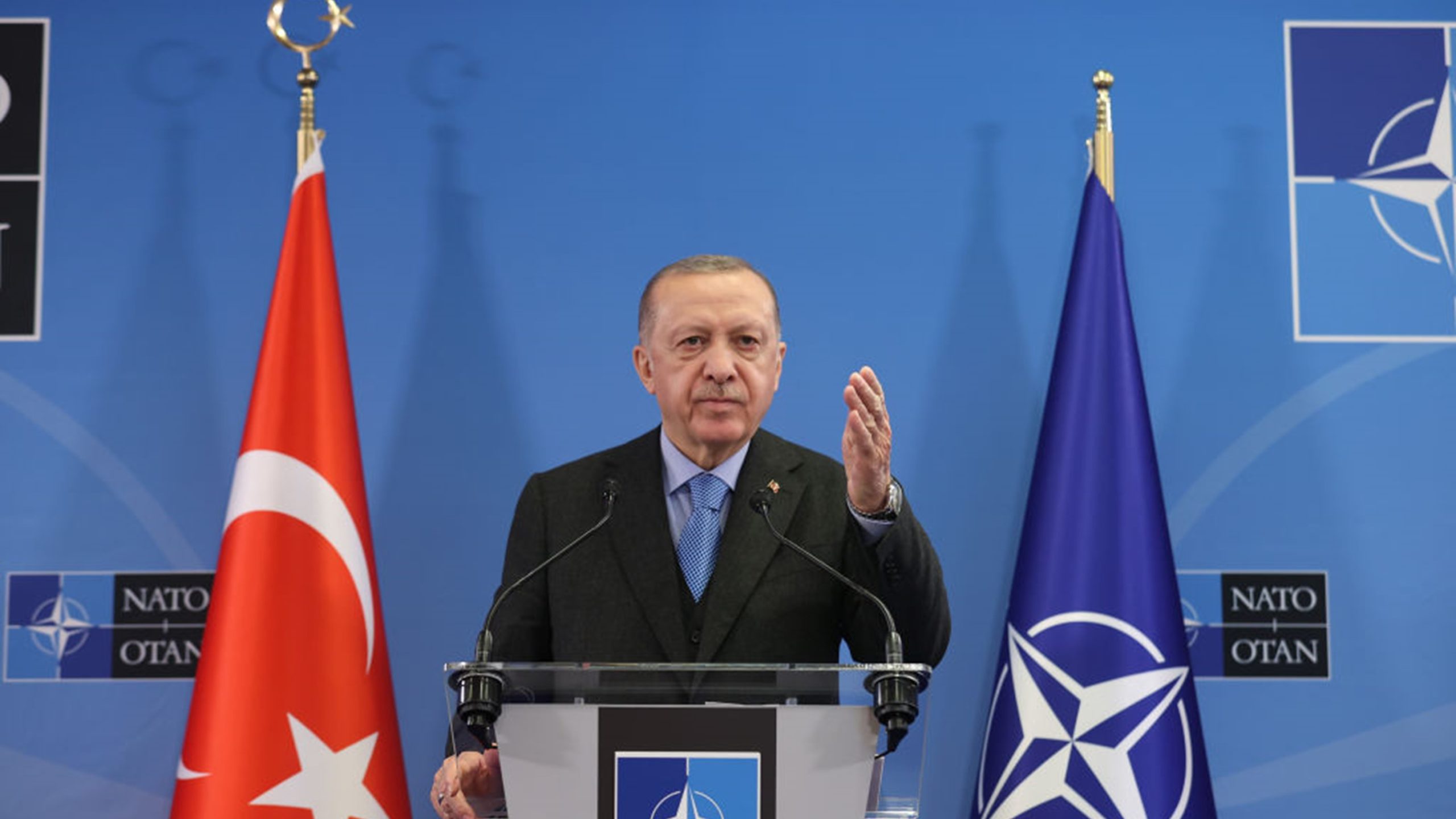
The idea of a so-called “Muslim NATO”, reported by a number of Middle Eastern and Western media outlets, reflects deeper processes of transformation in regional security and Turkey’s foreign-policy priorities. This is not about the formal creation of a military bloc that fully replicates the structure of the North Atlantic Alliance, but rather an attempt to build a new format of strategic defense cooperation among key Muslim states – primarily Saudi Arabia, Pakistan, and Turkey. Turkey’s potential accession to such an alliance could significantly alter the balance of power not only in the Middle East, but also in adjacent regions, including the South Caucasus.
At the core of this project lies an existing strategic agreement between Saudi Arabia and Pakistan that предусматривает mutual security commitments. In this configuration, Pakistan acts as a military power with nuclear capabilities and substantial defense experience; Saudi Arabia serves as a financial and economic center and a political leader of the Sunni world; and Turkey stands out as a state with one of the most capable armies in the region, a developed defense industry, and the unique status of a NATO member. It is precisely this combination of factors that has given rise, in expert circles, to the conditional label “Muslim NATO”, even though the term itself is not used officially.
Turkey’s interest in such a format is driven by several factors. First, Ankara has increasingly demonstrated a desire for strategic autonomy in recent years. Despite formally maintaining its alliance commitments within NATO, relations with the United States and a number of European countries remain complex and prone to crises. Against this backdrop, Turkey is interested in diversifying its foreign-policy and defense pillars so as not to be fully dependent on a single center of power. A new regional alliance provides an opportunity to strengthen its own positions without severing ties with the West.
Second, participation in such a union enhances Turkey’s role as a leader in the Muslim world. Ankara has been actively promoting itself as an independent center of power – from the Eastern Mediterranean and the Middle East to the Caucasus and Central Asia. Military and political rapprochement with Saudi Arabia and Pakistan allows Turkey to claim a more systemic role in shaping a regional security architecture, while also strengthening its influence through joint military exercises, technology transfers, and coordination of strategic approaches.
The Caucasus dimension of a potential alliance deserves special attention. The South Caucasus has traditionally been a zone where the interests of Russia, Turkey, and Iran intersect, and in recent years those of external actors as well. An increase in Turkey’s military-political weight through a new alliance could strengthen Ankara’s positions in the region, primarily through its strategic partnership with Azerbaijan. In this context, Turkey gains additional leverage over post-conflict settlement processes, the security of transport corridors and energy infrastructure, and the overall military balance in the region.
The potential involvement of Pakistan and Saudi Arabia, even in an indirect form, adds an extra geopolitical layer to the Caucasus direction. This is less about direct military presence and more about political support, military cooperation, and investment in infrastructure and defense projects. Such dynamics strengthen Turkey’s role as a key intermediary and security guarantor for its allies in the Caucasus, while at the same time complicating the strategic calculations of other regional players.
At the same time, Turkey’s growing influence in the Caucasus also entails risks. Russia and Iran are closely monitoring any changes in the regional balance of power, and the emergence of an additional military-political dimension may be perceived by them as a challenge to the existing equilibrium. This increases the likelihood of heightened competition, particularly with regard to control over transport corridors, military cooperation, and political influence over post-Soviet states in the region.
As in the case of the Middle East, the Caucasus direction underscores the dual nature of the potential “Muslim NATO”. On the one hand, it is a tool for Turkey to expand its strategic depth and consolidate its status as a regional power; on the other, it is a factor of potential instability that requires subtle diplomacy and constant balancing among the interests of major actors.
Ultimately, the initiative under discussion appears more as an attempt to institutionalize already existing strategic rapprochement among a number of Muslim states than as the creation of a full-fledged military bloc modeled on NATO. However, according to military experts, its possible implementation could affect not only the Middle East but also the South Caucasus, strengthening Turkey’s role in shaping a new regional security architecture. It is in this context that Ankara is increasingly positioning itself as an independent geopolitical center of power, whose decisions will have long-term consequences for neighboring regions.


 Latest news
Latest news
Latest newsGeorgia’s Constitutional Court Continues Case on Banning Opposition Parties: Political Pluralism at Stake
12.Oct.2026
Azerbaijan and Iran Step Up Security Contacts Amid Hijab Protests
12.Oct.2026
Personnel Shortages Complicate Ukrainian Forces’ Rotation: Ukraine Faces Long-Term Challenges on the Front Line
11.Oct.2026
Trump Eases Sanctions on Russian Fuel After Talks with Putin: Kyiv Fears Boost to Moscow’s War Revenues
10.Oct.2026
Putin Seeks to Strengthen Russia’s Influence in the Post-Soviet Space Through the CIS
10.Oct.2026
Russia and the South Caucasus: External Pressure, Political Competition and a Crisis of Trust
10.Oct.2026
Peaceful Settlement Between Armenia and Azerbaijan: Moving from Declarations to Implementation
10.Oct.2026
Moldova Ready to Accept as Many Ukrainians as Necessary if Situation Worsens This Winter
09.Oct.2026
Turkmenistan Turns Avaza into a Regional Diplomatic Hub as Caspian, Central Asian and CIS Agendas Converge
08.Oct.2026
Romania Scrambles Spanish F-18s After Aerial Targets Detected Near Ukrainian Border
07.Oct.2026
Berlin Deepens Defence Partnership with Kyiv: Germany to Provide Ukraine with €1 Billion in Military Aid
07.Oct.2026
European Parliament Against Georgian Dream: EU Prepares New Response to Tbilisi
06.Oct.2026
Bulgarian Foreign Minister to Discuss European Security and International Law in the Netherlands
05.Oct.2026
Rheinmetall in Bulgaria: Sofia Emerges as a New NATO Defence-Industrial Hub in the Balkans
05.Oct.2026
The Cost of a Long War: Moscow Expands Spending Plans Through 2029
05.Oct.2026