
 13 Oct 2026









When a Mediator Becomes a Player: Turkey and the New Architecture of the Middle East
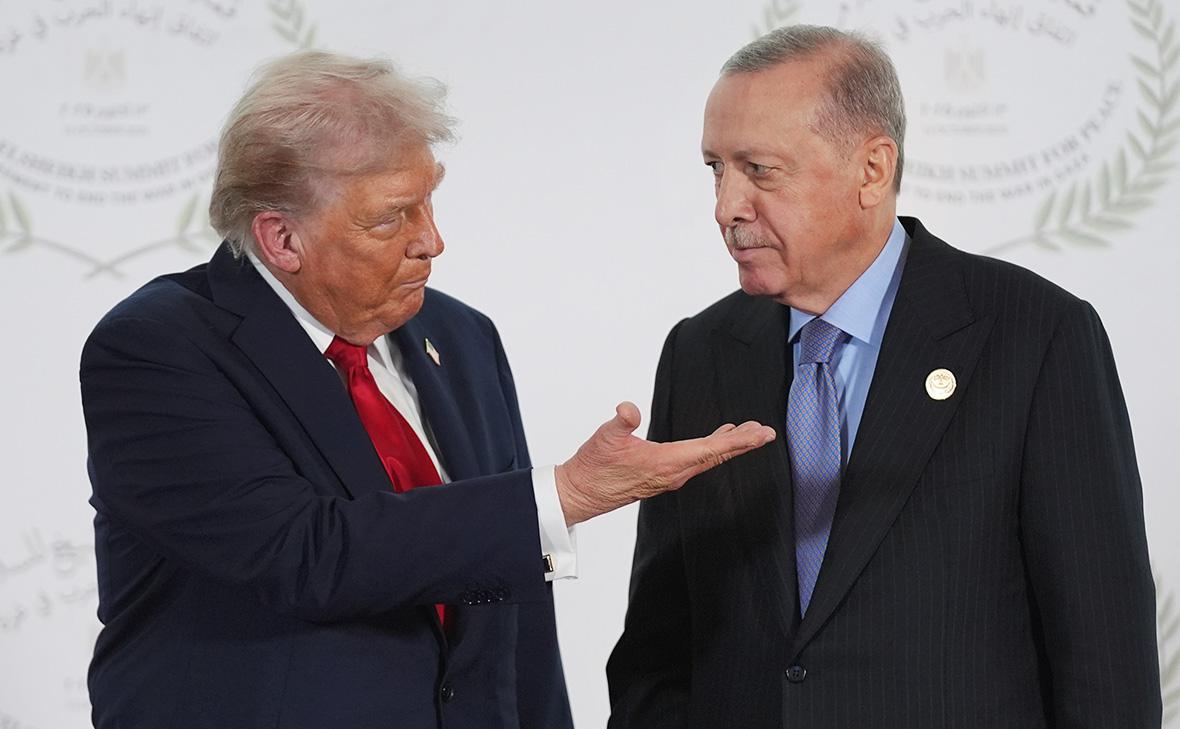
The
invitation extended to Turkish President Recep Tayyip Erdogan to join the Gaza Peace Council being formed with U.S.
participation has become an important indicator of a shifting balance of power
in the Middle East. This is not a symbolic gesture, but a de facto recognition
that without Turkey it is impossible to build a sustainable political framework
for Gaza’s postwar future. Washington, despite its decisive influence, faces a
serious deficit of trust among Arab and Muslim public opinion, while Ankara has
retained a reputation as one of the few states capable of speaking to the
Palestinians in the language of political and moral legitimacy. In this sense,
Turkey serves for the United States as a convenient intermediary and a kind of
buffer, able to soften perceptions of American involvement in the settlement process.
For Ankara itself, participation in such a format opens far
broader opportunities. Turkey gains direct access to the process of shaping
Gaza’s political architecture and, more broadly, to discussions on regional
security, where its voice now sounds on a par with traditional centers of
power. Erdogan consistently uses the Palestinian issue as a tool to restore
Turkey’s status as an indispensable regional actor – one capable of maintaining
dialogue with the West while simultaneously consolidating the Islamic world
around itself.
Against this backdrop, Turkey’s negotiations on joining a
regional defense pact with Saudi Arabia and Pakistan appear as a logical
continuation of the same strategy. This format of cooperation goes far beyond
conventional security agreements. Pakistan possesses nuclear capabilities and
significant military experience; Saudi Arabia commands vast financial resources
and energy influence; and Turkey in recent years has emerged as one of the key
producers and exporters of modern weapons, particularly unmanned systems and
precision strike capabilities. Taken together, this forms an alternative center
of power in the Islamic world that is not fully dependent on either the United
States or other external actors. For Ankara, this means greater strategic
autonomy, a strengthening of its domestic defense industry, and expanded
capacity to project power from the Eastern Mediterranean to South Asia.
It is precisely in this context that Israel’s concern over
the prospect of Turkey and Qatar participating in the governance of Gaza
becomes clear. Tel Aviv’s apprehension is linked less to a direct confrontation
with Ankara than to the risk of losing its monopoly over determining the
enclave’s future. Acting through humanitarian, political, and religious
channels, Turkey and Qatar are capable of entrenching themselves in Gaza as
long-term external guarantors of the Palestinian side. For Israel, this would
signify a shift from a familiar model based on military dominance to one of
multilateral governance, in which its influence would be constrained and
constantly balanced by other regional players. An additional source of anxiety
is the possibility that, under such circumstances, Hamas structures – even in a
transformed form – could retain their social and political base.
Ultimately,
a picture emerges of a complex and multilayered game in which Erdogan acts with
maximum pragmatism. With the United States, he builds a functional dialogue,
offering Turkey’s services as a mediator and stabilizer. In relations with the
Islamic world, he reinforces the image of a political and moral leader capable
of defending the Palestinian agenda. With Israel, Ankara avoids a direct
rupture, preferring a strategy of firm containment and pressure through
international and regional mechanisms. Thus, the Palestinian issue is
transformed for Turkey not only into a humanitarian or ideological cause, but
into a powerful instrument for expanding influence and securing a role as one
of the principal architects of Middle Eastern security.


 Latest news
Latest news
Latest newsGeorgia’s Constitutional Court Continues Case on Banning Opposition Parties: Political Pluralism at Stake
12.Oct.2026
Azerbaijan and Iran Step Up Security Contacts Amid Hijab Protests
12.Oct.2026
Personnel Shortages Complicate Ukrainian Forces’ Rotation: Ukraine Faces Long-Term Challenges on the Front Line
11.Oct.2026
Trump Eases Sanctions on Russian Fuel After Talks with Putin: Kyiv Fears Boost to Moscow’s War Revenues
10.Oct.2026
Putin Seeks to Strengthen Russia’s Influence in the Post-Soviet Space Through the CIS
10.Oct.2026
Russia and the South Caucasus: External Pressure, Political Competition and a Crisis of Trust
10.Oct.2026
Peaceful Settlement Between Armenia and Azerbaijan: Moving from Declarations to Implementation
10.Oct.2026
Moldova Ready to Accept as Many Ukrainians as Necessary if Situation Worsens This Winter
09.Oct.2026
Turkmenistan Turns Avaza into a Regional Diplomatic Hub as Caspian, Central Asian and CIS Agendas Converge
08.Oct.2026
Romania Scrambles Spanish F-18s After Aerial Targets Detected Near Ukrainian Border
07.Oct.2026
Berlin Deepens Defence Partnership with Kyiv: Germany to Provide Ukraine with €1 Billion in Military Aid
07.Oct.2026
European Parliament Against Georgian Dream: EU Prepares New Response to Tbilisi
06.Oct.2026
Bulgarian Foreign Minister to Discuss European Security and International Law in the Netherlands
05.Oct.2026
Rheinmetall in Bulgaria: Sofia Emerges as a New NATO Defence-Industrial Hub in the Balkans
05.Oct.2026
The Cost of a Long War: Moscow Expands Spending Plans Through 2029
05.Oct.2026