
 13 Oct 2026









Armenia and Azerbaijan Discuss Bypass Trade Routes: A Challenge to Georgia’s Transit Role
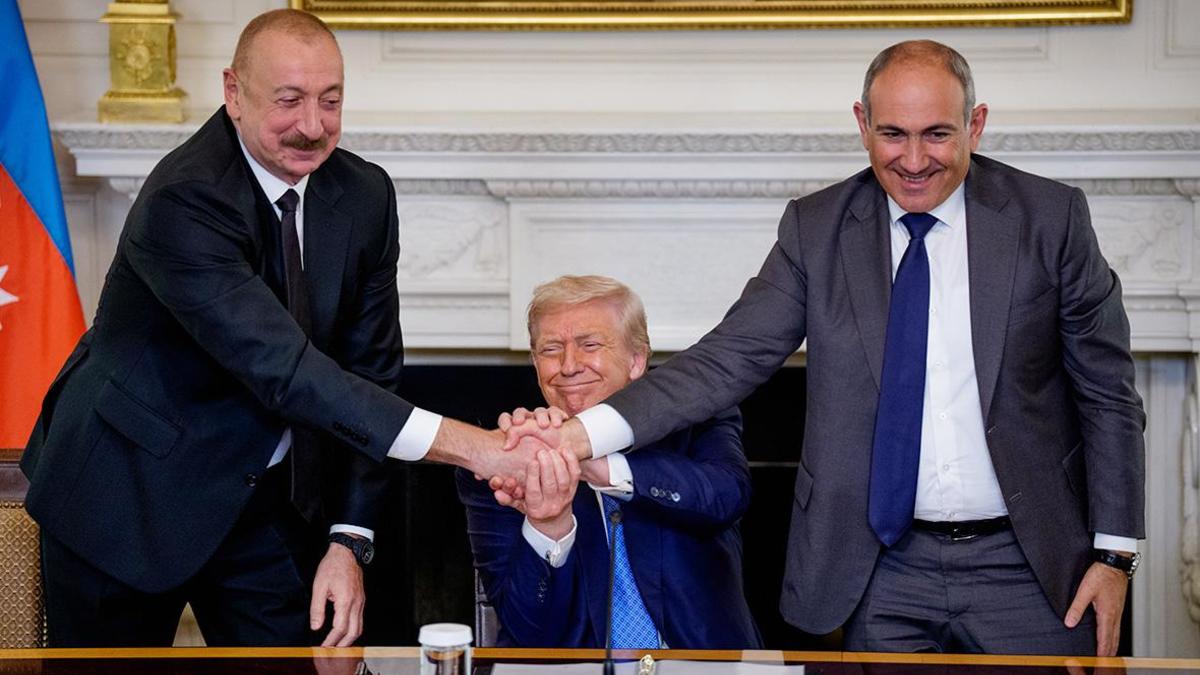
At the international economic forum in Davos, the leaders of Armenia and Azerbaijan discussed the possibility of creating direct trade routes that could bypass transit through Georgia. Although the initiative is still at the discussion stage, it has already raised serious concerns in Tbilisi about the country’s future role as a key transport corridor between the Caucasus, the Caspian region, and Europe.
It is worth noting that Georgia has historically served as an important transit hub for goods moving from Central Asia and the Caucasus region to Europe, as well as for the import and export of energy resources. A potential reduction in Georgian transit could negatively impact revenues from transport logistics, reduce the country’s strategic significance, and call into question investment plans for infrastructure projects such as railways and highways that are part of the Middle Corridor.
In Tbilisi, officials note that direct trade between Armenia and Azerbaijan via new routes could theoretically accelerate the movement of goods and reduce costs for neighboring countries, but at the same time, it weakens economic dependence on Georgia and diminishes its influence in regional politics. Experts warn that even a partial decline in transit flows will create long-term economic challenges for the Georgian economy and may require a revision of strategies for transport sector development and foreign economic policy.
Amid discussions of direct routes, uncertainty and risks remain: much depends on political stability in the region, the resolution of contentious issues between Armenia and Azerbaijan, as well as the participation of international investors in implementing new logistics projects. Thus, the current talks in Davos raise questions about Georgia’s future strategic position in the South Caucasus transport network and its ability to maintain its role as the main regional transit hub.


 Latest news
Latest news
Latest newsGeorgia’s Constitutional Court Continues Case on Banning Opposition Parties: Political Pluralism at Stake
12.Oct.2026
Azerbaijan and Iran Step Up Security Contacts Amid Hijab Protests
12.Oct.2026
Personnel Shortages Complicate Ukrainian Forces’ Rotation: Ukraine Faces Long-Term Challenges on the Front Line
11.Oct.2026
Trump Eases Sanctions on Russian Fuel After Talks with Putin: Kyiv Fears Boost to Moscow’s War Revenues
10.Oct.2026
Putin Seeks to Strengthen Russia’s Influence in the Post-Soviet Space Through the CIS
10.Oct.2026
Russia and the South Caucasus: External Pressure, Political Competition and a Crisis of Trust
10.Oct.2026
Peaceful Settlement Between Armenia and Azerbaijan: Moving from Declarations to Implementation
10.Oct.2026
Moldova Ready to Accept as Many Ukrainians as Necessary if Situation Worsens This Winter
09.Oct.2026
Turkmenistan Turns Avaza into a Regional Diplomatic Hub as Caspian, Central Asian and CIS Agendas Converge
08.Oct.2026
Romania Scrambles Spanish F-18s After Aerial Targets Detected Near Ukrainian Border
07.Oct.2026
Berlin Deepens Defence Partnership with Kyiv: Germany to Provide Ukraine with €1 Billion in Military Aid
07.Oct.2026
European Parliament Against Georgian Dream: EU Prepares New Response to Tbilisi
06.Oct.2026
Bulgarian Foreign Minister to Discuss European Security and International Law in the Netherlands
05.Oct.2026
Rheinmetall in Bulgaria: Sofia Emerges as a New NATO Defence-Industrial Hub in the Balkans
05.Oct.2026
The Cost of a Long War: Moscow Expands Spending Plans Through 2029
05.Oct.2026