
 13 Oct 2026









Middle East on the Brink of War: Iran, Israel and the U.S. Exchange Strikes
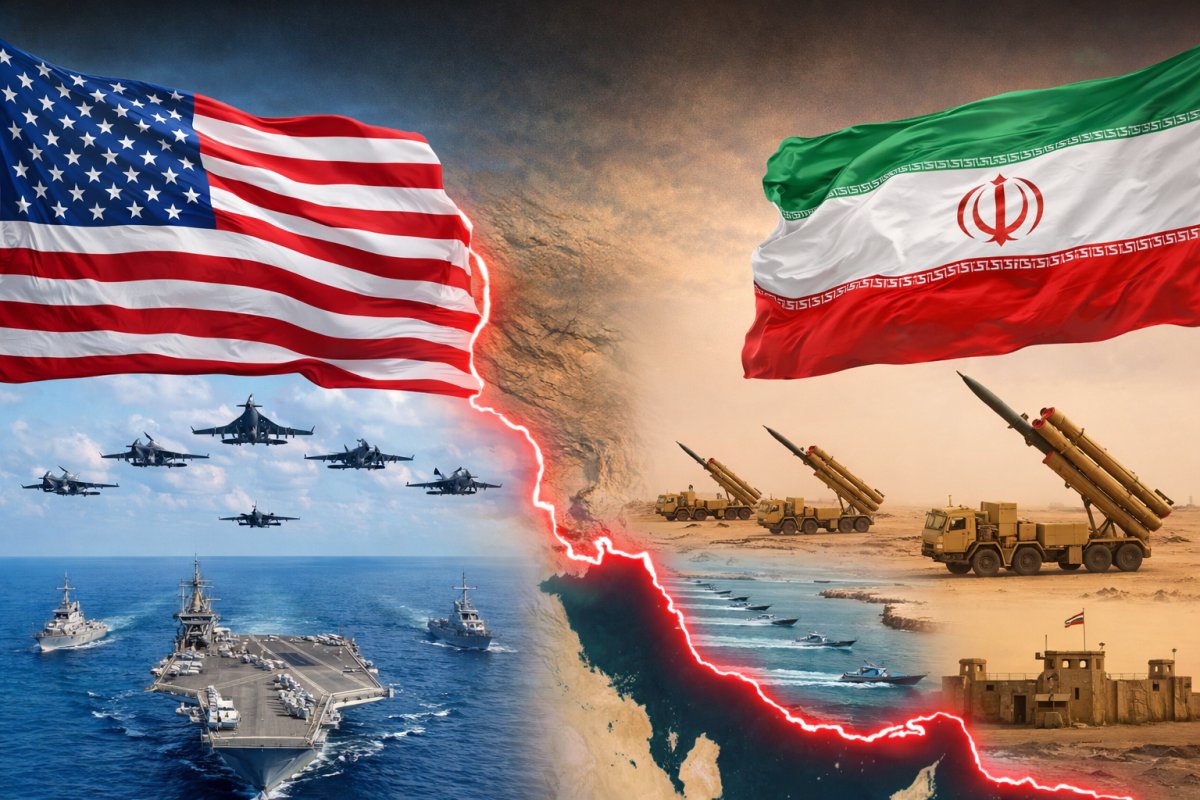
On February 28, 2026, the
situation in the Middle East entered its most serious phase in recent years —
after a coordinated military operation by Israel and the United States against
Iran, Tehran responded with large-scale missile strikes on Israeli and American
targets, effectively marking a new stage of direct military confrontation
between major powers in the region.
On
Saturday morning, Israel announced that it had carried out a “preemptive
missile strike” against Iran. The country’s Ministry of Defense and official
IDF representatives stated that the objective was to eliminate an imminent
threat to the State of Israel and its citizens. The operation, which media
outlets have already referred to as a joint action dubbed “Operation Epic Fury”,
was coordinated with Washington, and U.S. forces also participated in air and
missile strikes on Iranian territory.
During
the first phase of the strikes on Iran, dozens of strategic targets were reportedly
hit, including military bases, air defense systems, facilities of the Islamic
Revolutionary Guard Corps, and government headquarters. According to social
media reports and official sources, explosions were heard in Tehran, Isfahan,
Qom, and other major cities, accompanied by the closure of Iranian airspace.

Iran Under Attack by the United States and Israel
In
response, Tehran launched a massive retaliatory missile and drone strike,
firing ballistic missiles toward Israel as well as at U.S. military bases in
the Persian Gulf region, including air bases in Qatar, Kuwait, the United Arab
Emirates, and Bahrain. Iranian officials described these strikes as “just
retribution” for attacks on sovereign territory and as an act of self-defense
against external aggression.
In Abu
Dhabi, one person was reported killed by falling debris, while air defense
systems were actively engaged in the UAE and other countries in the region
hosting U.S. military facilities. In Israel, air defense systems were activated
over northern areas following the launch of Iranian missiles, including near
Jerusalem.
U.S.
President Donald Trump, addressing the nation, described the actions as the
beginning of a major combat operation, stating that the objective was to
“eliminate the threat posed by the Iranian regime” and protect Americans from
“immediate danger”. He also called on Iranian military personnel to lay down
their arms and appealed directly to the Iranian people to seek political
change.
Israel,
for its part, declared a state of emergency, closed its airspace, and placed
air defense forces on heightened alert, warning citizens of possible
retaliatory attacks. Both sides continue to exchange claims regarding damaged
targets and potential casualties, many of which remain unverified.
The
confrontation comes amid the collapse of diplomatic negotiations between the
United States and Iran over the nuclear program, which analysts say deepened
the crisis and contributed to the decision to resort to direct military force
rather than diplomacy. Some experts believe the escalation could have
far-reaching consequences for international security, energy markets, and
global economic stability, as oil prices and commodity markets are already
experiencing sharp volatility.
Additionally,
several countries in the region have closed or restricted their airspace, and
many airlines have canceled flights over the Middle East due to the threat of
missile strikes and the intensifying conflict.

The Russian Ministry of Foreign Affairs reminds Russian citizens of the possibility to leave Iran and Israel via Azerbaijan, Egypt, and Jordan
On the
international stage, reactions have been mixed: Russia sharply condemned the
U.S. and Israeli strikes as an act of aggression and called for an emergency
meeting of the UN Security Council, while Western countries have expressed
concern over the escalation and the risk that it could evolve into a broader
regional war.
This
confrontation represents one of the most significant escalations since previous
military clashes in the region. The key question now is whether this will
remain a limited campaign aimed at degrading military capabilities, or whether
it will expand into a wider regional conflict involving additional states. Many
experts also note that diplomatic efforts, which only days ago still seemed
possible, are now unlikely to yield results in the short term.


 Latest news
Latest news
Latest newsGeorgia’s Constitutional Court Continues Case on Banning Opposition Parties: Political Pluralism at Stake
12.Oct.2026
Azerbaijan and Iran Step Up Security Contacts Amid Hijab Protests
12.Oct.2026
Personnel Shortages Complicate Ukrainian Forces’ Rotation: Ukraine Faces Long-Term Challenges on the Front Line
11.Oct.2026
Trump Eases Sanctions on Russian Fuel After Talks with Putin: Kyiv Fears Boost to Moscow’s War Revenues
10.Oct.2026
Putin Seeks to Strengthen Russia’s Influence in the Post-Soviet Space Through the CIS
10.Oct.2026
Russia and the South Caucasus: External Pressure, Political Competition and a Crisis of Trust
10.Oct.2026
Peaceful Settlement Between Armenia and Azerbaijan: Moving from Declarations to Implementation
10.Oct.2026
Moldova Ready to Accept as Many Ukrainians as Necessary if Situation Worsens This Winter
09.Oct.2026
Turkmenistan Turns Avaza into a Regional Diplomatic Hub as Caspian, Central Asian and CIS Agendas Converge
08.Oct.2026
Romania Scrambles Spanish F-18s After Aerial Targets Detected Near Ukrainian Border
07.Oct.2026
Berlin Deepens Defence Partnership with Kyiv: Germany to Provide Ukraine with €1 Billion in Military Aid
07.Oct.2026
European Parliament Against Georgian Dream: EU Prepares New Response to Tbilisi
06.Oct.2026
Bulgarian Foreign Minister to Discuss European Security and International Law in the Netherlands
05.Oct.2026
Rheinmetall in Bulgaria: Sofia Emerges as a New NATO Defence-Industrial Hub in the Balkans
05.Oct.2026
The Cost of a Long War: Moscow Expands Spending Plans Through 2029
05.Oct.2026