
 13 Oct 2026









- Consolidation of power around a collective leadership structure and a new clerical leader — the most probable path, which could preserve the regime while weakening its monolithic character.
- Elite infighting — rivalry among religious authorities, military leaders, and political factions could result in prolonged instability.
- Retaliatory actions abroad — a leadership seeking to reassert authority may adopt a more aggressive external posture, risking an expansion of the conflict beyond national borders.
Point of No Return: How the Death of Ali Khamenei Is Reshaping Iran’s Political Landscape
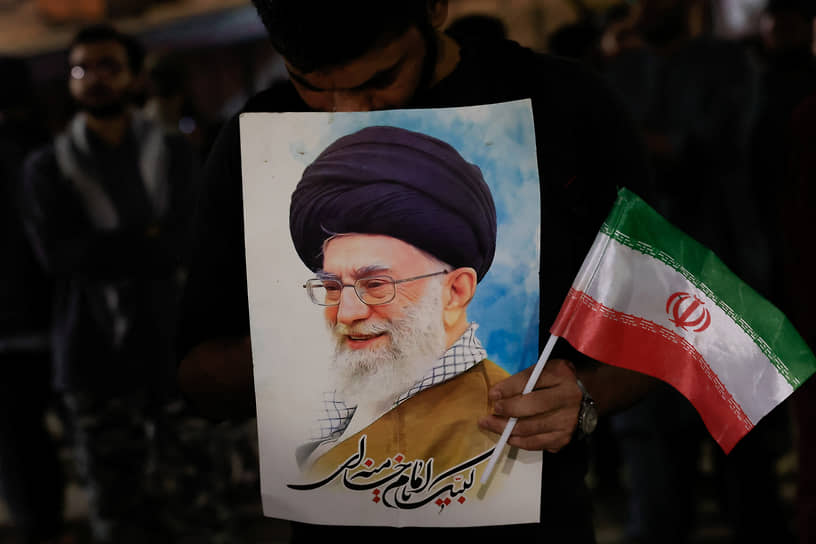
Supreme Leader of Iran, Ayatollah Ali Khamenei, died on February 28 as a result of a large-scale military operation carried out by the United States and Israel. News of his death was confirmed on the morning of March 1 by state news agencies Tasnim, IRNA, ISNA, Mehr, and Fars, following initial reports in foreign media and statements from U.S. officials.
According to official sources in Tehran, Khamenei was killed at his residence in the capital during a missile strike; several members of his family were also reportedly killed in the attack. In response, the Iranian government declared 40 days of national mourning and announced seven non-working days.
Iranian President Masoud Pezeshkian stated that avenging the Supreme Leader’s death is the “legitimate right and duty” of the Islamic Republic, signaling the possibility of a new round of regional escalation.
Power Vacuum and Transitional Period
Under Iran’s Constitution, the Assembly of Experts — an 88-member body of Shiite clerics — is responsible for appointing a new Supreme Leader and is expected to select a successor as swiftly as possible. In the interim, leadership responsibilities will be assumed by a governing council composed of the president, the head of the judiciary, and a representative of the Guardian Council.
However, the absence of a clearly designated successor increases uncertainty. Although several potential candidates have been mentioned, the system traditionally favors a broadly acceptable compromise figure from within the clerical establishment rather than a radical reformer.
Impact on Domestic Stability
Khamenei had been the central figure of Iran’s Islamic political system for more than 35 years. He built a powerful security apparatus, notably through the Islamic Revolutionary Guard Corps, and oversaw the suppression of major protest movements, including the mass demonstrations following the death of Mahsa Amini and subsequent waves of unrest. His absence raises questions about the cohesion of the ruling elite and the loyalty of security structures.
Possible Scenarios
Experts outline several likely trajectories:
The Role of External Actors
Khamenei’s death has already prompted reactions from global leaders. Russian President Vladimir Putin condemned the killing as “cynical,” adding to diplomatic tensions in the region.
The United States, describing the operation as a “justified step” and calling on Iranians to determine their own political future, has reinforced the perception of the crisis as a defining moment in the confrontation between Iran and the West — with potential implications for global security and energy markets.
In this context, the death of Ali Khamenei represents a historic turning point that calls Iran’s future trajectory into question. The manner in which the transition of power unfolds — and whether the political system maintains its cohesion — will shape not only Iran’s internal stability but also the broader dynamics of regional security and international relations.


 Latest news
Latest news
Latest newsGeorgia’s Constitutional Court Continues Case on Banning Opposition Parties: Political Pluralism at Stake
12.Oct.2026
Azerbaijan and Iran Step Up Security Contacts Amid Hijab Protests
12.Oct.2026
Personnel Shortages Complicate Ukrainian Forces’ Rotation: Ukraine Faces Long-Term Challenges on the Front Line
11.Oct.2026
Trump Eases Sanctions on Russian Fuel After Talks with Putin: Kyiv Fears Boost to Moscow’s War Revenues
10.Oct.2026
Putin Seeks to Strengthen Russia’s Influence in the Post-Soviet Space Through the CIS
10.Oct.2026
Russia and the South Caucasus: External Pressure, Political Competition and a Crisis of Trust
10.Oct.2026
Peaceful Settlement Between Armenia and Azerbaijan: Moving from Declarations to Implementation
10.Oct.2026
Moldova Ready to Accept as Many Ukrainians as Necessary if Situation Worsens This Winter
09.Oct.2026
Turkmenistan Turns Avaza into a Regional Diplomatic Hub as Caspian, Central Asian and CIS Agendas Converge
08.Oct.2026
Romania Scrambles Spanish F-18s After Aerial Targets Detected Near Ukrainian Border
07.Oct.2026
Berlin Deepens Defence Partnership with Kyiv: Germany to Provide Ukraine with €1 Billion in Military Aid
07.Oct.2026
European Parliament Against Georgian Dream: EU Prepares New Response to Tbilisi
06.Oct.2026
Bulgarian Foreign Minister to Discuss European Security and International Law in the Netherlands
05.Oct.2026
Rheinmetall in Bulgaria: Sofia Emerges as a New NATO Defence-Industrial Hub in the Balkans
05.Oct.2026
The Cost of a Long War: Moscow Expands Spending Plans Through 2029
05.Oct.2026