
 13 Oct 2026









Nine Georgian Opposition Parties Unite Against Georgian Dream
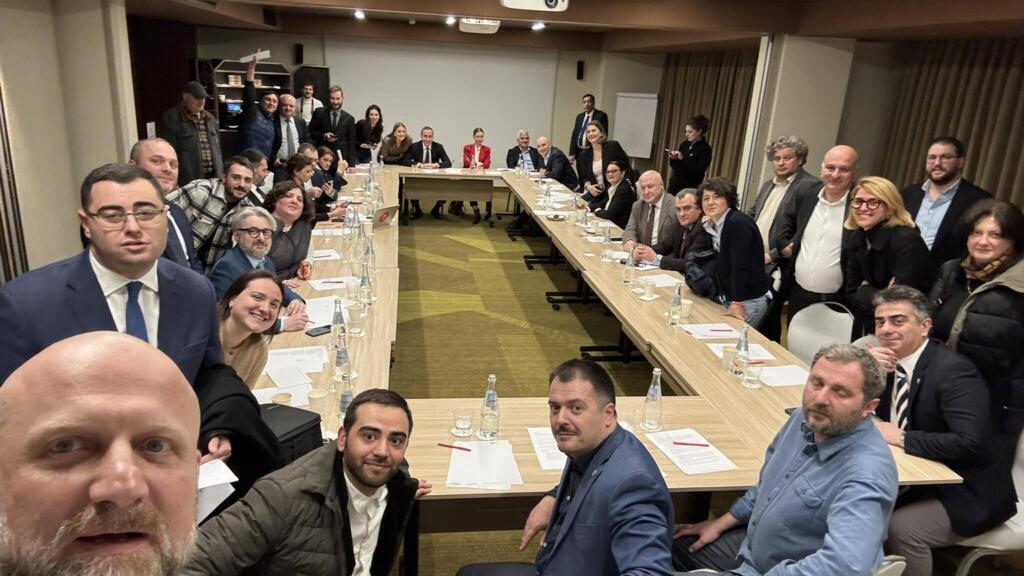
In Georgia, nine opposition parties have announced the creation of a new political alliance aimed at uniting their efforts against the ruling party “Georgian Dream”. The decision to form the coalition was made after a series of consultations among opposition leaders, who concluded that acting separately weakens their position in the political struggle and prevents them from effectively competing with the government.
According to representatives of the alliance, its main goal is to coordinate political strategy, work jointly on reforms, and prepare for future election campaigns. Opposition leaders believe that a united front will allow them to increase pressure on the government and offer voters a more consolidated alternative to the current authorities. They also stated their intention to develop a common position on key issues ranging from electoral reform to the country’s foreign policy course.
The alliance includes parties representing different political orientations — from liberal to more conservative forces. However, they are united by a critical attitude toward the government’s policies and by their support for closer integration with European institutions. Some members of the coalition had previously cooperated during protest campaigns and parliamentary initiatives, but the current agreement is intended to establish more systematic and long-term cooperation.
Representatives of the opposition say the alliance will also coordinate public campaigns and monitor political processes in the country. They plan to involve civil society organizations and experts in order to develop a package of reforms that could be presented to the public as an alternative to the current government’s political course.
The ruling party “Georgian Dream” has so far reacted cautiously to the creation of the new alliance. Government representatives noted that opposition forces have tried to unite before, but such projects often faced internal disagreements and failed to produce long-term political results.
Political analysts note that the emergence of such an alliance could increase competition on the country’s political scene, especially amid ongoing debates about democratic reforms and Georgia’s future political direction. In their view, the success of the alliance will largely depend on whether its members can maintain unity and develop a clear and common program of action.


 Latest news
Latest news
Latest newsGeorgia’s Constitutional Court Continues Case on Banning Opposition Parties: Political Pluralism at Stake
12.Oct.2026
Azerbaijan and Iran Step Up Security Contacts Amid Hijab Protests
12.Oct.2026
Personnel Shortages Complicate Ukrainian Forces’ Rotation: Ukraine Faces Long-Term Challenges on the Front Line
11.Oct.2026
Trump Eases Sanctions on Russian Fuel After Talks with Putin: Kyiv Fears Boost to Moscow’s War Revenues
10.Oct.2026
Putin Seeks to Strengthen Russia’s Influence in the Post-Soviet Space Through the CIS
10.Oct.2026
Russia and the South Caucasus: External Pressure, Political Competition and a Crisis of Trust
10.Oct.2026
Peaceful Settlement Between Armenia and Azerbaijan: Moving from Declarations to Implementation
10.Oct.2026
Moldova Ready to Accept as Many Ukrainians as Necessary if Situation Worsens This Winter
09.Oct.2026
Turkmenistan Turns Avaza into a Regional Diplomatic Hub as Caspian, Central Asian and CIS Agendas Converge
08.Oct.2026
Romania Scrambles Spanish F-18s After Aerial Targets Detected Near Ukrainian Border
07.Oct.2026
Berlin Deepens Defence Partnership with Kyiv: Germany to Provide Ukraine with €1 Billion in Military Aid
07.Oct.2026
European Parliament Against Georgian Dream: EU Prepares New Response to Tbilisi
06.Oct.2026
Bulgarian Foreign Minister to Discuss European Security and International Law in the Netherlands
05.Oct.2026
Rheinmetall in Bulgaria: Sofia Emerges as a New NATO Defence-Industrial Hub in the Balkans
05.Oct.2026
The Cost of a Long War: Moscow Expands Spending Plans Through 2029
05.Oct.2026