
 13 Oct 2026









Killing of Key Iranian Politician Heightens Instability
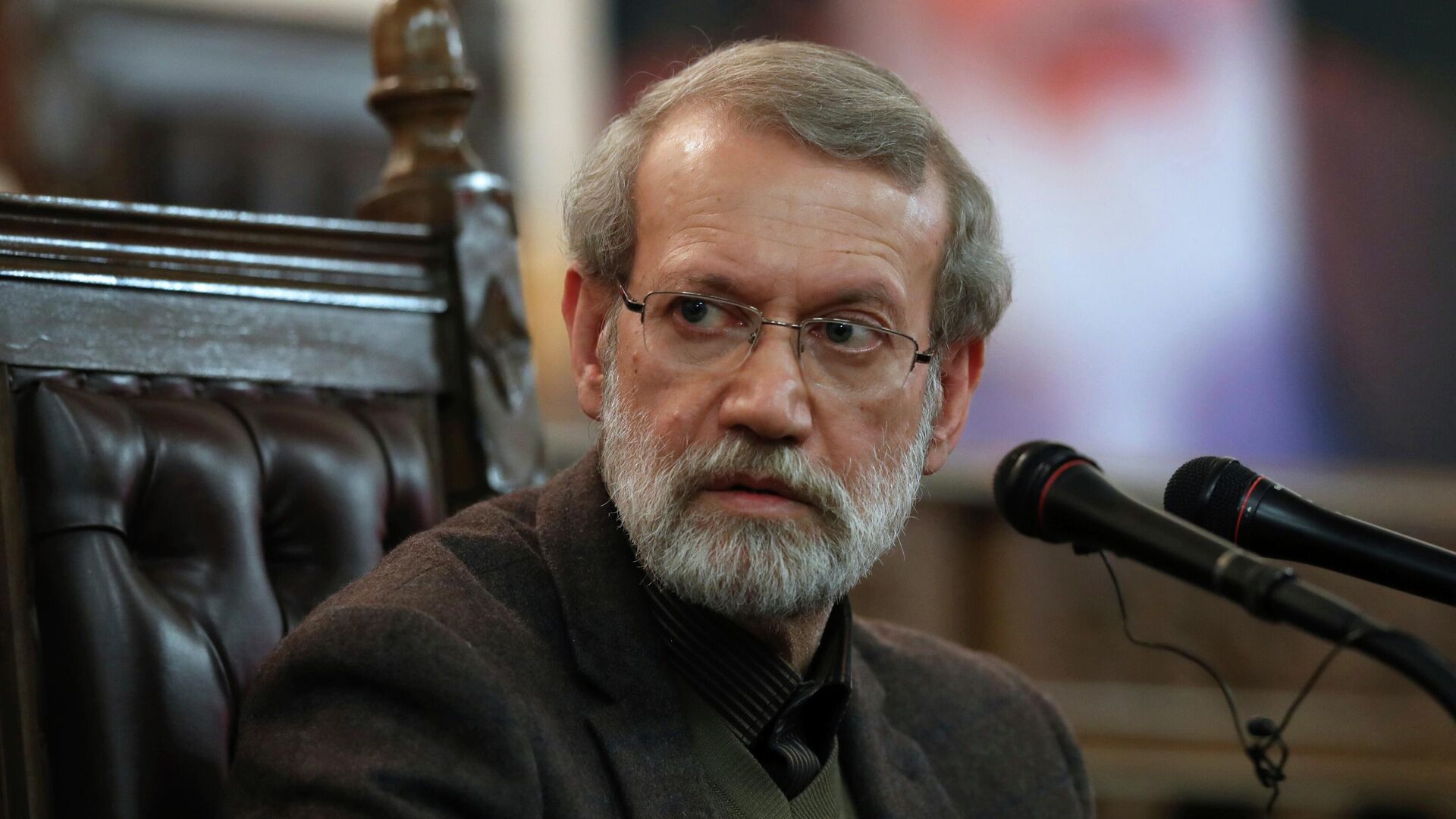
The
death of Ali Larijani has become one of the key events in the ongoing crisis
surrounding Iran and has sharply altered the balance of power within the
country, amplifying the destabilizing effects already underway. Larijani was
killed on March 17, in the midst of a military escalation, at a time when he
was effectively considered one of the central figures of the governing system —
especially following the weakening or departure of other senior officials.
The context of this event is critically important: by early
2026, Iran was already in a deep crisis, linked to military strikes, internal
tensions, and challenges regarding the succession of power. Larijani was seen
not merely as an experienced politician, but as a possible “operational center”
of the system — a person capable of coordinating decisions under conditions of
war and partial paralysis of the power vertical. His elimination effectively
intensified the “decapitation” effect on the system, as multiple key figures
responsible for security and strategic decisions were simultaneously removed.
Analysts note that in such authoritarian models, power is
often concentrated around a narrow circle of individuals, and their
simultaneous loss does not lead to a smooth transfer of authority, but to
fragmentation of governance. In Iran’s case, according to available
information, the system attempted to prepare for this scenario in advance —
creating several decision-making centers to maintain governability even after
the removal of individual leaders. Nevertheless, the death of figures like
Larijani still reduces the efficiency of this model and increases the risk of
competition among elite groups.
Another important aspect is the question of succession.
Formally, Iran has a complex mechanism for the transfer of power, but in
reality, it heavily depends on informal agreements within the elite. After the
death of key figures, less experienced or less legitimate actors — so-called
“third-tier” players — may come to power. This raises the likelihood of
mistakes, uncoordinated decisions, and even internal power struggles.
At the same time, despite the apparent vulnerability of the
regime, the scenario of immediate destabilization or revolution is not
guaranteed. Experts note that the Iranian opposition suffers from a lack of
clear structure and coordination: protests in the country have historically
been massive but disorganized. This means that even in conditions of maximum
state weakness, the protest potential cannot always be converted into political
change.
On the other hand, the very logic of conflict may work in
favor of the authorities. External threats traditionally consolidate parts of
society, and the death of figures like Larijani can be used as a mobilization
factor, reinforcing rhetoric of resistance and creating the image of a “victim
of aggression”. In this sense, the effect of his death extends beyond domestic
politics and begins to operate on the international stage, intensifying
anti-Western sentiment in the region.
Thus, the assassination of Larijani is a blow to Iran’s governing mechanism at a critical moment. It heightens uncertainty, complicates the decision-making process, and simultaneously raises the stakes both domestically and in regional confrontations. In the short term, this leads to systemic chaos, and in the long term, it may either accelerate transformation or, conversely, lead to even greater consolidation of power around security structures.


 Latest news
Latest news
Latest newsGeorgia’s Constitutional Court Continues Case on Banning Opposition Parties: Political Pluralism at Stake
12.Oct.2026
Azerbaijan and Iran Step Up Security Contacts Amid Hijab Protests
12.Oct.2026
Personnel Shortages Complicate Ukrainian Forces’ Rotation: Ukraine Faces Long-Term Challenges on the Front Line
11.Oct.2026
Trump Eases Sanctions on Russian Fuel After Talks with Putin: Kyiv Fears Boost to Moscow’s War Revenues
10.Oct.2026
Putin Seeks to Strengthen Russia’s Influence in the Post-Soviet Space Through the CIS
10.Oct.2026
Russia and the South Caucasus: External Pressure, Political Competition and a Crisis of Trust
10.Oct.2026
Peaceful Settlement Between Armenia and Azerbaijan: Moving from Declarations to Implementation
10.Oct.2026
Moldova Ready to Accept as Many Ukrainians as Necessary if Situation Worsens This Winter
09.Oct.2026
Turkmenistan Turns Avaza into a Regional Diplomatic Hub as Caspian, Central Asian and CIS Agendas Converge
08.Oct.2026
Romania Scrambles Spanish F-18s After Aerial Targets Detected Near Ukrainian Border
07.Oct.2026
Berlin Deepens Defence Partnership with Kyiv: Germany to Provide Ukraine with €1 Billion in Military Aid
07.Oct.2026
European Parliament Against Georgian Dream: EU Prepares New Response to Tbilisi
06.Oct.2026
Bulgarian Foreign Minister to Discuss European Security and International Law in the Netherlands
05.Oct.2026
Rheinmetall in Bulgaria: Sofia Emerges as a New NATO Defence-Industrial Hub in the Balkans
05.Oct.2026
The Cost of a Long War: Moscow Expands Spending Plans Through 2029
05.Oct.2026