
 13 Oct 2026









Tensions Between Georgia and the EU Intensify Amid Visit of the “Weimar Triangle” to Tbilisi
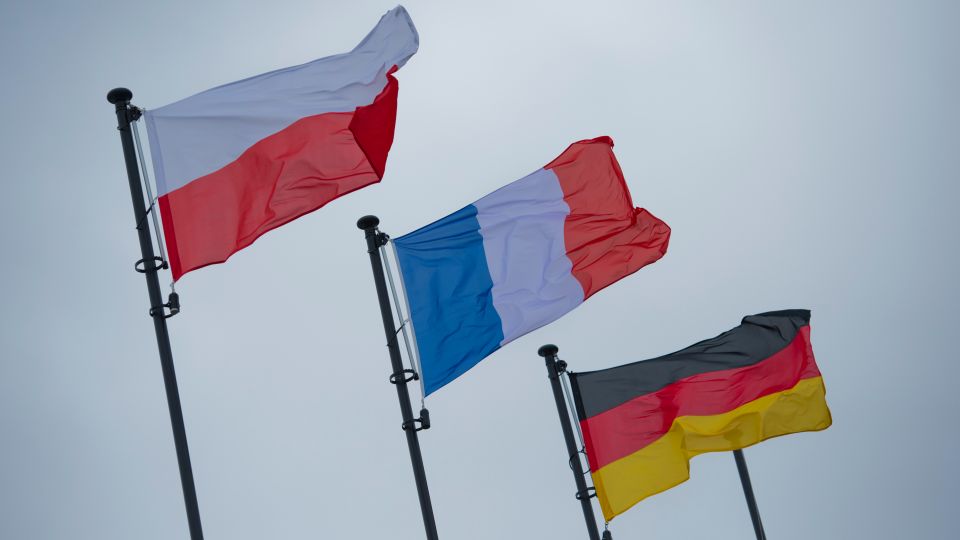
Meetings between representatives of the so-called “Weimar
Triangle” — France, Germany, and Poland — and Georgian authorities, opposition
figures, and civil society have taken place in Tbilisi. The visit comes against
the backdrop of a noticeable cooling in relations between Georgia and the
European Union.
The European delegation held a wide range of talks, engaging
nearly all key political forces in the country. The main topics of discussion
were Georgia’s prospects for European integration and the current disagreements
between Tbilisi and Brussels.
Earlier, representatives of the “Weimar Triangle” accused
the Georgian authorities of drifting away from the European course. In
particular, concerns were raised over the foreign funding law adopted in March,
which the EU views as a sign of increasing pressure on civil society.
European countries have expressed concern that the policies
of the ruling Georgian Dream party could lead to democratic backsliding and
complicate the country’s EU integration process.
For their part, Georgian authorities have taken a more
restrained but critical stance. Tbilisi has reiterated its readiness for
dialogue, while emphasizing that pressure from Brussels will not yield results.
Officials argue that EU demands, including the revision of
certain laws, are “unrealistic”, and describe the EU’s approach as a “policy of
grievance” that does not contribute to constructive engagement.
Relations between the sides have been deteriorating in
recent years. In particular, the EU has already suspended visa-free travel for
holders of Georgian diplomatic and service passports, does not rule out
extending restrictions to a broader group of citizens, and has set a number of
conditions for the continuation of Georgia’s European integration. At the same
time, the Georgian government previously announced a suspension of discussions
on EU accession talks until 2028, a move that triggered a strong reaction from
European institutions.
Despite mutual criticism, the current talks in Tbilisi have
been conducted in a softer tone compared to previous months. Georgian
representatives acknowledge existing disagreements but describe the meetings as
“constructive”.
Experts note that
the visit of the “Weimar Triangle” may represent an attempt by the EU to
preserve its influence in Georgia and prevent the country from drifting further
away from the European path. Georgia remains an EU candidate country, but the
integration process has effectively slowed amid political disagreements and
mutual grievances between Tbilisi and Brussels.


 Latest news
Latest news
Latest newsGeorgia’s Constitutional Court Continues Case on Banning Opposition Parties: Political Pluralism at Stake
12.Oct.2026
Azerbaijan and Iran Step Up Security Contacts Amid Hijab Protests
12.Oct.2026
Personnel Shortages Complicate Ukrainian Forces’ Rotation: Ukraine Faces Long-Term Challenges on the Front Line
11.Oct.2026
Trump Eases Sanctions on Russian Fuel After Talks with Putin: Kyiv Fears Boost to Moscow’s War Revenues
10.Oct.2026
Putin Seeks to Strengthen Russia’s Influence in the Post-Soviet Space Through the CIS
10.Oct.2026
Russia and the South Caucasus: External Pressure, Political Competition and a Crisis of Trust
10.Oct.2026
Peaceful Settlement Between Armenia and Azerbaijan: Moving from Declarations to Implementation
10.Oct.2026
Moldova Ready to Accept as Many Ukrainians as Necessary if Situation Worsens This Winter
09.Oct.2026
Turkmenistan Turns Avaza into a Regional Diplomatic Hub as Caspian, Central Asian and CIS Agendas Converge
08.Oct.2026
Romania Scrambles Spanish F-18s After Aerial Targets Detected Near Ukrainian Border
07.Oct.2026
Berlin Deepens Defence Partnership with Kyiv: Germany to Provide Ukraine with €1 Billion in Military Aid
07.Oct.2026
European Parliament Against Georgian Dream: EU Prepares New Response to Tbilisi
06.Oct.2026
Bulgarian Foreign Minister to Discuss European Security and International Law in the Netherlands
05.Oct.2026
Rheinmetall in Bulgaria: Sofia Emerges as a New NATO Defence-Industrial Hub in the Balkans
05.Oct.2026
The Cost of a Long War: Moscow Expands Spending Plans Through 2029
05.Oct.2026