
 13 Oct 2026









- senior developers;
- AI specialists;
- product managers.
- energy dependence;
- external market reliance;
- regulatory instability;
- talent outflow;
- geopolitical uncertainty.
Armenia as the South Caucasus IT Hub: $1 Billion in Exports, Potential and Limits
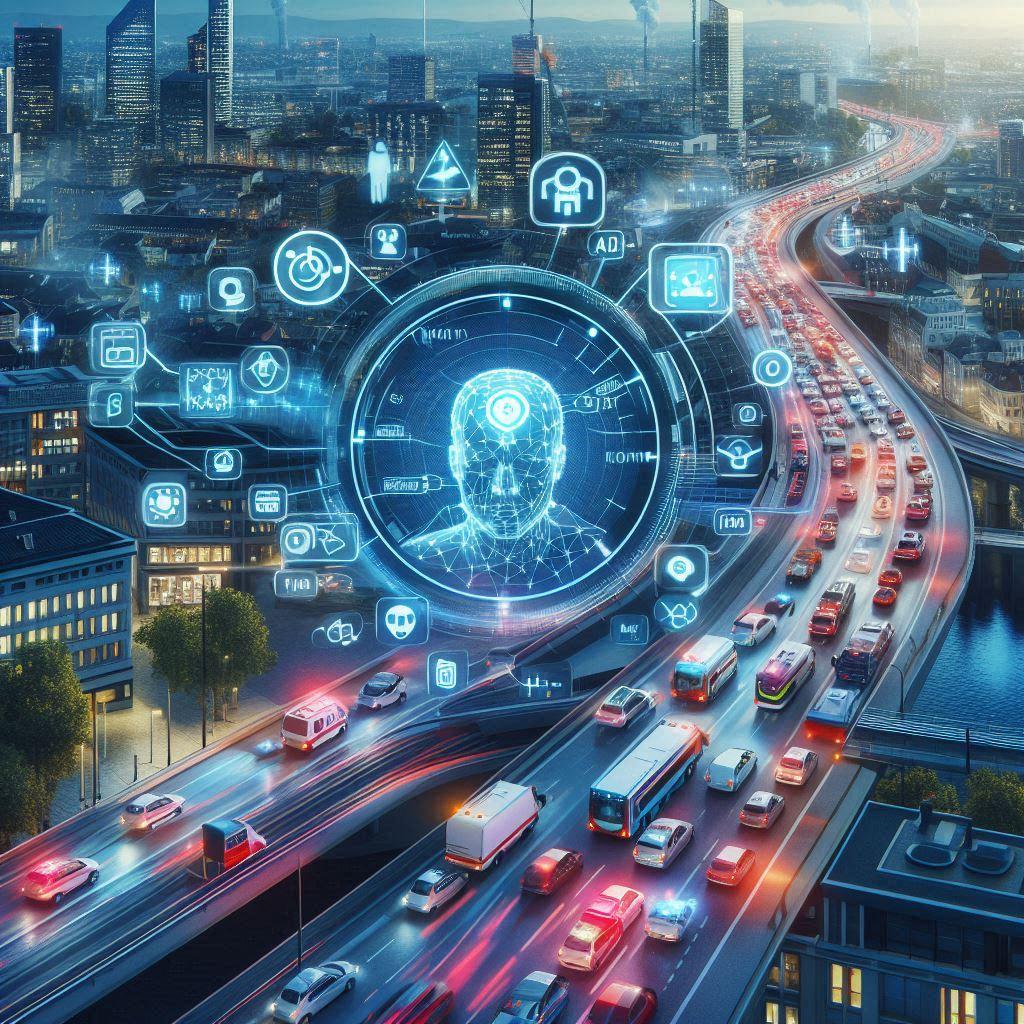
In the Armenian city of Hrazdan, just 70 kilometers from Yerevan, a project is taking shape that could redefine the region’s technological landscape. A supercomputing data center powered by thousands of NVIDIA Blackwell processors, with infrastructure capacity exceeding 100 megawatts, is set to launch in the near future. The first phase alone is valued at $500 million — but this is only the beginning.
In February 2026, Firebird AI, together with the U.S. government, announced a second phase worth $4 billion, involving 50,000 GPUs. If completed as planned, Armenia could rank among the world’s top five countries in AI computing power.
For a country of just three million people, facing geopolitical constraints and limited resources, this sounds almost improbable. Yet Armenia represents a unique convergence of factors: Soviet engineering legacy, a powerful global diaspora, an influx of relocants, and growing Western strategic interest.
An Ecosystem That Grew Against the Odds
Over the past 10–15 years, Armenia has emerged as one of the fastest-growing IT centers in the South Caucasus. Today, the sector accounts for more than 7–8% of GDP, while IT service exports continue to grow at double-digit rates.
However, this growth has been externally oriented from the start. Most companies operate in U.S. and European markets. Global firms use Armenia primarily as an engineering base rather than a decision-making center. Even successful companies like PicsArt and ServiceTitan, despite their Armenian roots, are managed from the United States.
This creates a fundamental contradiction: Armenia produces technology, but a significant share of the value is captured abroad.
Diaspora as the Engine
The roots of Armenia’s tech rise trace back to the Soviet era, when the country was known as the “Silicon Valley of the USSR”, employing around 100,000 engineers.
After the collapse of the Soviet Union, that system fragmented — but its human capital evolved into a global diaspora. This diaspora became the primary driver of Armenia’s IT renaissance.
Armenians who built careers in Silicon Valley and Europe began investing back home, launching companies and transferring expertise.
Two standout examples are PicsArt and ServiceTitan. The former has become a global platform with hundreds of millions of users, while the latter went public on NASDAQ in 2024 with a valuation exceeding $10 billion.
The diaspora does not formally control the sector, but it shapes its structure — from capital to networks and market access. According to estimates, most venture funds operating in Armenia are connected in some way to diaspora entrepreneurs.
As Samson Avetian notes:
“Only 10–15 startups have received funding from non-Armenian venture capitalists”.
The State: Incentives and Contradictions
The government’s role has largely been to stimulate growth. In recent years, Armenia has introduced tax incentives, established a Ministry of High-Tech Industry, and adopted multiple digital development strategies.
However, businesses increasingly point to a different issue: unpredictability.
Sargis Karapetyan, head of the Union of Advanced Technology Enterprises, explains:
“This creates a problem of trust. Companies begin to fear participating in government programs”.
At the same time, he emphasizes Armenia’s key strength:
“Unlike many countries in the region, our development began back in the 1990s… Today we already have a mature ecosystem”.
Yet a fundamental limitation remains:
“The main challenge is the small domestic market”.
From Outsourcing to Products
Historically, Armenia’s IT sector has been built on outsourcing. Today, that model is beginning to shift.
Global economic pressures and cost optimization have reduced demand for outsourcing services, forcing companies to rethink their strategies.
“Companies are starting to move from outsourcing to building their own products”, says Karapetyan.
This transition is reshaping the industry. Demand is rising for marketing, sales, and product management capabilities, while interest in artificial intelligence continues to grow.
“The biggest shortage is AI specialists”.
Technology and Security
At the same time, a new layer is emerging at the intersection of technology and security. Cybersecurity is becoming a national priority, with new educational and research centers being established.
Armenia is one of the few countries in the region where IT, telecommunications, and defense technologies are overseen by a single ministry.
This does not indicate militarization, but rather a gradual convergence of technology and security — a natural development given the country’s geopolitical environment.
Talent: The Core Constraint
Despite a strong educational foundation, talent shortages remain the sector’s most pressing challenge.
Even leading companies acknowledge that while the quality of specialists is high, the quantity is insufficient.
The most critical gaps include:
At the same time, brain drain continues, with professionals relocating to the U.S., Europe, and the Middle East.
Bagrat Dabaghyan of Triada Studio highlights a deeper concern:
“AI accelerates work but reduces jobs… the question is how junior specialists will become professionals if entry-level tasks are automated”.
Regional Competition
In comparison to its neighbors, Armenia occupies a distinct position.
Georgia offers simpler business conditions, while Kazakhstan provides access to capital and a larger domestic market.
Armenia’s unique advantage lies in its global diaspora.
This is not just a source of investment, but a living network connecting Yerevan with Silicon Valley and major European tech hubs.
Structural Risks
Despite its progress, Armenia’s model remains vulnerable.
Key risks include:
Energy is particularly critical: AI-scale infrastructure requires stable and affordable power — something Armenia does not yet fully have.
A Turning Point
The NVIDIA-backed project could become a defining moment. If successful, Armenia will no longer be just a supplier of engineering talent. It could become a place where global-scale technologies are built and processed.
But the central question remains: Can Armenia sustain this growth?
Can it transition from an “outsourcing + external dependence” model to one based on “products + local value creation”? And perhaps most importantly — can the state create conditions where business grows not in spite of the system, but because of it?
Journalist
Marine Kharatyan


 Latest news
Latest news
Latest newsGeorgia’s Constitutional Court Continues Case on Banning Opposition Parties: Political Pluralism at Stake
12.Oct.2026
Azerbaijan and Iran Step Up Security Contacts Amid Hijab Protests
12.Oct.2026
Personnel Shortages Complicate Ukrainian Forces’ Rotation: Ukraine Faces Long-Term Challenges on the Front Line
11.Oct.2026
Trump Eases Sanctions on Russian Fuel After Talks with Putin: Kyiv Fears Boost to Moscow’s War Revenues
10.Oct.2026
Putin Seeks to Strengthen Russia’s Influence in the Post-Soviet Space Through the CIS
10.Oct.2026
Russia and the South Caucasus: External Pressure, Political Competition and a Crisis of Trust
10.Oct.2026
Peaceful Settlement Between Armenia and Azerbaijan: Moving from Declarations to Implementation
10.Oct.2026
Moldova Ready to Accept as Many Ukrainians as Necessary if Situation Worsens This Winter
09.Oct.2026
Turkmenistan Turns Avaza into a Regional Diplomatic Hub as Caspian, Central Asian and CIS Agendas Converge
08.Oct.2026
Romania Scrambles Spanish F-18s After Aerial Targets Detected Near Ukrainian Border
07.Oct.2026
Berlin Deepens Defence Partnership with Kyiv: Germany to Provide Ukraine with €1 Billion in Military Aid
07.Oct.2026
European Parliament Against Georgian Dream: EU Prepares New Response to Tbilisi
06.Oct.2026
Bulgarian Foreign Minister to Discuss European Security and International Law in the Netherlands
05.Oct.2026
Rheinmetall in Bulgaria: Sofia Emerges as a New NATO Defence-Industrial Hub in the Balkans
05.Oct.2026
The Cost of a Long War: Moscow Expands Spending Plans Through 2029
05.Oct.2026