
 13 Oct 2026









Mandate for Stability: Radev Wins and Gets a Chance to Reset the Country
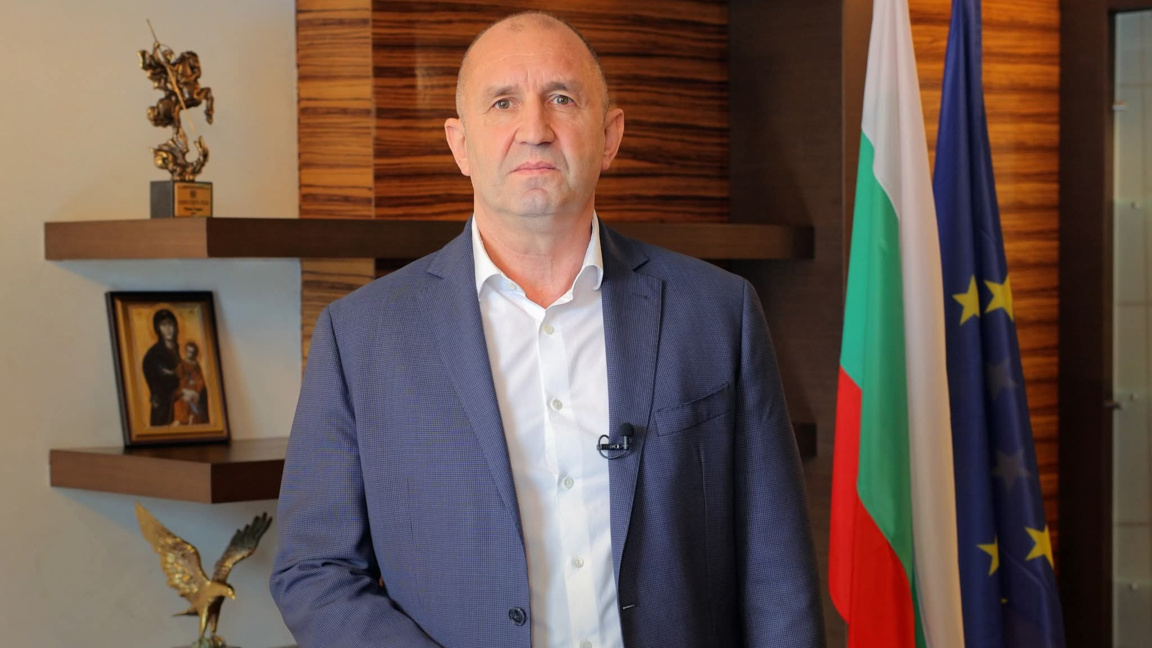
The victory of the coalition led by former president Rumen Radev in the April 19 parliamentary elections has become one of the most significant political events in Bulgaria in recent years. His bloc, “Progressive Bulgaria”, secured around 44–45% of the vote, decisively outperforming its competitors and effectively gaining the ability to form a single-party government — a rare scenario for a country whose political system has recently been defined by fragmentation and unstable coalitions.
This result is particularly notable against the backdrop of a prolonged political crisis. Over the past few years, Bulgaria has gone through a series of snap elections and frequent government changes, undermining trust in public institutions and slowing down strategic decision-making. Radev’s decisive victory may signal a growing public demand for stronger, more centralized leadership capable of ensuring stability and predictability.
The former president’s political success also reflects voter fatigue with traditional parties and their inability to form durable coalitions. Positioning himself as a more independent figure, Radev managed to consolidate protest voters as well as part of the moderate electorate, focusing on socio-economic issues and criticism of the established political elite.
At the same time, his victory could influence the country’s foreign policy direction. Radev is known for his more cautious stance on certain European Union initiatives and his emphasis on a pragmatic foreign policy approach. This does not necessarily imply a sharp shift, but Bulgaria may adopt a more autonomous position within the EU, particularly on issues such as energy and security.
The economic context is equally important. The country is in the process of transitioning to the euro and deepening its integration into European structures — a path that requires political stability and consistent policymaking. In this regard, the formation of a single-party government could accelerate decision-making, while also increasing the government’s responsibility for its outcomes.
Overall, the election results can be seen as a potential turning point: Bulgaria now has a chance to emerge from a period of political turbulence. The key question, however, is whether the new leadership will use this mandate to implement systemic reforms, or whether a high concentration of power will lead to new internal tensions.


 Latest news
Latest news
Latest newsGeorgia’s Constitutional Court Continues Case on Banning Opposition Parties: Political Pluralism at Stake
12.Oct.2026
Azerbaijan and Iran Step Up Security Contacts Amid Hijab Protests
12.Oct.2026
Personnel Shortages Complicate Ukrainian Forces’ Rotation: Ukraine Faces Long-Term Challenges on the Front Line
11.Oct.2026
Trump Eases Sanctions on Russian Fuel After Talks with Putin: Kyiv Fears Boost to Moscow’s War Revenues
10.Oct.2026
Putin Seeks to Strengthen Russia’s Influence in the Post-Soviet Space Through the CIS
10.Oct.2026
Russia and the South Caucasus: External Pressure, Political Competition and a Crisis of Trust
10.Oct.2026
Peaceful Settlement Between Armenia and Azerbaijan: Moving from Declarations to Implementation
10.Oct.2026
Moldova Ready to Accept as Many Ukrainians as Necessary if Situation Worsens This Winter
09.Oct.2026
Turkmenistan Turns Avaza into a Regional Diplomatic Hub as Caspian, Central Asian and CIS Agendas Converge
08.Oct.2026
Romania Scrambles Spanish F-18s After Aerial Targets Detected Near Ukrainian Border
07.Oct.2026
Berlin Deepens Defence Partnership with Kyiv: Germany to Provide Ukraine with €1 Billion in Military Aid
07.Oct.2026
European Parliament Against Georgian Dream: EU Prepares New Response to Tbilisi
06.Oct.2026
Bulgarian Foreign Minister to Discuss European Security and International Law in the Netherlands
05.Oct.2026
Rheinmetall in Bulgaria: Sofia Emerges as a New NATO Defence-Industrial Hub in the Balkans
05.Oct.2026
The Cost of a Long War: Moscow Expands Spending Plans Through 2029
05.Oct.2026