
 13 Oct 2026









Azerbaijan and the Czech Republic strengthen military cooperation
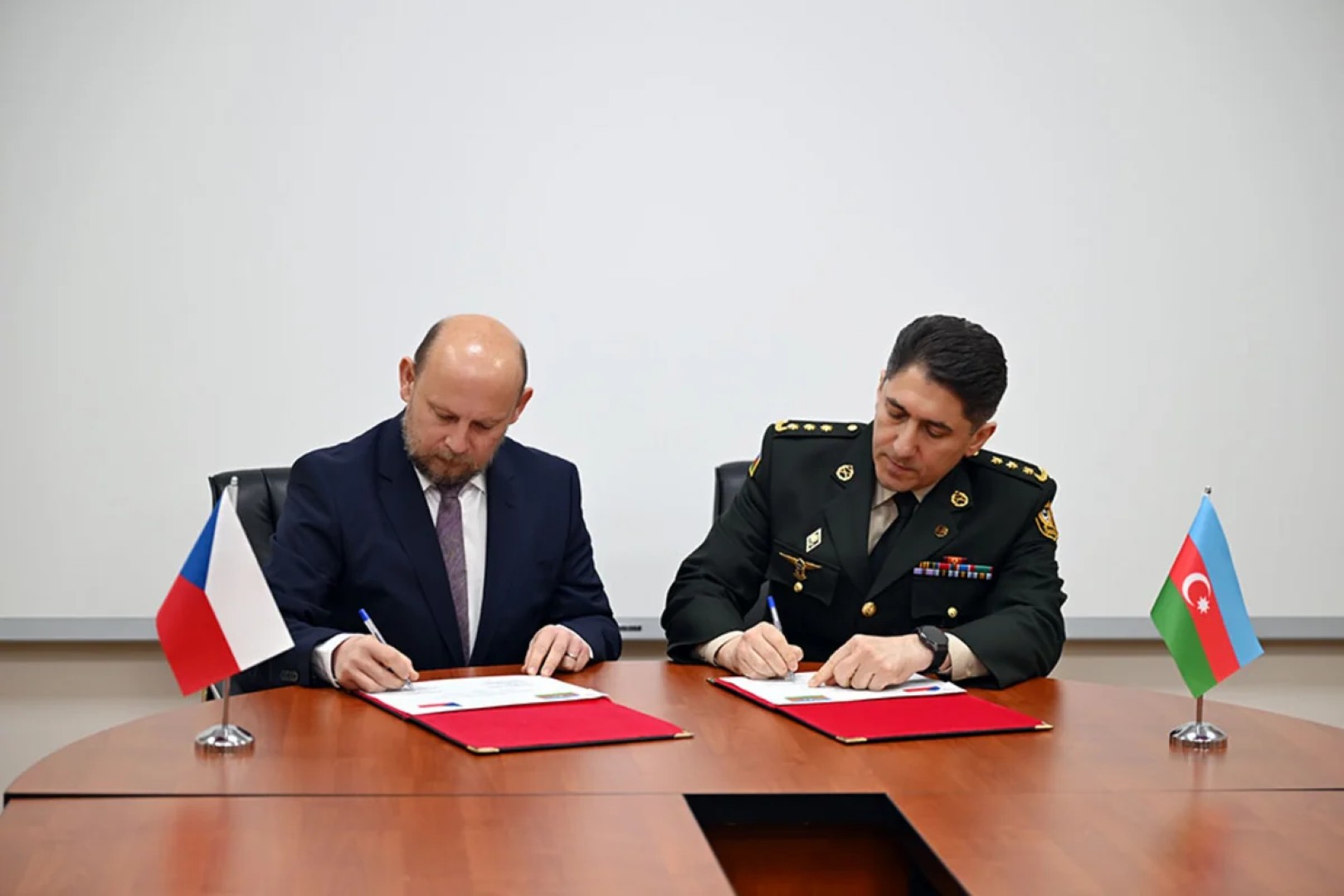
Azerbaijan and the Czech Republic have signed a bilateral military cooperation plan for 2026 — a document that formally outlines the parties’ intentions to expand defense ties, but is unlikely to mark a qualitative breakthrough in their relations. The talks took place in Baku, where the delegations reviewed the current state of cooperation and outlined general areas for future engagement.
As is often the case with such agreements, specific details remain undisclosed. Typically, they include a standard set of measures — exchanges of delegations, consultations, participation in military exercises, and training programs. These formats have long been part of international practice and generally play a supportive rather than transformative role.
For Azerbaijan, the agreement fits into its established strategy of expanding its network of partners and pursuing a multi-vector foreign policy. Baku has consistently built ties with a wide range of countries, including those in Europe, seeking to avoid overreliance on any single partner while signaling openness to cooperation with the West. At the same time, the practical impact of such agreements is often limited and tends to materialize gradually.
For the Czech Republic, participation in initiatives of this kind appears to be more about maintaining a presence in the South Caucasus and sustaining political dialogue than about implementing large-scale military projects. Despite having a developed defense industry, Prague is not among the key actors shaping the regional balance of power, making its role in this context largely supplementary.
In a broader context, the signing reflects the continued interest of European countries in the South Caucasus amid ongoing shifts in the regional security architecture. However, it would be premature to speak of any significant deepening of military cooperation at this stage: such plans often serve more as diplomatic instruments and signals of intent than as mechanisms for rapid and tangible expansion of defense ties.


 Latest news
Latest news
Latest newsGeorgia’s Constitutional Court Continues Case on Banning Opposition Parties: Political Pluralism at Stake
12.Oct.2026
Azerbaijan and Iran Step Up Security Contacts Amid Hijab Protests
12.Oct.2026
Personnel Shortages Complicate Ukrainian Forces’ Rotation: Ukraine Faces Long-Term Challenges on the Front Line
11.Oct.2026
Trump Eases Sanctions on Russian Fuel After Talks with Putin: Kyiv Fears Boost to Moscow’s War Revenues
10.Oct.2026
Putin Seeks to Strengthen Russia’s Influence in the Post-Soviet Space Through the CIS
10.Oct.2026
Russia and the South Caucasus: External Pressure, Political Competition and a Crisis of Trust
10.Oct.2026
Peaceful Settlement Between Armenia and Azerbaijan: Moving from Declarations to Implementation
10.Oct.2026
Moldova Ready to Accept as Many Ukrainians as Necessary if Situation Worsens This Winter
09.Oct.2026
Turkmenistan Turns Avaza into a Regional Diplomatic Hub as Caspian, Central Asian and CIS Agendas Converge
08.Oct.2026
Romania Scrambles Spanish F-18s After Aerial Targets Detected Near Ukrainian Border
07.Oct.2026
Berlin Deepens Defence Partnership with Kyiv: Germany to Provide Ukraine with €1 Billion in Military Aid
07.Oct.2026
European Parliament Against Georgian Dream: EU Prepares New Response to Tbilisi
06.Oct.2026
Bulgarian Foreign Minister to Discuss European Security and International Law in the Netherlands
05.Oct.2026
Rheinmetall in Bulgaria: Sofia Emerges as a New NATO Defence-Industrial Hub in the Balkans
05.Oct.2026
The Cost of a Long War: Moscow Expands Spending Plans Through 2029
05.Oct.2026