
 13 Oct 2026









EUPM Armenia begins operations amid rising hybrid threats and the growing role of the EU in the region
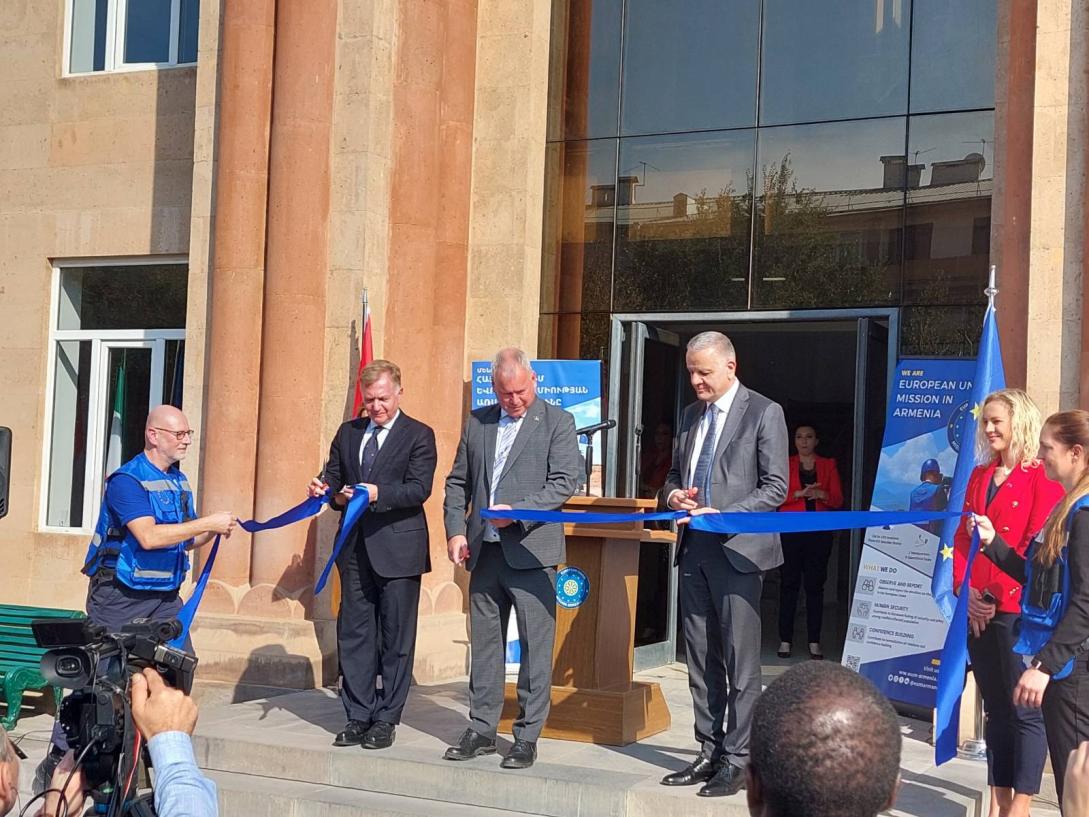
In the coming months, a new European Union mission — EUPM Armenia (European Union Partnership
Mission in the Republic of Armenia) — is set to begin operations in
Armenia. It will have a two-year mandate and consist of a limited contingent of
European advisors.
The decision to establish the mission was made at the
request of the Armenian side and unanimously approved by EU ambassadors. EUPM
Armenia will succeed the EU Monitoring Mission (EUMA), which has been operating
since 2023, focusing on monitoring the Armenia–Azerbaijan border situation and
building confidence in the region. Unlike its predecessor, the new mission
shifts its focus from observation to institutional and reform-oriented support.
The main objectives of EUPM Armenia include strengthening
the rule of law, reforming the police, supporting democratic institutions, and
developing mechanisms to counter hybrid threats, cyberattacks, and
disinformation. It is emphasized that the mission is civilian in nature and
does not have a military mandate.
The launch of the mission comes amid preparations for the
2026 parliamentary elections and increasing information competition in the
region. European structures view EUPM Armenia as a tool for long-term support
of state institutional resilience, although its effectiveness parameters remain
largely flexible and will be determined through practical implementation on the
ground.
European expert circles note that the mission reflects a
broader EU approach toward Armenia, where the emphasis is not on security in
the traditional military sense, but on institutional transformation, improved
governance transparency, and strengthening democratic mechanisms. In this
context, Armenia is seen as a country undergoing structural reforms with active
external support from European institutions.
Particular attention is given to information and
cybersecurity. Amid the rise of disinformation campaigns and hybrid pressure in
the region, the mission is viewed as one of the instruments to counter foreign
information interference. Experts link this to the overall increase in
competition for influence in the South Caucasus information space.
At the same time, it is stressed that EUPM Armenia is not a
security instrument in the military sense and cannot provide defense
guarantees. Its function is to accompany reforms and strengthen the
institutional resilience of the state.
In parallel, the mission is seen as part of a broader EU
strategy in the region aimed at deepening political dialogue with Armenia,
developing democratic institutions, and gradually integrating the country into
European governance standards.
Thus, the launch of EUPM Armenia represents an important
milestone in the transformation of relations between Armenia and the European
Union, marking a shift from an observation-based model of engagement toward a
deeper form of EU institutional involvement in Armenia’s internal reform
processes.
Journalist,
Marine Kharatyan


 Latest news
Latest news
Latest newsGeorgia’s Constitutional Court Continues Case on Banning Opposition Parties: Political Pluralism at Stake
12.Oct.2026
Azerbaijan and Iran Step Up Security Contacts Amid Hijab Protests
12.Oct.2026
Personnel Shortages Complicate Ukrainian Forces’ Rotation: Ukraine Faces Long-Term Challenges on the Front Line
11.Oct.2026
Trump Eases Sanctions on Russian Fuel After Talks with Putin: Kyiv Fears Boost to Moscow’s War Revenues
10.Oct.2026
Putin Seeks to Strengthen Russia’s Influence in the Post-Soviet Space Through the CIS
10.Oct.2026
Russia and the South Caucasus: External Pressure, Political Competition and a Crisis of Trust
10.Oct.2026
Peaceful Settlement Between Armenia and Azerbaijan: Moving from Declarations to Implementation
10.Oct.2026
Moldova Ready to Accept as Many Ukrainians as Necessary if Situation Worsens This Winter
09.Oct.2026
Turkmenistan Turns Avaza into a Regional Diplomatic Hub as Caspian, Central Asian and CIS Agendas Converge
08.Oct.2026
Romania Scrambles Spanish F-18s After Aerial Targets Detected Near Ukrainian Border
07.Oct.2026
Berlin Deepens Defence Partnership with Kyiv: Germany to Provide Ukraine with €1 Billion in Military Aid
07.Oct.2026
European Parliament Against Georgian Dream: EU Prepares New Response to Tbilisi
06.Oct.2026
Bulgarian Foreign Minister to Discuss European Security and International Law in the Netherlands
05.Oct.2026
Rheinmetall in Bulgaria: Sofia Emerges as a New NATO Defence-Industrial Hub in the Balkans
05.Oct.2026
The Cost of a Long War: Moscow Expands Spending Plans Through 2029
05.Oct.2026