
 13 Oct 2026









Ukrainian Drones Strike Oil Refinery in Ryazan
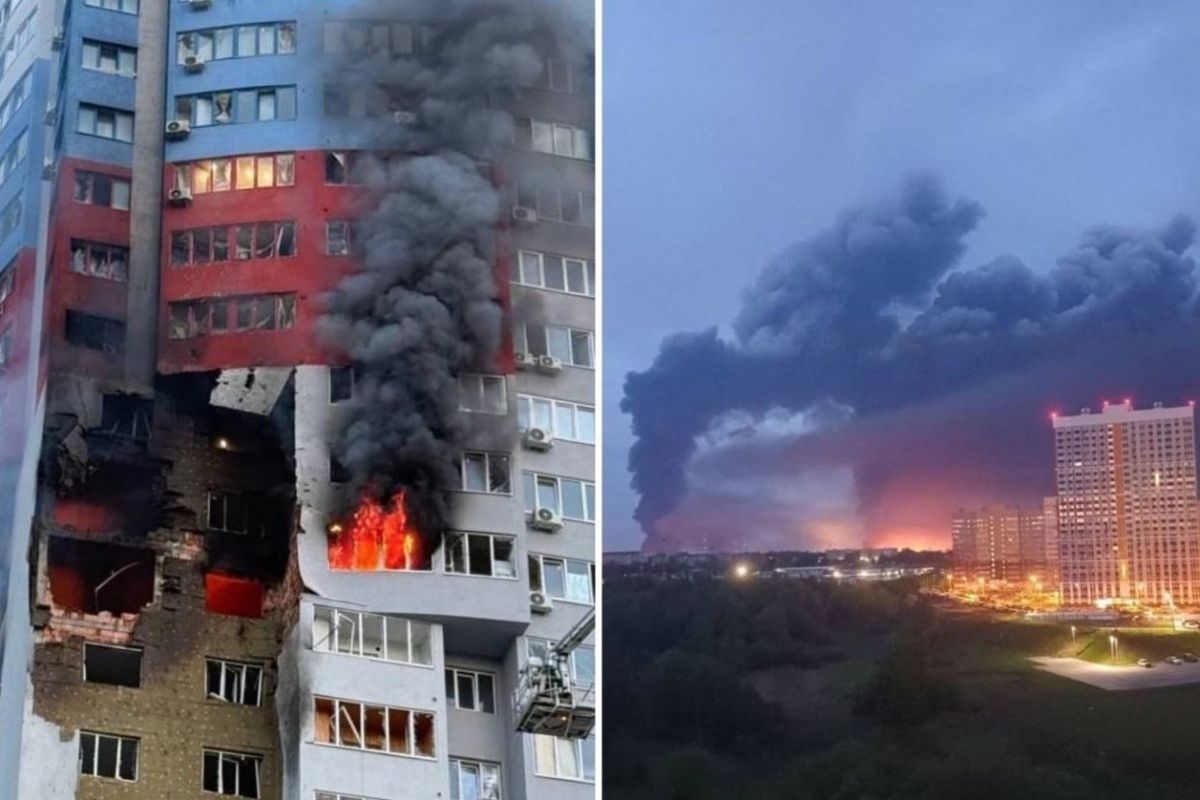
Ukrainian drones attacked an oil refinery in the Russian city of Ryazan during the night of May 15, targeting one of the country’s largest oil-processing centers. According to the Ukrainian General Staff, the strike caused a major fire at the facility. The Ryazan refinery, owned by Rosneft, is located about 200 kilometers southeast of Moscow and is considered a strategically important part of Russia’s energy infrastructure.
The Ukrainian side stated that the attack was part of a broader operation targeting military and infrastructure facilities across Russian territory. Commander of Ukraine’s Unmanned Systems Forces, Robert Brovdi, said that 23 targets were struck overnight, including fuel and military infrastructure sites. In addition to Ryazan, Kyiv claimed that Ukrainian drones also targeted facilities linked to Russia’s Caspian Flotilla in Dagestan.
Russian authorities confirmed the drone attack on the region. Ryazan Governor Pavel Malkov reported damage to residential buildings and civilian casualties. According to Reuters, at least four people were killed, including a child, while more than ten others were injured.
The Ryazan oil refinery plays a key role in supplying Russia’s domestic market with gasoline, diesel fuel, and aviation kerosene. Industry analysts estimate that the facility processes around 5% of Russia’s total crude oil output. This is one of the reasons why such sites have increasingly become targets of Ukraine’s long-range drone campaign.
Since the beginning of 2026, Ukraine has significantly intensified strikes against Russian oil infrastructure. Refineries, fuel depots, and export terminals across multiple regions have repeatedly come under attack. Kyiv views these operations as a way to reduce Russia’s energy revenues, disrupt military fuel supplies, and increase economic pressure on Moscow.
The series of attacks has already led to the temporary shutdown of a significant portion of Russia’s refining capacity. Exports of petroleum products through Russian seaports have started to decline, while energy companies are being forced to spend more on repairs and the reinforcement of air defense systems.
Military analysts note that the conflict is increasingly shifting toward mutual strikes on critical infrastructure. While military targets near the front line once dominated operations, both sides are now seeking to damage each other’s economies and logistical networks far beyond the battlefield. Against the backdrop of stalled peace negotiations, such attacks may become a permanent feature of the war, increasing both economic and psychological pressure on Russia and Ukraine alike.


 Latest news
Latest news
Latest newsGeorgia’s Constitutional Court Continues Case on Banning Opposition Parties: Political Pluralism at Stake
12.Oct.2026
Azerbaijan and Iran Step Up Security Contacts Amid Hijab Protests
12.Oct.2026
Personnel Shortages Complicate Ukrainian Forces’ Rotation: Ukraine Faces Long-Term Challenges on the Front Line
11.Oct.2026
Trump Eases Sanctions on Russian Fuel After Talks with Putin: Kyiv Fears Boost to Moscow’s War Revenues
10.Oct.2026
Putin Seeks to Strengthen Russia’s Influence in the Post-Soviet Space Through the CIS
10.Oct.2026
Russia and the South Caucasus: External Pressure, Political Competition and a Crisis of Trust
10.Oct.2026
Peaceful Settlement Between Armenia and Azerbaijan: Moving from Declarations to Implementation
10.Oct.2026
Moldova Ready to Accept as Many Ukrainians as Necessary if Situation Worsens This Winter
09.Oct.2026
Turkmenistan Turns Avaza into a Regional Diplomatic Hub as Caspian, Central Asian and CIS Agendas Converge
08.Oct.2026
Romania Scrambles Spanish F-18s After Aerial Targets Detected Near Ukrainian Border
07.Oct.2026
Berlin Deepens Defence Partnership with Kyiv: Germany to Provide Ukraine with €1 Billion in Military Aid
07.Oct.2026
European Parliament Against Georgian Dream: EU Prepares New Response to Tbilisi
06.Oct.2026
Bulgarian Foreign Minister to Discuss European Security and International Law in the Netherlands
05.Oct.2026
Rheinmetall in Bulgaria: Sofia Emerges as a New NATO Defence-Industrial Hub in the Balkans
05.Oct.2026
The Cost of a Long War: Moscow Expands Spending Plans Through 2029
05.Oct.2026