
 13 Oct 2026









Beijing’s Hidden Role: Chinese Military Training for Russian Forces Revealed
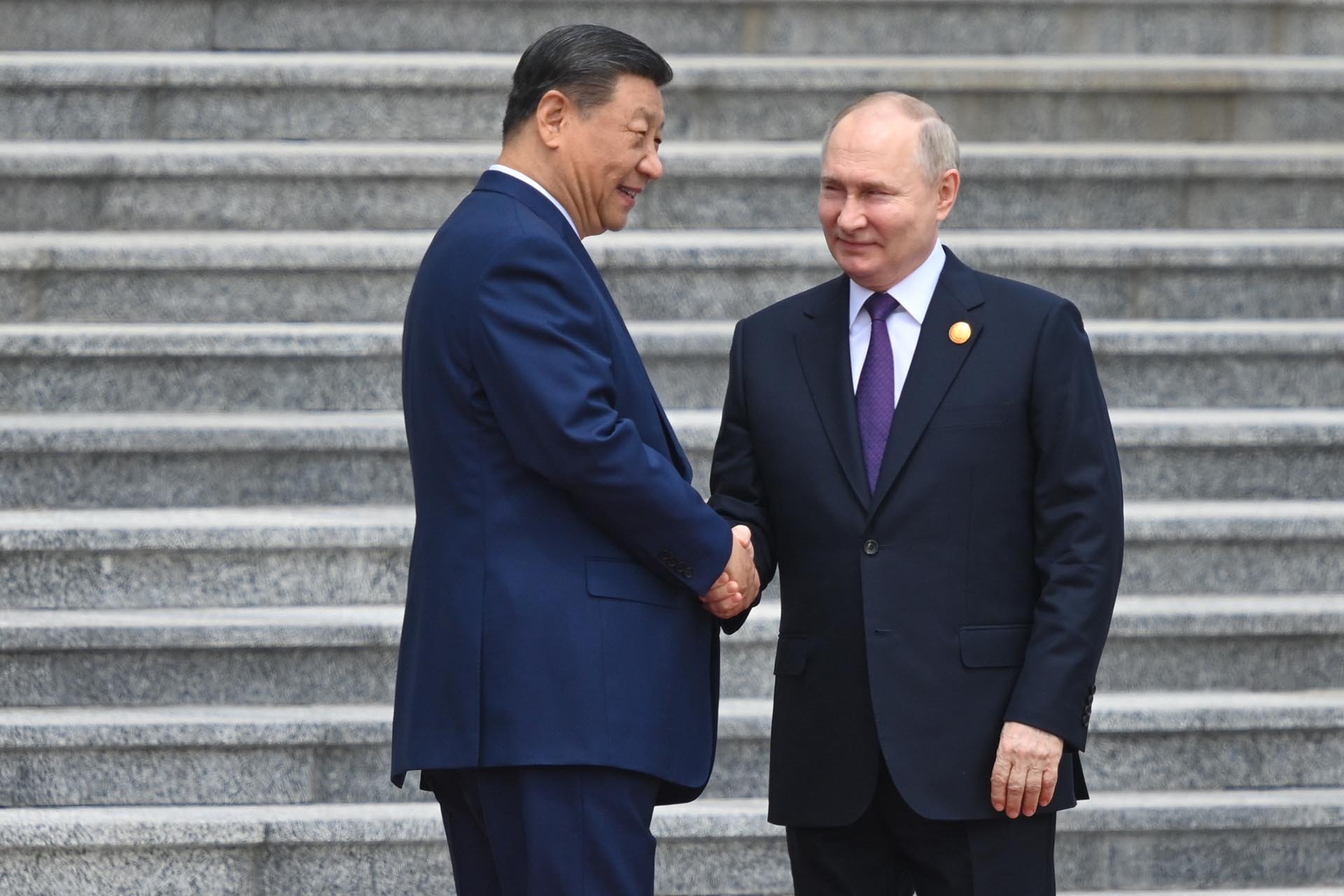
China appears to have become far more deeply involved in the Russia–Ukraine war than officially acknowledged. In late 2025, around 200 Russian servicemen reportedly underwent secret military training in China, after which some of them returned to the battlefield in Ukraine. This was not merely a symbolic exchange of experience, but a comprehensive training program that included drone operations, electronic warfare, army aviation, and mechanized infantry tactics.
According to Reuters, the bilateral agreement was signed on July 2, 2025, by senior Russian and Chinese military officials in Beijing. The training reportedly took place at military facilities in Beijing, Nanjing, Zhengzhou, Shijiazhuang, and Yibin. Documents cited in the report also indicate that Chinese military personnel were expected to undergo reciprocal training in Russia. Intelligence sources claim that some of the Russian soldiers who completed the program have already been spotted in Crimea and the Zaporizhzhia region, where they are applying newly acquired skills in modern drone warfare.
The revelations are particularly sensitive given Beijing’s repeated claims of maintaining a “neutral position” on the war in Ukraine. China has consistently portrayed itself as a supporter of peace negotiations while criticizing Western sanctions against Moscow, yet it has avoided openly admitting direct military assistance to Russia. The new reports suggest that cooperation between the two countries may be evolving beyond economic and technological support into a more discreet military-operational partnership.
Particular attention has focused on the drone warfare component of the program. Over the past two years, the war in Ukraine has effectively become the world’s largest testing ground for FPV drones, reconnaissance UAVs, and electronic warfare systems. China, which possesses one of the world’s most advanced drone industries, is effectively gaining an opportunity to study modern warfare through Russia’s battlefield experience while simultaneously transferring its own technological expertise to Moscow. For Beijing, this may represent not only support for a strategic partner but also preparation for potential future conflicts, especially scenarios involving Taiwan.
In Western capitals, such reports are likely to reinforce perceptions of an emerging informal geopolitical axis involving Russia, China, Iran, and North Korea. In recent years, Reuters and other Western media outlets have already published investigations into Chinese components used in Russian drones, joint UAV development projects, and the alleged presence of Chinese specialists at Russian defense industry facilities.
What makes the current revelations particularly significant is that the issue is no longer limited to sanctions evasion or the supply of dual-use technology. Instead, it involves the direct training of military personnel — a qualitatively new level of involvement that could increase political pressure from the United States and the European Union on Beijing. This comes at a time when the administration of Donald Trump is simultaneously attempting to maintain dialogue with China while also preventing further strategic alignment between Beijing and Moscow.
Analysts also note that Russia is increasingly seeking external sources of manpower, technological expertise, and industrial support in order to sustain the war effort. Previous reports have pointed to the involvement of foreign volunteers and mercenaries, as well as Russia’s growing dependence on Chinese electronics and industrial components for its defense sector. The reports have already triggered strong reactions on social media. Some observers argue that China has effectively abandoned neutrality and is becoming a covert ally of Moscow. Others believe Beijing is primarily using the war as an opportunity to test military technologies and deepen Russia’s long-term economic and strategic dependence on China.


 Latest news
Latest news
Latest newsGeorgia’s Constitutional Court Continues Case on Banning Opposition Parties: Political Pluralism at Stake
12.Oct.2026
Azerbaijan and Iran Step Up Security Contacts Amid Hijab Protests
12.Oct.2026
Personnel Shortages Complicate Ukrainian Forces’ Rotation: Ukraine Faces Long-Term Challenges on the Front Line
11.Oct.2026
Trump Eases Sanctions on Russian Fuel After Talks with Putin: Kyiv Fears Boost to Moscow’s War Revenues
10.Oct.2026
Putin Seeks to Strengthen Russia’s Influence in the Post-Soviet Space Through the CIS
10.Oct.2026
Russia and the South Caucasus: External Pressure, Political Competition and a Crisis of Trust
10.Oct.2026
Peaceful Settlement Between Armenia and Azerbaijan: Moving from Declarations to Implementation
10.Oct.2026
Moldova Ready to Accept as Many Ukrainians as Necessary if Situation Worsens This Winter
09.Oct.2026
Turkmenistan Turns Avaza into a Regional Diplomatic Hub as Caspian, Central Asian and CIS Agendas Converge
08.Oct.2026
Romania Scrambles Spanish F-18s After Aerial Targets Detected Near Ukrainian Border
07.Oct.2026
Berlin Deepens Defence Partnership with Kyiv: Germany to Provide Ukraine with €1 Billion in Military Aid
07.Oct.2026
European Parliament Against Georgian Dream: EU Prepares New Response to Tbilisi
06.Oct.2026
Bulgarian Foreign Minister to Discuss European Security and International Law in the Netherlands
05.Oct.2026
Rheinmetall in Bulgaria: Sofia Emerges as a New NATO Defence-Industrial Hub in the Balkans
05.Oct.2026
The Cost of a Long War: Moscow Expands Spending Plans Through 2029
05.Oct.2026