
 13 Oct 2026









Russia and China Strengthen Coordination on Key International Issues
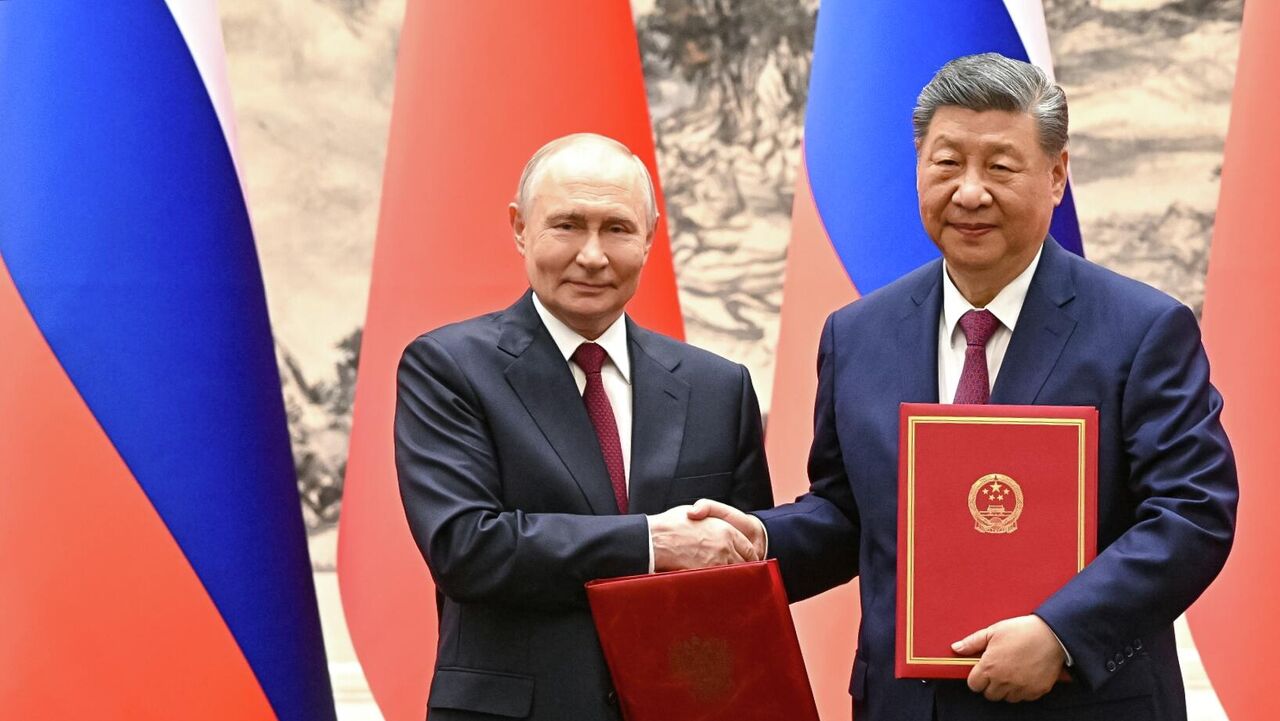
Russian President Vladimir Putin and Chinese President Xi Jinping held talks in Beijing, during which Moscow and Beijing reaffirmed their commitment to deepening their strategic partnership. The leaders discussed international security issues, economic cooperation, and the situation in the Arctic.
Particular attention during the meeting was devoted to global stability and the evolving military-political environment. Russia and China opposed the militarization of the Arctic, emphasizing the need to preserve the region as a zone of international cooperation and sustainable development. In their joint statements, both sides expressed concern over the growing military presence of NATO countries in the Arctic region.
In addition, Moscow and Beijing criticized the U.S. missile defense system “Golden Dome,” arguing that such projects could undermine the strategic balance and heighten international tensions. The Kremlin stated that Russia and China intend to coordinate their positions on global security issues through international platforms and multilateral institutions.
Following the talks, the two sides confirmed their readiness to expand trade and economic cooperation, increase settlements in national currencies, and deepen collaboration in energy, transportation, and high technology sectors. The Russian president’s visit to China is widely seen as another sign of the growing rapprochement between the two countries amid continuing tensions with the West.
Analysts note that the current stage of Russia-China relations extends far beyond a traditional economic partnership. Against the backdrop of sanctions pressure from the United States and the European Union, Russia is increasingly redirecting its trade, logistics, and financial mechanisms toward Asia, particularly China. For Beijing, cooperation with Moscow remains an important element of its broader strategy to counter U.S. influence and promote a multipolar world order.
The Arctic agenda is also gaining strategic importance. The Arctic is emerging as one of the key arenas of global competition due to its vast natural resources and the growing significance of the Northern Sea Route. Russia is interested in attracting Chinese investment and technology for the development of the region, while China seeks to strengthen its presence in the Arctic as a self-described “near-Arctic state”. Their joint criticism of the militarization of the region reflects Moscow and Beijing’s attempt to promote an alternative model of regional cooperation in contrast to NATO’s expanding presence in the North.
The criticism of the “Golden Dome” missile defense initiative also highlights the growing concerns in Moscow and Beijing over U.S. defense projects. According to experts, both Russia and China fear that the expansion of American missile defense capabilities could eventually weaken their nuclear deterrence potential. As a result, the two countries are increasingly demonstrating coordinated positions on strategic security matters.
The talks in Beijing demonstrate that Russia-China rapprochement is becoming increasingly institutionalized and strategic in nature. Despite the continuing imbalance in the economic capabilities of the two countries, Moscow and Beijing appear determined to build a long-term political and geo-economic partnership capable of reshaping the balance of power across Eurasia and in global politics more broadly.


 Latest news
Latest news
Latest newsGeorgia’s Constitutional Court Continues Case on Banning Opposition Parties: Political Pluralism at Stake
12.Oct.2026
Azerbaijan and Iran Step Up Security Contacts Amid Hijab Protests
12.Oct.2026
Personnel Shortages Complicate Ukrainian Forces’ Rotation: Ukraine Faces Long-Term Challenges on the Front Line
11.Oct.2026
Trump Eases Sanctions on Russian Fuel After Talks with Putin: Kyiv Fears Boost to Moscow’s War Revenues
10.Oct.2026
Putin Seeks to Strengthen Russia’s Influence in the Post-Soviet Space Through the CIS
10.Oct.2026
Russia and the South Caucasus: External Pressure, Political Competition and a Crisis of Trust
10.Oct.2026
Peaceful Settlement Between Armenia and Azerbaijan: Moving from Declarations to Implementation
10.Oct.2026
Moldova Ready to Accept as Many Ukrainians as Necessary if Situation Worsens This Winter
09.Oct.2026
Turkmenistan Turns Avaza into a Regional Diplomatic Hub as Caspian, Central Asian and CIS Agendas Converge
08.Oct.2026
Romania Scrambles Spanish F-18s After Aerial Targets Detected Near Ukrainian Border
07.Oct.2026
Berlin Deepens Defence Partnership with Kyiv: Germany to Provide Ukraine with €1 Billion in Military Aid
07.Oct.2026
European Parliament Against Georgian Dream: EU Prepares New Response to Tbilisi
06.Oct.2026
Bulgarian Foreign Minister to Discuss European Security and International Law in the Netherlands
05.Oct.2026
Rheinmetall in Bulgaria: Sofia Emerges as a New NATO Defence-Industrial Hub in the Balkans
05.Oct.2026
The Cost of a Long War: Moscow Expands Spending Plans Through 2029
05.Oct.2026