
 13 Oct 2026









Europe Without Washington: Berlin Discusses a New Format of Support for Ukraine
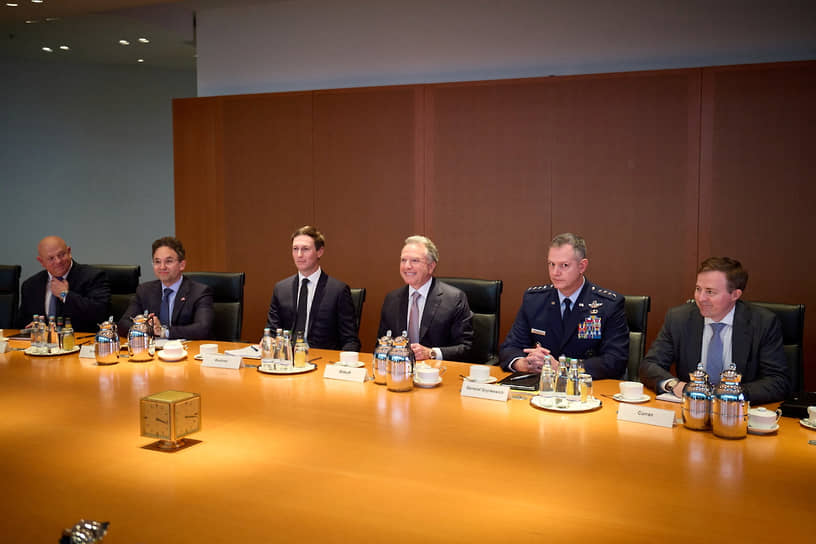
Against the backdrop of the ongoing war in Ukraine and the increasingly visible decline of Washington’s interest in direct involvement in the peace process, closed-door consultations are taking place in Berlin between representatives of Ukraine, Germany, France, and the United Kingdom. According to European diplomatic sources, the meetings are being held in a narrow format and are focused on several key areas at once — coordinating further military assistance to Kyiv, developing a unified European position on possible negotiations with Russia, and preparing for a potential change in the role of the United States in the Ukrainian conflict.
Sources within European institutions say the current consultations represent one of the most serious attempts yet by Europe to build its own framework for supporting Ukraine without complete dependence on the American line. The renewed diplomatic activity was reportedly triggered by recent statements from members of the US administration calling for a “reassessment of approaches” to the conflict and a reduction in Washington’s involvement in the prolonged negotiation process.
According to available information, Germany and France are advocating the creation of a permanent coordination mechanism between leading European countries and Kyiv. Such a structure would allow faster coordination of arms deliveries, financing for Ukraine’s defense industry, and the training of Ukrainian military personnel. The United Kingdom, meanwhile, continues to insist on maintaining the toughest possible stance toward Moscow and opposes any premature compromises.
One of the key topics under discussion remains the prospect of new negotiations between Russia and Ukraine. European diplomats fear that if US activity declines further, Moscow could attempt to increase pressure both on the battlefield and politically in order to secure more favorable conditions for a possible ceasefire. Various mediation formats are reportedly being discussed in Berlin, including an expanded role for Turkiye, Gulf states, and several Eastern European countries.
At the same time, serious disagreements remain within Europe regarding the future strategy toward the conflict. Some politicians in Germany and France are increasingly speaking about the need to seek gradual de-escalation, citing concerns over growing economic pressure and rising military expenditures. In contrast, London and several Eastern European states believe that any weakening of support for Ukraine could be interpreted by Russia as a sign of Western weakness.
Experts note that the current consultations in Berlin reflect a broader transformation of European security policy. For the first time in years, leading EU countries and the United Kingdom are effectively discussing the possibility of managing Europe’s largest military crisis without the decisive role of the United States. For this reason, the talks are being viewed not merely as another meeting on Ukraine, but as a test of Europe’s ability to act as an independent geopolitical center of power.


 Latest news
Latest news
Latest newsGeorgia’s Constitutional Court Continues Case on Banning Opposition Parties: Political Pluralism at Stake
12.Oct.2026
Azerbaijan and Iran Step Up Security Contacts Amid Hijab Protests
12.Oct.2026
Personnel Shortages Complicate Ukrainian Forces’ Rotation: Ukraine Faces Long-Term Challenges on the Front Line
11.Oct.2026
Trump Eases Sanctions on Russian Fuel After Talks with Putin: Kyiv Fears Boost to Moscow’s War Revenues
10.Oct.2026
Putin Seeks to Strengthen Russia’s Influence in the Post-Soviet Space Through the CIS
10.Oct.2026
Russia and the South Caucasus: External Pressure, Political Competition and a Crisis of Trust
10.Oct.2026
Peaceful Settlement Between Armenia and Azerbaijan: Moving from Declarations to Implementation
10.Oct.2026
Moldova Ready to Accept as Many Ukrainians as Necessary if Situation Worsens This Winter
09.Oct.2026
Turkmenistan Turns Avaza into a Regional Diplomatic Hub as Caspian, Central Asian and CIS Agendas Converge
08.Oct.2026
Romania Scrambles Spanish F-18s After Aerial Targets Detected Near Ukrainian Border
07.Oct.2026
Berlin Deepens Defence Partnership with Kyiv: Germany to Provide Ukraine with €1 Billion in Military Aid
07.Oct.2026
European Parliament Against Georgian Dream: EU Prepares New Response to Tbilisi
06.Oct.2026
Bulgarian Foreign Minister to Discuss European Security and International Law in the Netherlands
05.Oct.2026
Rheinmetall in Bulgaria: Sofia Emerges as a New NATO Defence-Industrial Hub in the Balkans
05.Oct.2026
The Cost of a Long War: Moscow Expands Spending Plans Through 2029
05.Oct.2026