
 13 Oct 2026









Ankara Turns Defense Industry into a Tool of Global Influence
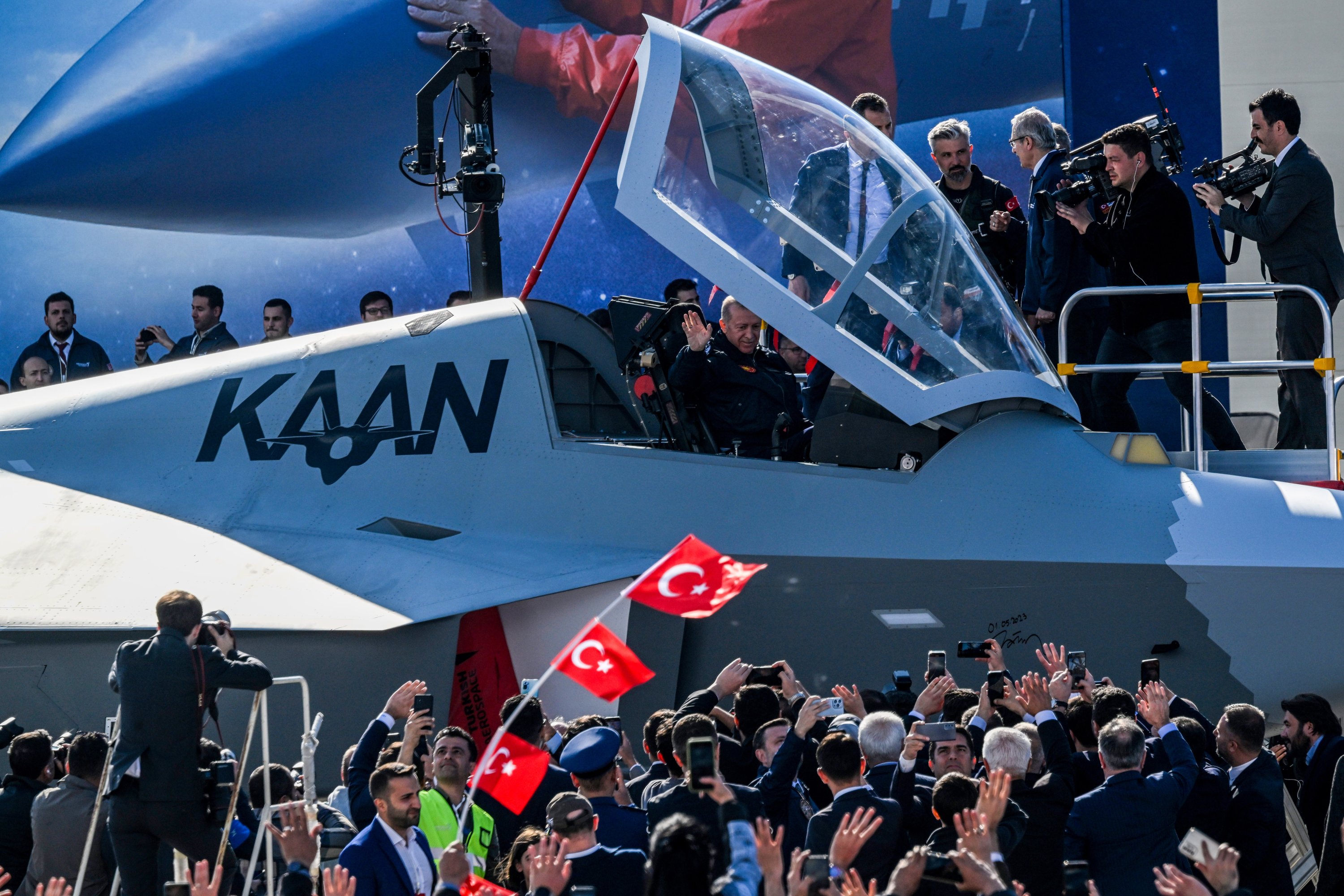
Turkiye is seeking to significantly increase its arms exports and strengthen its position in the global defense market amid large-scale Western rearmament efforts and shifting international security dynamics. Over the past two decades, Ankara has transformed its defense industry from a sector heavily dependent on foreign suppliers into one of the world's fastest-growing producers of military equipment. Today, Turkish-made defense products are exported to nearly 40 countries across Europe, Asia, Africa, and the Middle East, and the government aims to capitalize on rising global demand to further expand its international presence.
Turkiye’s defense exports reached $10 billion in 2025, more than tripling compared to 2021. Exports to Europe and the United States alone increased almost fourfold during the same period, reaching $5.6 billion. Defense products now account for approximately 3.7% of Turkiye’s total exports, making the sector an increasingly important source of foreign currency revenues for the national economy.
Much of this success has been driven by companies such as Baykar, Turkish Aerospace Industries, and other manufacturers specializing in unmanned aerial vehicles, munitions, armored vehicles, and advanced weapons systems. Turkish-made Bayraktar combat drones have become particularly well known after being deployed in several conflicts in recent years and have emerged as a symbol of the country’s growing technological capabilities. According to industry estimates cited by Reuters, Turkiye now supplies roughly 65% of the global armed drone market.
The rapid expansion of Turkiye’s defense industry comes at a time of surging military spending worldwide. International studies indicate that global defense expenditures have increased by 24% over the past five years, approaching $2.9 trillion, while military spending in Europe has risen by approximately 75%. Following the outbreak of the war in Ukraine, European governments accelerated the modernization of their armed forces, seeking to reduce dependence on traditional suppliers and strengthen their defense capabilities. In this environment, Turkish manufacturers have positioned themselves as competitive alternatives, often offering products that are more affordable, available more quickly, and easier to adapt to customer requirements than many Western counterparts.
Additional opportunities for Ankara have emerged as NATO members reassess defense priorities and alliance structures. Amid ongoing debates over the future scale of U.S. military involvement in Europe, many allies increasingly view Turkiye not only as a strategic outpost on NATO’s southeastern flank but also as an important industrial partner. Turkish officials hope to use the upcoming NATO summit in Ankara to promote new export agreements and joint production projects with European countries.
At the same time, Turkiye still faces challenges in expanding further into the European defense market. Ankara remains excluded from certain European Union defense initiatives, including some funding mechanisms for joint military projects. Political disagreements between Turkiye and several European governments on foreign policy and domestic issues also continue to complicate cooperation. Nevertheless, Turkish defense companies have already secured contracts with Poland, Romania, Spain, and Portugal. Baykar has also acquired the Italian aerospace manufacturer Piaggio Aerospace and launched cooperation with Leonardo on joint defense production projects.
Analysts believe that the continued growth of Turkiye’s defense sector will have implications far beyond economics. Situated between the war in Ukraine and the instability of the Middle East, Turkiye is seeking to strengthen its own security while simultaneously using its defense industry as a tool of foreign policy and strategic influence. If current growth trends continue, Ankara could significantly expand its role in both European and global arms markets, solidifying its position as one of the leading players in the emerging international defense industry.


 Latest news
Latest news
Latest newsGeorgia’s Constitutional Court Continues Case on Banning Opposition Parties: Political Pluralism at Stake
12.Oct.2026
Azerbaijan and Iran Step Up Security Contacts Amid Hijab Protests
12.Oct.2026
Personnel Shortages Complicate Ukrainian Forces’ Rotation: Ukraine Faces Long-Term Challenges on the Front Line
11.Oct.2026
Trump Eases Sanctions on Russian Fuel After Talks with Putin: Kyiv Fears Boost to Moscow’s War Revenues
10.Oct.2026
Putin Seeks to Strengthen Russia’s Influence in the Post-Soviet Space Through the CIS
10.Oct.2026
Russia and the South Caucasus: External Pressure, Political Competition and a Crisis of Trust
10.Oct.2026
Peaceful Settlement Between Armenia and Azerbaijan: Moving from Declarations to Implementation
10.Oct.2026
Moldova Ready to Accept as Many Ukrainians as Necessary if Situation Worsens This Winter
09.Oct.2026
Turkmenistan Turns Avaza into a Regional Diplomatic Hub as Caspian, Central Asian and CIS Agendas Converge
08.Oct.2026
Romania Scrambles Spanish F-18s After Aerial Targets Detected Near Ukrainian Border
07.Oct.2026
Berlin Deepens Defence Partnership with Kyiv: Germany to Provide Ukraine with €1 Billion in Military Aid
07.Oct.2026
European Parliament Against Georgian Dream: EU Prepares New Response to Tbilisi
06.Oct.2026
Bulgarian Foreign Minister to Discuss European Security and International Law in the Netherlands
05.Oct.2026
Rheinmetall in Bulgaria: Sofia Emerges as a New NATO Defence-Industrial Hub in the Balkans
05.Oct.2026
The Cost of a Long War: Moscow Expands Spending Plans Through 2029
05.Oct.2026