
 13 Oct 2026









Strike on Oil Infrastructure: Ukraine Claims Attacks on Two Russian Refineries
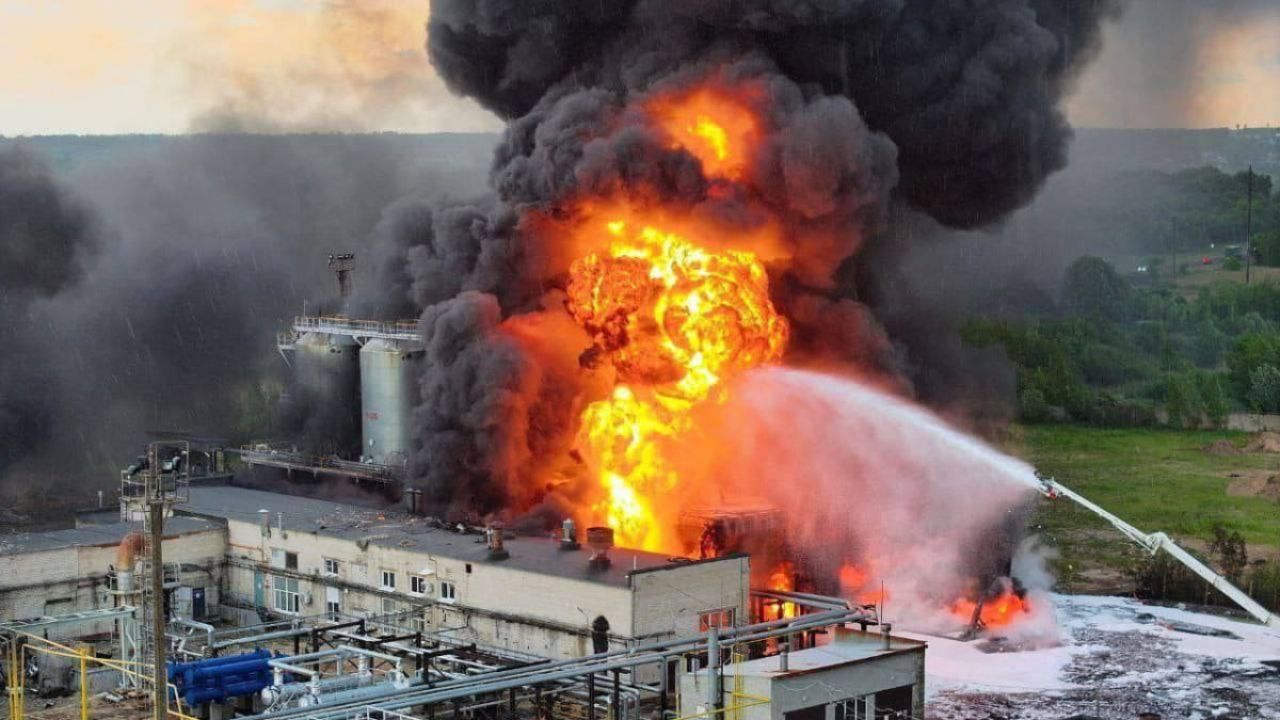
Ukraine has claimed responsibility for long-range strikes targeting two Russian oil refineries overnight on June 28, in the Krasnodar Territory and the Yaroslavl Region. Ukrainian President Volodymyr Zelenskyy said the operation was part of Kyiv’s strategy to weaken Russia’s military-industrial and energy capabilities. According to him, the targets were facilities supporting Russia’s fuel infrastructure.
Russian authorities confirmed that the Krasnodar Territory came under a drone attack. According to the regional governor, debris from intercepted unmanned aerial vehicles caused a fire at an oil refinery in the town of Slavyansk-on-Kuban. Officials also reported damage to a power line, a gas pipeline, and several residential buildings. One person was reported killed in the incident.
Russian officials initially made no public statement regarding the second reported target in the Yaroslavl Region. However, Ukrainian authorities said the strike hit one of the region’s largest oil-processing facilities. Several independent media outlets, citing open-source information, suggested that the facility may have been the Slavneft-YANOS refinery, although this has not been officially confirmed.
According to Russia’s Ministry of Defense, air defense systems repelled a large-scale drone attack across multiple regions during the night. Russian media reported that dozens of drones were intercepted and that temporary restrictions were introduced in several areas.
Strikes on oil refineries have become a central element of Ukraine’s long-range campaign against Russia’s energy infrastructure. Kyiv argues that targeting fuel production and refining facilities reduces Russia’s ability to supply its armed forces while increasing the economic costs of sustaining the war. Moscow, meanwhile, maintains that most attacks are successfully intercepted by air defense systems and that any resulting damage is limited and quickly repaired.
Military analysts say the latest operation demonstrates Ukraine’s continued focus on targets deep inside Russian territory. Particular attention has been drawn to the reported strike in the Yaroslavl Region, located roughly 700 kilometers (435 miles) from the Ukrainian border. If confirmed, it would provide further evidence of Ukraine’s expanding long-range strike capabilities.
Analysts also note that repeated attacks on Russia’s refining sector could temporarily reduce refining capacity, increase repair costs, and force energy companies to adjust fuel logistics. However, the overall impact on the domestic fuel market will depend on the extent of the damage, the speed of repair work, the availability of reserve processing capacity, and broader conditions within Russia’s energy sector.


 Latest news
Latest news
Latest newsGeorgia’s Constitutional Court Continues Case on Banning Opposition Parties: Political Pluralism at Stake
12.Oct.2026
Azerbaijan and Iran Step Up Security Contacts Amid Hijab Protests
12.Oct.2026
Personnel Shortages Complicate Ukrainian Forces’ Rotation: Ukraine Faces Long-Term Challenges on the Front Line
11.Oct.2026
Trump Eases Sanctions on Russian Fuel After Talks with Putin: Kyiv Fears Boost to Moscow’s War Revenues
10.Oct.2026
Putin Seeks to Strengthen Russia’s Influence in the Post-Soviet Space Through the CIS
10.Oct.2026
Russia and the South Caucasus: External Pressure, Political Competition and a Crisis of Trust
10.Oct.2026
Peaceful Settlement Between Armenia and Azerbaijan: Moving from Declarations to Implementation
10.Oct.2026
Moldova Ready to Accept as Many Ukrainians as Necessary if Situation Worsens This Winter
09.Oct.2026
Turkmenistan Turns Avaza into a Regional Diplomatic Hub as Caspian, Central Asian and CIS Agendas Converge
08.Oct.2026
Romania Scrambles Spanish F-18s After Aerial Targets Detected Near Ukrainian Border
07.Oct.2026
Berlin Deepens Defence Partnership with Kyiv: Germany to Provide Ukraine with €1 Billion in Military Aid
07.Oct.2026
European Parliament Against Georgian Dream: EU Prepares New Response to Tbilisi
06.Oct.2026
Bulgarian Foreign Minister to Discuss European Security and International Law in the Netherlands
05.Oct.2026
Rheinmetall in Bulgaria: Sofia Emerges as a New NATO Defence-Industrial Hub in the Balkans
05.Oct.2026
The Cost of a Long War: Moscow Expands Spending Plans Through 2029
05.Oct.2026