
 13 Oct 2026









Iran Turns Khamenei Funeral into a Show of Strength as Week-Long National Mourning Begins
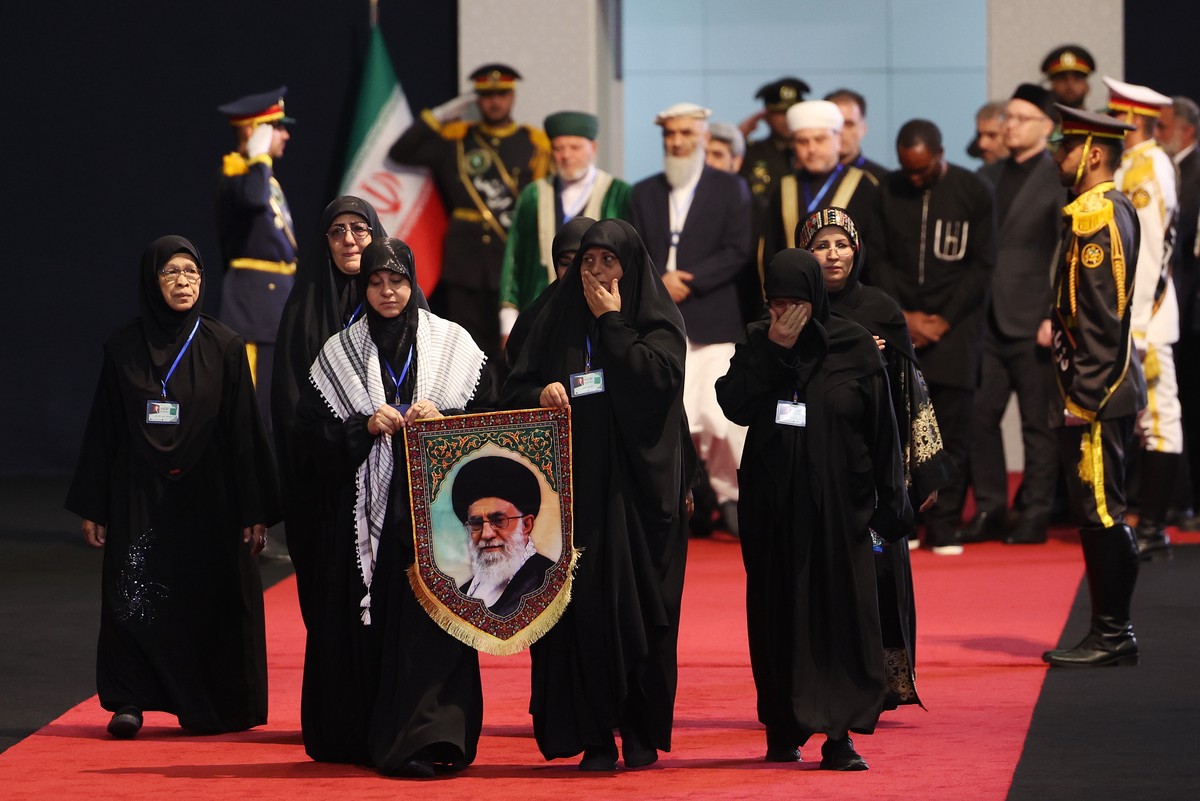
Iran has launched a week-long series of
nationwide mourning ceremonies for Supreme Leader Ali Khamenei, who was killed
in a U.S.-Israeli airstrike earlier this year. On the first day of the events,
tens of thousands of mourners gathered at Tehran’s Mosalla Grand Mosque complex,
where Khamenei’s coffin has been placed for public farewell. Despite extreme
summer temperatures, authorities installed cooling systems, water mist
stations, and medical facilities in anticipation of millions of visitors
expected throughout the mourning period.
According to the official schedule, Khamenei’s body will
remain in Tehran until the evening of July 5 before being transferred to the
Shiite holy city of Qom. The funeral procession will then continue to the Iraqi
cities of Najaf and Karbala before concluding on July 9 in Mashhad, where the
late leader will be buried near the shrine of Imam Reza.
The ceremonies are being held under unprecedented security
measures. Iranian authorities have reinforced protection around strategic
facilities, tightened security nationwide, and imposed additional restrictions
on the country's airspace. Senior military officials have warned that any
external attempt to disrupt the mourning events would receive an
"immediate and decisive response", urging the United States and
Israel to refrain from actions that could be interpreted as provocations during
the funeral period.
Iranian officials say delegations from more than 30
countries are participating in the ceremonies, including representatives from Russia, China, India, Saudi
Arabia, Turkiye, Iraq, Afghanistan, Armenia, and Turkmenistan, as well as officials from several
Palestinian and Lebanese organizations. Tehran views the broad international
participation as evidence that, despite recent military confrontation and the
transition of power, Iran continues to maintain diplomatic influence and close
ties across the Middle East and the wider Shiite world.
The death of Khamenei, who led Iran for 37 years, marked
one of the most significant political events in the country's modern history.
Following his death, his son Mojtaba Khamenei was appointed as the country's
new Supreme Leader. However, he has made only limited public appearances due to
injuries reportedly sustained in the same airstrike. As a result, the ongoing funeral
ceremonies have become the first major state event since the transfer of
supreme authority.
Analysts note that the mourning ceremonies
carry significance far beyond their religious dimension. For the Iranian
leadership, they represent an opportunity to demonstrate the resilience of the
political system, the state's ability to mobilize public support, and the
continuity of power following an unprecedented strike against the country's
highest leadership. The mass processions are intended to reinforce the
legitimacy of the new leadership both domestically and internationally.
At the same time, experts emphasize that the scale of the official ceremonies does not eliminate Iran's underlying domestic challenges. The country continues to face severe economic pressure stemming from years of sanctions, a prolonged economic crisis, and accumulated public dissatisfaction. Against this backdrop, the authorities are placing particular emphasis on ensuring large public participation in the mourning events, viewing them as an important political and information campaign designed to project national unity and state stability amid the continuing confrontation with the United States and Israel.
CCBS Expert Group


 Latest news
Latest news
Latest newsGeorgia’s Constitutional Court Continues Case on Banning Opposition Parties: Political Pluralism at Stake
12.Oct.2026
Azerbaijan and Iran Step Up Security Contacts Amid Hijab Protests
12.Oct.2026
Personnel Shortages Complicate Ukrainian Forces’ Rotation: Ukraine Faces Long-Term Challenges on the Front Line
11.Oct.2026
Trump Eases Sanctions on Russian Fuel After Talks with Putin: Kyiv Fears Boost to Moscow’s War Revenues
10.Oct.2026
Putin Seeks to Strengthen Russia’s Influence in the Post-Soviet Space Through the CIS
10.Oct.2026
Russia and the South Caucasus: External Pressure, Political Competition and a Crisis of Trust
10.Oct.2026
Peaceful Settlement Between Armenia and Azerbaijan: Moving from Declarations to Implementation
10.Oct.2026
Moldova Ready to Accept as Many Ukrainians as Necessary if Situation Worsens This Winter
09.Oct.2026
Turkmenistan Turns Avaza into a Regional Diplomatic Hub as Caspian, Central Asian and CIS Agendas Converge
08.Oct.2026
Romania Scrambles Spanish F-18s After Aerial Targets Detected Near Ukrainian Border
07.Oct.2026
Berlin Deepens Defence Partnership with Kyiv: Germany to Provide Ukraine with €1 Billion in Military Aid
07.Oct.2026
European Parliament Against Georgian Dream: EU Prepares New Response to Tbilisi
06.Oct.2026
Bulgarian Foreign Minister to Discuss European Security and International Law in the Netherlands
05.Oct.2026
Rheinmetall in Bulgaria: Sofia Emerges as a New NATO Defence-Industrial Hub in the Balkans
05.Oct.2026
The Cost of a Long War: Moscow Expands Spending Plans Through 2029
05.Oct.2026