
 13 Oct 2026









- Unmanned aerial systems (UAS);
- Ground robotic systems;
- Cybersecurity;
- A tactical stage combining engineering and applied skills.
Engineers Instead of Soldiers: Kazakhstan Hosts Its First Engineering Technologies Championship
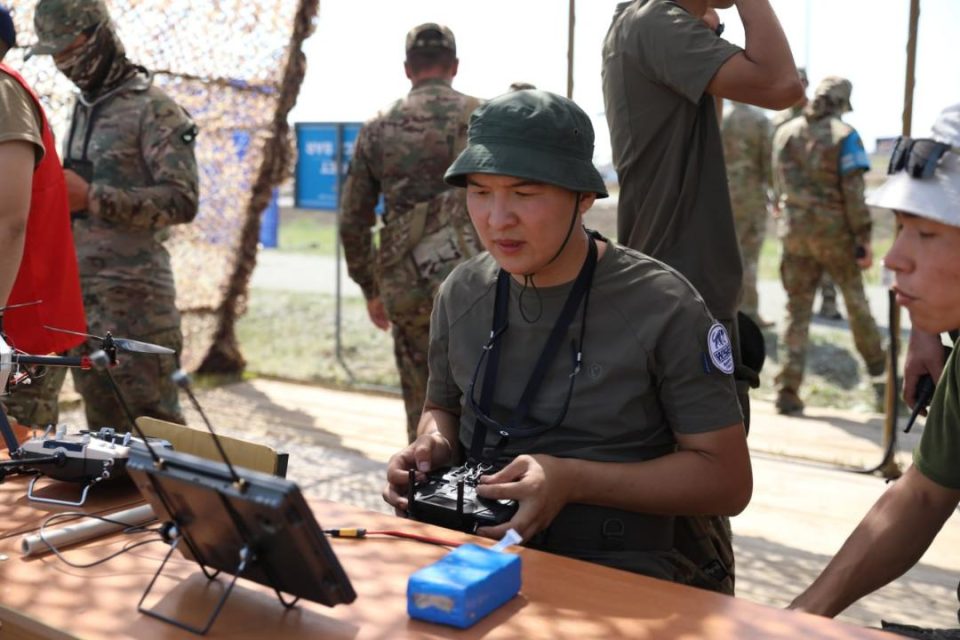
Kazakhstan has launched its first national military engineering championship, SHAIQAS-2026, a competition that could become a new growth driver for the country's defense industry and technology startups. Unlike traditional military contests, the event brings together engineers, drone developers, robotics specialists, and cybersecurity experts, with dual-use technologies serving as the main "weapon".
The championship is organized by the Ministry of Defense of Kazakhstan in partnership with the Defence Tech Center, with support from the Ministry of Science and Higher Education. The initiative aims to identify promising engineering teams and innovations capable of progressing from prototype to industrial production and practical application in both defense and civilian sectors.
The competition is divided into four categories:

In the drone category, participants assemble FPV drones from standardized kits before completing challenges focused on speed, maneuverability, and payload delivery. During the ground robotics competition, teams demonstrate robotic systems capable of casualty evacuation and other engineering tasks. A separate cyber range tests participants' ability to defend against digital attacks and solve practical cybersecurity challenges. The championship concludes with a comprehensive field exercise designed to simulate real-world operational conditions.
Teams of five to fifteen members are eligible to compete, including students, university faculty, engineers from industrial companies, IT professionals, and military personnel. The championship finals are scheduled for August 14–15, with a total prize fund of 10 million tenge (approximately $21,000). Winners will also gain access to the Defence Tech Center's acceleration program, while outstanding academic supervisors will receive special awards.
The launch of SHAIQAS reflects a broader global trend: modern armed forces increasingly rely not only on conventional weapons but also on engineering teams capable of rapidly developing software, autonomous systems, electronic warfare capabilities, and unmanned platforms.
Recent conflicts have demonstrated that drones, robotic systems, and digital technologies are transforming the nature of warfare. In response, many countries have established defense technology programs that bring together universities, startups, and private industry to accelerate innovation.
Kazakhstan is effectively taking its first nationwide step in this direction. The championship creates a platform where academia, research institutions, the IT sector, and the military can collaborate, allowing the most promising technologies to receive further support and potentially transition into practical use.
Experts note that competitions like SHAIQAS are evolving beyond traditional engineering contests to become mechanisms for identifying and developing technologies with real-world applications. While university engineering competitions have historically focused on academic achievement, SHAIQAS offers a full-cycle model: development, testing, military evaluation, acceleration, and potential deployment.
Another defining feature of the project is its emphasis on dual-use technologies. Many of the solutions developed during the competition have applications beyond defense, including emergency response, infrastructure monitoring, industrial automation, agriculture, logistics, and the protection of critical infrastructure. As a result, SHAIQAS-2026 has the potential to become more than just a military engineering championship. It could serve as the foundation for Kazakhstan's emerging defense technology ecosystem, where university research, private-sector innovation, and government procurement are integrated into a unified framework for technological development.


 Latest news
Latest news
Latest newsGeorgia’s Constitutional Court Continues Case on Banning Opposition Parties: Political Pluralism at Stake
12.Oct.2026
Azerbaijan and Iran Step Up Security Contacts Amid Hijab Protests
12.Oct.2026
Personnel Shortages Complicate Ukrainian Forces’ Rotation: Ukraine Faces Long-Term Challenges on the Front Line
11.Oct.2026
Trump Eases Sanctions on Russian Fuel After Talks with Putin: Kyiv Fears Boost to Moscow’s War Revenues
10.Oct.2026
Putin Seeks to Strengthen Russia’s Influence in the Post-Soviet Space Through the CIS
10.Oct.2026
Russia and the South Caucasus: External Pressure, Political Competition and a Crisis of Trust
10.Oct.2026
Peaceful Settlement Between Armenia and Azerbaijan: Moving from Declarations to Implementation
10.Oct.2026
Moldova Ready to Accept as Many Ukrainians as Necessary if Situation Worsens This Winter
09.Oct.2026
Turkmenistan Turns Avaza into a Regional Diplomatic Hub as Caspian, Central Asian and CIS Agendas Converge
08.Oct.2026
Romania Scrambles Spanish F-18s After Aerial Targets Detected Near Ukrainian Border
07.Oct.2026
Berlin Deepens Defence Partnership with Kyiv: Germany to Provide Ukraine with €1 Billion in Military Aid
07.Oct.2026
European Parliament Against Georgian Dream: EU Prepares New Response to Tbilisi
06.Oct.2026
Bulgarian Foreign Minister to Discuss European Security and International Law in the Netherlands
05.Oct.2026
Rheinmetall in Bulgaria: Sofia Emerges as a New NATO Defence-Industrial Hub in the Balkans
05.Oct.2026
The Cost of a Long War: Moscow Expands Spending Plans Through 2029
05.Oct.2026