
 22 Sep 2026









The South Caucasus Strengthens Protection of Strategic Infrastructure: What Lies Behind the Eternity-2026 Exercises
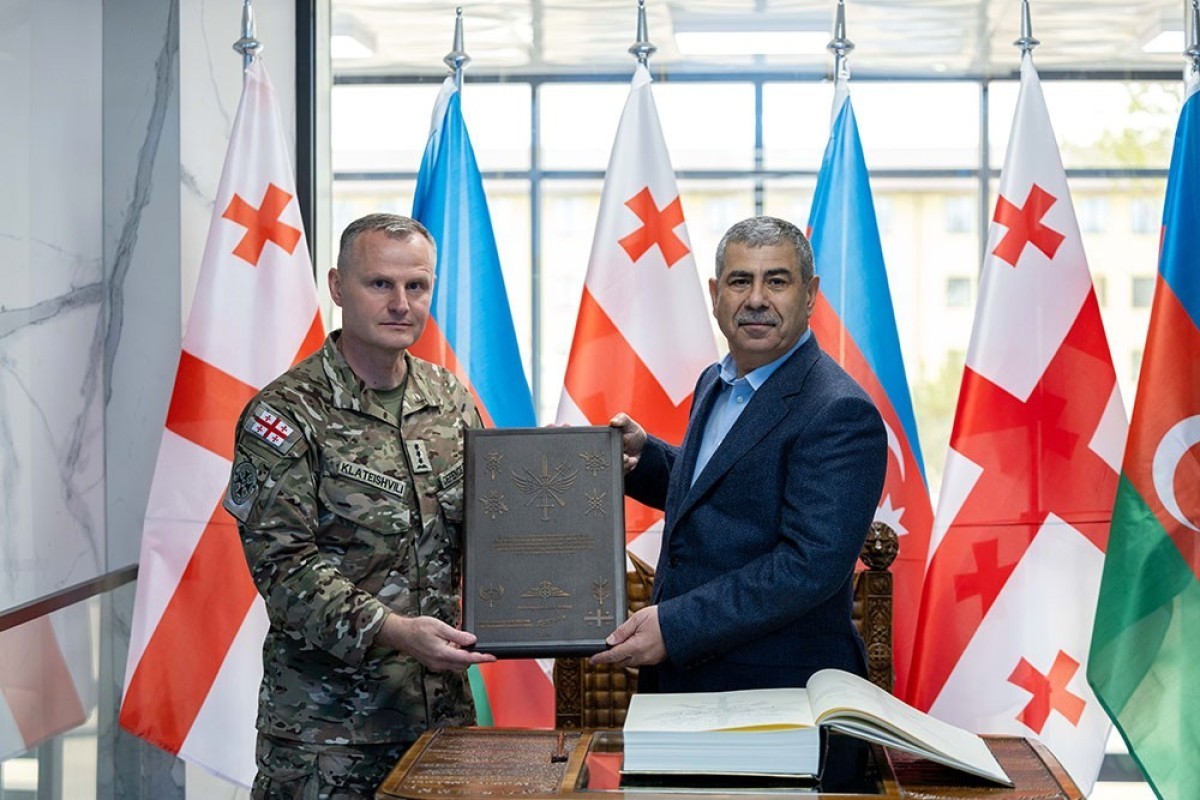
Azerbaijan, Turkiye, and Georgia continue to deepen their practical military cooperation in the field of regional security. In November 2026, Azerbaijan will host the joint computer-assisted command-and-staff exercise Eternity-2026, aimed at enhancing coordination in the protection of strategic facilities and critical transport and energy infrastructure across the three countries.
Preparations for the large-scale exercise have entered their final stage. Azerbaijan recently hosted the main planning conference, during which representatives of the defense ministries of the three participating states agreed on the key parameters of the upcoming drills. According to Azerbaijan's Ministry of Defense, the participants discussed the exercise scenario, the structure of the joint headquarters, the distribution of responsibilities among participating units, the sequence of tactical activities, as well as organizational and logistical arrangements.
In addition to military personnel from Azerbaijan, Turkiye, and Georgia, representatives of Azerbaijan's State Agency for the Protection of Strategic Facilities and Azerbaijan Railways will also take part in the exercise. The inclusion of civilian institutions highlights the comprehensive nature of the drills, which are designed to strengthen cooperation not only among the armed forces but also between military and civilian organizations responsible for safeguarding critical infrastructure.
Under the approved scenario, participants will rehearse the protection and defense of energy and transport infrastructure, as well as strategic communication routes running through the territories of the three countries. Particular emphasis will be placed on coordination between national headquarters, intelligence and information sharing, crisis response, and joint decision-making under simulated threat conditions.
The computer-assisted command-and-staff format enables participants to simulate a wide range of realistic operational scenarios without deploying large troop formations or conducting live-fire activities. This approach provides an effective platform for evaluating command-and-control systems, communications networks, and cooperation mechanisms between military and civilian authorities in response to contemporary security challenges.
The name Eternity is closely associated with one of the region's key energy projects — the Baku-Tbilisi-Ceyhan (BTC) oil pipeline and the South Caucasus Gas Pipeline, whose security remains a cornerstone of regional stability. The South Caucasus serves as a strategic transit corridor linking the Caspian region with European energy markets. Oil and gas pipelines, the Baku-Tbilisi-Kars railway, major international highways, and other critical infrastructure crossing Azerbaijan, Georgia, and Turkiye play a vital role in ensuring reliable energy and trade flows toward Europe.
Military cooperation among Azerbaijan, Turkiye, and Georgia has been developing for more than a decade and includes regular joint exercises, personnel training, professional exchanges, and coordinated efforts to protect critical infrastructure. At the same time, this trilateral format has traditionally focused on ensuring the security of international transport and energy projects rather than establishing a formal military alliance.
The outcomes of Eternity-2026 are expected to improve interoperability among the participating countries' command structures, enhance interagency coordination, and further strengthen the security of strategic infrastructure that is essential not only for the South Caucasus but also for the broader Eurasian region.
Security experts note that exercises of this kind reflect the three countries' shared commitment to increasing the resilience of transport, logistics, and energy corridors against a broad range of threats, including sabotage, terrorism, cyberattacks, and man-made emergencies. Their significance has grown further amid the expanding role of the Middle Corridor, the transcontinental trade route connecting China and Central Asia with the South Caucasus and Europe.


 Latest news
Latest news
Latest newsBulgaria Strengthens Mobile Air Defence Through Strategic Partnership with Czechia
22.Sep.2026
Bulgaria Marks 118 Years of Independence: Veliko Tarnovo Becomes the Center of National Celebrations
22.Sep.2026
Tbilisi Links Georgia’s European Future to the Restoration of Territorial Integrity
22.Sep.2026
Duma Elections Reinforce Kremlin Dominance Amid the War
21.Sep.2026
Zelenskyy Approves New Long-Range Ukrainian Operations Amid Russian Attacks
20.Sep.2026
US Sanctions Target Russias Main Pillar as Moscow Faces New Pressure on Oil Revenues
19.Sep.2026
Russia Begins State Duma Elections Amid War in Ukraine
18.Sep.2026
Bulgaria Strengthens Protection of Strategic Infrastructure Against Drones and Other Threats
18.Sep.2026
Georgia and Enka: How the Namakhvani Dispute Could Affect the Investment Climate
17.Sep.2026
Una Aleksandra Bērziņa-Čerenkova: After Russia’s Invasion, Latvia Began Banning Russian-Language Media
17.Sep.2026
Rainer Saks: Russia сould lose its influence in Armenia, just as it did in the Baltics
16.Sep.2026
Russian Drones Violated Moldovan Airspace Twice During Zelenskys Trips
16.Sep.2026
Operation Vivaldi: Ukraine Reports Advances Near Lyman as Fighting Intensifies
16.Sep.2026
Kazakhstan and South Korea Elevate Ties to Comprehensive Strategic Partnership
16.Sep.2026
Armenia Energy Diversification: Testing the Limits of Dependence on Russian Gas
15.Sep.2026