
 22 Sep 2026









Bulgaria Strengthens Mobile Air Defence Through Strategic Partnership with Czechia
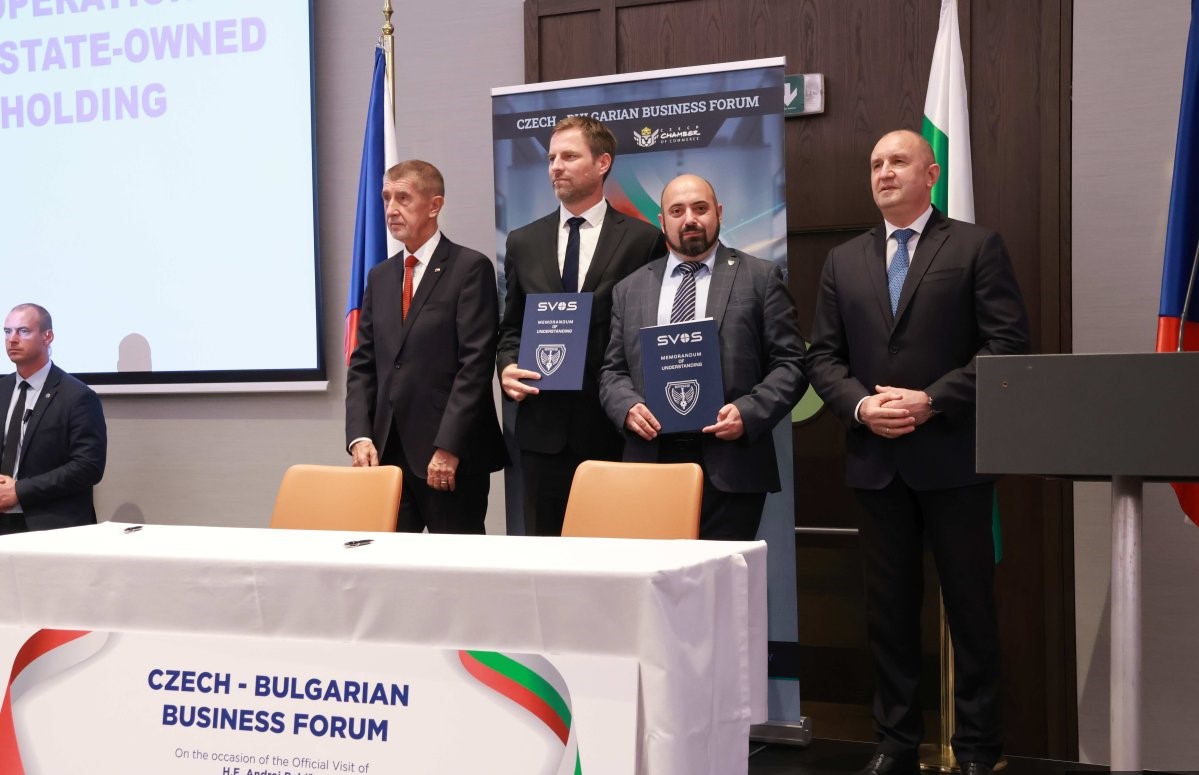
Bulgaria is integrating its
national defence industry into the development of mobile air-defence
capabilities, potentially enhancing the country’s ability to counter aircraft,
helicopters, cruise missiles and unmanned aerial systems.
On September 16, 2026,
Bulgaria’s state-owned TEREM-HOLDING and
Czech defence manufacturer SVOS signed a
memorandum on strategic industrial cooperation. The agreement covers
cooperation in the production, integration and subsequent maintenance of mobile
air-defence systems. The memorandum was signed in Sofia during the
Bulgarian-Czech Business Forum in the presence of the prime ministers of
Bulgaria and Czechia.
A key area of cooperation is
the MSHORAD short-range mobile
air-defence system, based on the MARS S-330 armoured
platform. Its configuration includes Sweden’s RBS 70 NG
missile system, the Giraffe 1X radar
and a command-and-control element. The system is designed to provide a mobile
layer of air defence capable of protecting military units and critical assets
against a range of aerial threats, including small unmanned aerial vehicles.
From a military perspective,
the significance of the agreement goes beyond the potential acquisition of new
equipment. TEREM-HOLDING is expected to participate as a
subcontractor in the production of selected MSHORAD components, equipment
integration and parts of the final assembly process, while also
providing technical maintenance and repair services in Bulgaria. This could
contribute to the gradual development of national expertise in mobile
air-defence technologies.
The selection of the MARS
platform for the integration of the RBS 70 NG is also significant. The Czech
Ministry of Defence has already contracted the acquisition of 24 MARS vehicles equipped with RBS 70 NG missile systems,
while negotiations concerning similar systems for other NATO members are
underway. Bulgaria therefore has an opportunity to become part of an emerging
European defence-industrial cooperation network.
For Sofia, the initiative is
particularly relevant given the changing nature of aerial threats. The
widespread use of relatively inexpensive drones alongside more conventional
air-attack systems is increasing the requirements placed on modern air-defence
networks. Short-range mobile systems can provide close protection for military
formations, industrial facilities, critical infrastructure and other high-value
assets, complementing longer-range air-defence systems.
The partnership also forms
part of broader Bulgarian-Czech defence-industrial cooperation. During the same
forum, other defence-related agreements were signed, including an arrangement
between AERO Vodochody and Bulgaria’s
Ministry of Defence concerning joint testing and certification of weapons for
the L-39 Skyfox aircraft.
At the same time, the
memorandum does not automatically constitute a contract
for the delivery of MSHORAD systems to the Bulgarian Armed Forces.
At this stage, the agreement establishes an industrial framework for potential
production, integration and maintenance of such systems. Nevertheless, the
cooperation model could allow Bulgaria to combine access to modern Western
technologies with the development of domestic repair, integration and
manufacturing capabilities.
In
the broader strategic context, the agreement reflects Sofia’s efforts to
strengthen European defence-industrial cooperation and
national air-defence capabilities. For Bulgaria, located on
NATO’s eastern flank and bordering the Black Sea, the development of mobile
short-range air-defence systems is becoming increasingly relevant as the role
of unmanned systems grows and the regional air-security environment becomes
more complex.


 Latest news
Latest news
Latest newsBulgaria Strengthens Mobile Air Defence Through Strategic Partnership with Czechia
22.Sep.2026
Bulgaria Marks 118 Years of Independence: Veliko Tarnovo Becomes the Center of National Celebrations
22.Sep.2026
Tbilisi Links Georgia’s European Future to the Restoration of Territorial Integrity
22.Sep.2026
Duma Elections Reinforce Kremlin Dominance Amid the War
21.Sep.2026
Zelenskyy Approves New Long-Range Ukrainian Operations Amid Russian Attacks
20.Sep.2026
US Sanctions Target Russias Main Pillar as Moscow Faces New Pressure on Oil Revenues
19.Sep.2026
Russia Begins State Duma Elections Amid War in Ukraine
18.Sep.2026
Bulgaria Strengthens Protection of Strategic Infrastructure Against Drones and Other Threats
18.Sep.2026
Georgia and Enka: How the Namakhvani Dispute Could Affect the Investment Climate
17.Sep.2026
Una Aleksandra Bērziņa-Čerenkova: After Russia’s Invasion, Latvia Began Banning Russian-Language Media
17.Sep.2026
Rainer Saks: Russia сould lose its influence in Armenia, just as it did in the Baltics
16.Sep.2026
Russian Drones Violated Moldovan Airspace Twice During Zelenskys Trips
16.Sep.2026
Operation Vivaldi: Ukraine Reports Advances Near Lyman as Fighting Intensifies
16.Sep.2026
Kazakhstan and South Korea Elevate Ties to Comprehensive Strategic Partnership
16.Sep.2026
Armenia Energy Diversification: Testing the Limits of Dependence on Russian Gas
15.Sep.2026