
 13 Oct 2026









- maintain
economic relations with Russia;
- expand
trade with Belarus;
- deepen
strategic and economic ties with China;
- avoid
direct military confrontation with Moscow;
- maintain
relations with the EU and other Western partners;
- use
the country’s geographic position to develop transit projects.
From Confrontation to Pragmatism: Georgia’s New Geopolitical Strategy
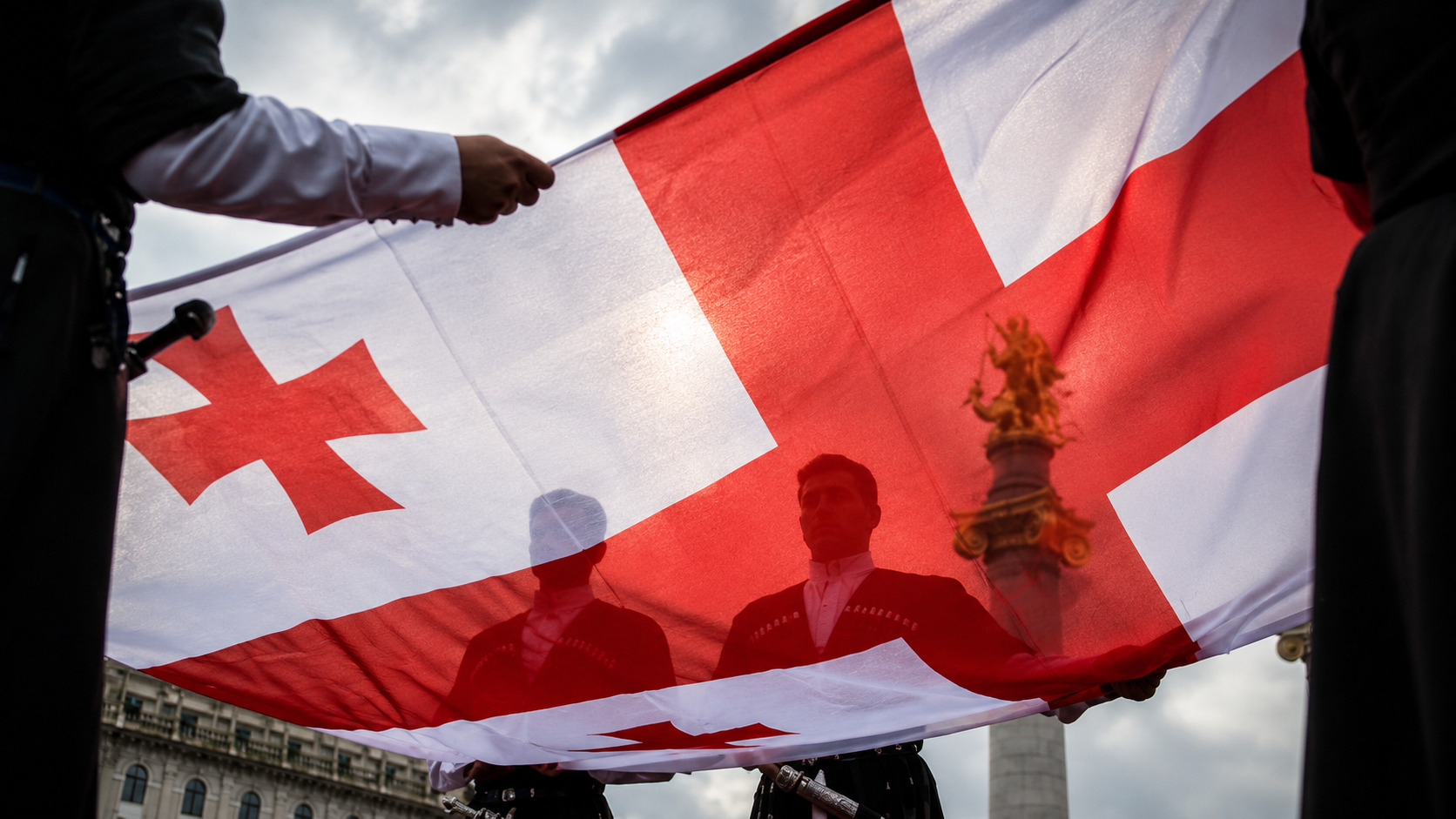
Georgia
is demonstrating an increasingly noticeable shift in its foreign policy
rhetoric. The government of Irakli Kobakhidze is avoiding directly referring to
Russia as an “enemy”, while simultaneously expanding pragmatic contacts with
Moscow, developing economic relations with Belarus, and deepening cooperation
with China. Against this backdrop, protests by supporters of European
integration continue inside the country, while the 2008 August war has once
again become one of the main tools of domestic political struggle.
Kobakhidze: Calling
Russia an Enemy Means Taking a Political Step
Georgian
Prime Minister Irakli Kobakhidze stated that he does not consider it
appropriate to use the phrase “Russia is an enemy”. According to him, such a
definition is not a neutral statement and implies subsequent political actions.
This
position is indicative of the current course of the Georgian government.
Tbilisi continues to speak of the country’s territorial integrity and maintains
its principled opposition to the Russian military presence in Abkhazia and
South Ossetia, while at the same time seeking to avoid a new direct
confrontation with Moscow.
Thus,
the Georgian authorities are effectively distinguishing between the territorial
conflict with Russia and the need to maintain working relations with the
Russian state.
This
is particularly important for the Georgian Dream party from an economic
perspective. Russia remains one of Georgia’s significant trading and tourism
partners, and since the beginning of Russia’s war against Ukraine, the Georgian
authorities have repeatedly emphasized that they do not intend to impose
bilateral sanctions on Moscow.
Moscow Offers Tbilisi
“Pragmatic” Cooperation
Against
the backdrop of the cautious rhetoric of the Georgian government, Moscow is
also demonstrating an interest in further rapprochement. Russian Deputy Foreign
Minister Mikhail Galuzin stated that Moscow is ready to develop and expand
pragmatic relations with Tbilisi. The Russian side views economic contacts and
political dialogue as the foundation for further improvement in bilateral
relations.
In
practice, Moscow is offering Georgia a model of relations based not on
resolving the political issue surrounding Abkhazia and South Ossetia, but on
the gradual expansion of practical cooperation. This corresponds to Russia’s
diplomatic approach in recent years: rather than demanding that Tbilisi
immediately change its position on territorial issues, Moscow seeks to build a
network of economic and humanitarian ties capable of gradually strengthening
mutual interdependence between the two countries.
This
approach is also convenient for Tbilisi. It allows Georgia to gain economic
benefits from relations with Russia without recognizing the Russian position on
the occupied territories.
Belarus Becomes Another
Direction of the Eastern Economic Vector
At
the same time, Georgia is expanding its economic contacts with Belarus. Tbilisi
and Minsk are discussing increased trade and supplies of Georgian products to
the Belarusian market.
The
growth in trade between the two countries during the first half of 2026
indicates that the Georgian authorities continue to use economic diplomacy as a
tool for diversifying their external relations.
However,
there is a broader political context. Belarus is one of Russia’s closest
allies, and the expansion of economic cooperation between Tbilisi and Minsk
objectively fits into the development of a broader network of relations between
Georgia and post-Soviet states.
At
the same time, Tbilisi is seeking to avoid turning these ties into a formal
political alliance. The focus is primarily on trade, transportation,
investment, and humanitarian contacts.
The 2008 War Becomes a
Tool of Domestic Politics
The
year 2008 occupies a special place in the current political debate. Against the
backdrop of the 18th anniversary of the Russian-Georgian war, the Georgian
Dream government has once again intensified its criticism of former President
Mikheil Saakashvili and his team.
Kobakhidze
stated that the war was launched by the Georgian leadership “at the direction
of foreign powers”. For the current authorities, this is not merely a
historical assessment. The issue of August 2008 is being used as an argument in
favor of Tbilisi’s current policy: the government seeks to portray itself as
the political force that will prevent a repeat of military escalation with
Russia.
In
this logic, Saakashvili has become a symbol of the opposite model — a policy of
tough confrontation with Moscow and close military-political alignment with the
West.
Opponents
of Georgian Dream, by contrast, view this interpretation as an attempt to shift
responsibility away from Russia and use the tragedy of 2008 to justify the
government’s current retreat from the Euro-Atlantic course.
Protests Show That the
Domestic Conflict Has Not Disappeared
At
the same time, domestic confrontation continues. In Tbilisi, supporters of
European integration continue to take to the streets to protest against government
policies. The protest movement has become one of the longest-running political
crises in modern Georgian history.
For
the opposition, the government’s rejection of harsh anti-Russian rhetoric is
evidence of a gradual shift in the country’s geopolitical course. The
authorities, in turn, argue that a confrontational policy could endanger
Georgia’s security and lead to a repetition of the 2008 scenario.
Thus,
the dispute between the government and the opposition is gradually moving
beyond an ordinary struggle for power. The central question is what model of
Georgian statehood the country should pursue — a state maximally integrated
into Western structures, or a country that simultaneously cooperates with the
West, Russia, China, and other centers of power.
Georgia Is Attempting to
Pursue a Multi-Vector Policy
Recent
developments suggest that Tbilisi is not necessarily moving toward a formal
abandonment of its European direction. Rather, the government appears to be
attempting to change the balance of its external relations.
The
Georgian government is seeking simultaneously to:
In
this sense, the Georgian Dream government’s policy increasingly resembles a
multi-vector model in which economic interests are separated from political
orientation. The key question is how long Tbilisi will be able to maintain this
balance.
The Main Risk for Tbilisi
Is Not Russia, but Domestic Polarization
At
the same time, the most serious threat to the government’s current course may
not come from Moscow. Georgian society remains deeply divided over the
country’s foreign-policy orientation. For a significant part of the population,
European integration has become not merely a foreign-policy objective, but part
of the country’s national identity and vision of its future. Therefore, any
noticeable rapprochement with Russia is automatically perceived by the
opposition as a move toward Russia’s sphere of influence.
The
government, however, seeks to frame the situation differently: not as a turn
toward the East, but as a rejection of a policy that could drag Georgia into
another war. It is precisely this confrontation between two strategies —
“European integration at any cost” versus “security and pragmatic relations
with all centers of power” — that is likely to shape Georgia’s political agenda
in the near future.
As a
result, Georgia finds itself facing a difficult choice. Tbilisi is seeking to
maintain access to Western markets and institutions without severing its
economic ties with Russia, while expanding cooperation with China and other
non-Western partners.
This
is no longer simply a change in rhetoric. It is the gradual formation of a new
foreign-policy model for Georgia — a model in which Tbilisi seeks not to choose
a single geopolitical camp, but to derive economic and strategic advantages
from the competition between them.
CCBS
Expert Group


 Latest news
Latest news
Latest newsGeorgia’s Constitutional Court Continues Case on Banning Opposition Parties: Political Pluralism at Stake
12.Oct.2026
Azerbaijan and Iran Step Up Security Contacts Amid Hijab Protests
12.Oct.2026
Personnel Shortages Complicate Ukrainian Forces’ Rotation: Ukraine Faces Long-Term Challenges on the Front Line
11.Oct.2026
Trump Eases Sanctions on Russian Fuel After Talks with Putin: Kyiv Fears Boost to Moscow’s War Revenues
10.Oct.2026
Putin Seeks to Strengthen Russia’s Influence in the Post-Soviet Space Through the CIS
10.Oct.2026
Russia and the South Caucasus: External Pressure, Political Competition and a Crisis of Trust
10.Oct.2026
Peaceful Settlement Between Armenia and Azerbaijan: Moving from Declarations to Implementation
10.Oct.2026
Moldova Ready to Accept as Many Ukrainians as Necessary if Situation Worsens This Winter
09.Oct.2026
Turkmenistan Turns Avaza into a Regional Diplomatic Hub as Caspian, Central Asian and CIS Agendas Converge
08.Oct.2026
Romania Scrambles Spanish F-18s After Aerial Targets Detected Near Ukrainian Border
07.Oct.2026
Berlin Deepens Defence Partnership with Kyiv: Germany to Provide Ukraine with €1 Billion in Military Aid
07.Oct.2026
European Parliament Against Georgian Dream: EU Prepares New Response to Tbilisi
06.Oct.2026
Bulgarian Foreign Minister to Discuss European Security and International Law in the Netherlands
05.Oct.2026
Rheinmetall in Bulgaria: Sofia Emerges as a New NATO Defence-Industrial Hub in the Balkans
05.Oct.2026
The Cost of a Long War: Moscow Expands Spending Plans Through 2029
05.Oct.2026