
 13 Oct 2026









Moscow Demonstrates Its Unchanged Position on the Disputed Kuril Islands
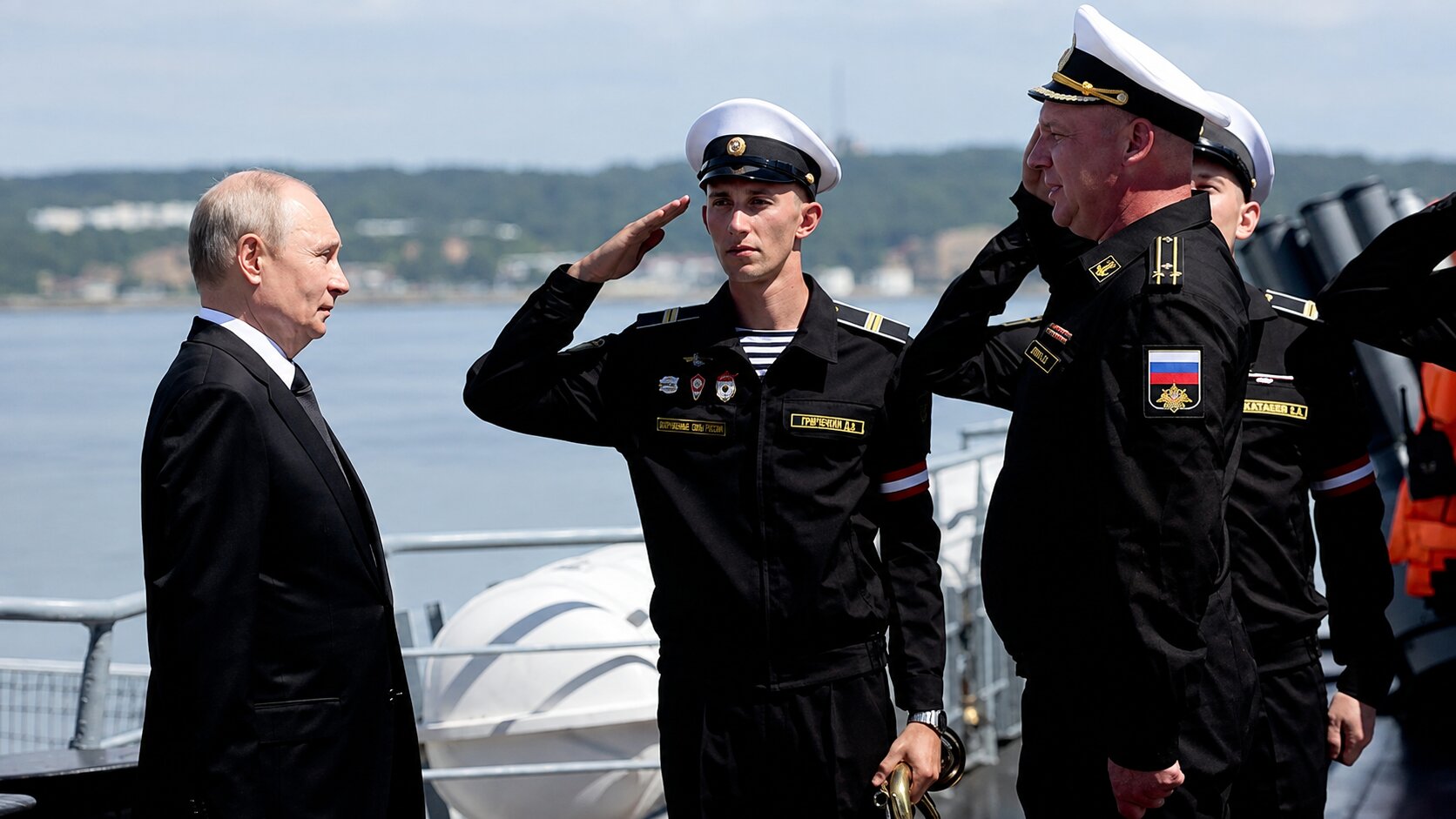
Russian
President Vladimir Putin visited the Kuril Islands for the first time on August
13, arriving on Iturup — one of the four southern islands of the archipelago
claimed by both Russia and Japan. The visit prompted a strong reaction from
Tokyo, which called the trip unacceptable and lodged an official protest with
Moscow.
Iturup,
known in Japan as Etorofu, has been under Russian control since the end of
World War II. Tokyo considers the four southern islands — Iturup, Kunashir,
Shikotan and the Habomai Islands — part of its “Northern Territories”. The
territorial dispute remains one of the main reasons why Russia and Japan have
still not concluded a full-fledged peace treaty formally ending World War II.
During
his visit, Putin toured a fish-processing plant, a school and a hospital, met
with Sakhalin Region Governor Valery Limarenko and spoke with local residents.
At the fish-processing facility, the president was briefed on production and
sampled local fish roe. Russian state media presented the visit primarily as a
demonstration of the Kremlin’s attention to the development of the Russian Far
East and the quality of life on the Kuril Islands.
However,
the political context of the trip extends well beyond the socioeconomic agenda.
The visit came after Putin took part in Pacific Fleet exercises in the Russian
Far East. The day before, the president spoke aboard a Russian warship and
stated that the current status of the Kuril Islands is established by
international documents as a result of World War II. At the same time, he said
Moscow remains willing to seek a solution that would allow Russia and Japan to
conclude a peace treaty.
At the
same time, Russia continues to strengthen its military presence on the Kuril
Islands. This gives Putin’s visit additional strategic significance: the
Russian president’s trip to the disputed territory did not take place in
isolation, but against the backdrop of a demonstration of the Pacific Fleet’s
capabilities and increased attention by Moscow to the security of Russia’s Far
Eastern borders.
Japan
reacted sharply. Foreign Minister Toshimitsu Motegi said Tokyo “strongly
protests” Putin’s visit to Iturup, emphasizing that Japan considers the island
its inherent territory both historically and under international law. Prime Minister
Sanae Takaichi described the visit as “absolutely unacceptable” and said
Moscow’s actions would further complicate efforts to improve Russian-Japanese
relations.
The
timing of the visit also carries symbolic significance. Putin visited Iturup
just two days before the 81st anniversary of Japan’s surrender,
which brought World War II to an end. The trip also came shortly after North
Korea launched a missile toward waters between the Korean Peninsula and Japan
and amid preparations for major joint military exercises by the United States
and South Korea.
An
additional signal came from a joint statement by the Russian and Chinese
ambassadors in Tokyo. Moscow and Beijing opposed attempts to revise the outcome
of World War II and warned against the remilitarization of the Asia-Pacific
region. The wording reflects the Russian and Chinese position regarding Japan’s
growing military capabilities and its expanding security cooperation with the
United States.
Putin’s
trip to Iturup can therefore be viewed as a combination of territorial, military and
diplomatic signals. On the one hand, Moscow is demonstrating
that it has no intention of questioning its effective control over the southern
Kuril Islands. The personal presence of the Russian president on one of the most
disputed islands reinforces that message.
On the
other hand, the Kremlin is simultaneously leaving some room for diplomacy.
Ahead of the visit, Putin spoke about Russia’s willingness to cooperate with
all neighboring countries, including Japan, and referred to previous efforts by
Moscow and Tokyo to move closer to concluding a peace treaty.
Thus,
Russia’s position can be summarized as follows: control over the islands is not up for discussion,
but economic and political cooperation with Japan could theoretically continue.
For Tokyo, however, such an approach remains unacceptable, as the Japanese side
has traditionally linked a full improvement in bilateral relations to the
resolution of the territorial dispute.
The
situation has been further complicated by the consequences of the
Russia-Ukraine war. After Russia launched its full-scale invasion of Ukraine in
2022, Japan joined Western sanctions against Moscow, effectively undermining
earlier efforts to develop economic cooperation in parallel with negotiations
over the Kuril Islands.
The
Kuril Islands are important not only as the subject of a Russian-Japanese
territorial dispute. Their geographic location allows Russia to control
important maritime approaches between the Sea of Okhotsk and the Pacific Ocean.
Against the backdrop of growing military activity by the United States, Japan
and South Korea, Moscow increasingly views the Russian Far East as a
strategically important direction.
Putin’s
visit can therefore be seen as part of a broader policy aimed at strengthening
Russia’s presence in the Asia-Pacific region. It is particularly significant
that the president’s trip coincided with Pacific Fleet exercises and Moscow’s
statements about the need to ensure the security of Russia’s eastern borders.
At the
same time, the visit itself does not indicate any immediate preparations for a
new escalation of military confrontation between Russia and Japan. Rather, it
should be viewed as a political demonstration of control and a warning to Tokyo,
particularly against the backdrop of strengthening Japanese-American military
cooperation.
Vladimir Putin’s visit to
Iturup has become Moscow’s most significant symbolic move on the Kuril issue in
recent years. Russia demonstrated its effective control over the disputed territory
while simultaneously linking that demonstration to Pacific Fleet activity and
the broader security agenda in the Russian Far East. The most likely scenario
remains a combination of a firm position on
sovereignty over the Kuril Islands with limited readiness for economic and
political dialogue with Tokyo. Amid growing tensions
in the Asia-Pacific region, this approach allows Moscow to consolidate its
position in the Far East while demonstrating a willingness to cooperate — but
without making concessions on the territorial issue.


 Latest news
Latest news
Latest newsGeorgia’s Constitutional Court Continues Case on Banning Opposition Parties: Political Pluralism at Stake
12.Oct.2026
Azerbaijan and Iran Step Up Security Contacts Amid Hijab Protests
12.Oct.2026
Personnel Shortages Complicate Ukrainian Forces’ Rotation: Ukraine Faces Long-Term Challenges on the Front Line
11.Oct.2026
Trump Eases Sanctions on Russian Fuel After Talks with Putin: Kyiv Fears Boost to Moscow’s War Revenues
10.Oct.2026
Putin Seeks to Strengthen Russia’s Influence in the Post-Soviet Space Through the CIS
10.Oct.2026
Russia and the South Caucasus: External Pressure, Political Competition and a Crisis of Trust
10.Oct.2026
Peaceful Settlement Between Armenia and Azerbaijan: Moving from Declarations to Implementation
10.Oct.2026
Moldova Ready to Accept as Many Ukrainians as Necessary if Situation Worsens This Winter
09.Oct.2026
Turkmenistan Turns Avaza into a Regional Diplomatic Hub as Caspian, Central Asian and CIS Agendas Converge
08.Oct.2026
Romania Scrambles Spanish F-18s After Aerial Targets Detected Near Ukrainian Border
07.Oct.2026
Berlin Deepens Defence Partnership with Kyiv: Germany to Provide Ukraine with €1 Billion in Military Aid
07.Oct.2026
European Parliament Against Georgian Dream: EU Prepares New Response to Tbilisi
06.Oct.2026
Bulgarian Foreign Minister to Discuss European Security and International Law in the Netherlands
05.Oct.2026
Rheinmetall in Bulgaria: Sofia Emerges as a New NATO Defence-Industrial Hub in the Balkans
05.Oct.2026
The Cost of a Long War: Moscow Expands Spending Plans Through 2029
05.Oct.2026