
 13 Oct 2026









The Black Sea Becomes a Risk Zone: Can Turkiye Protect Key Trade Routes?
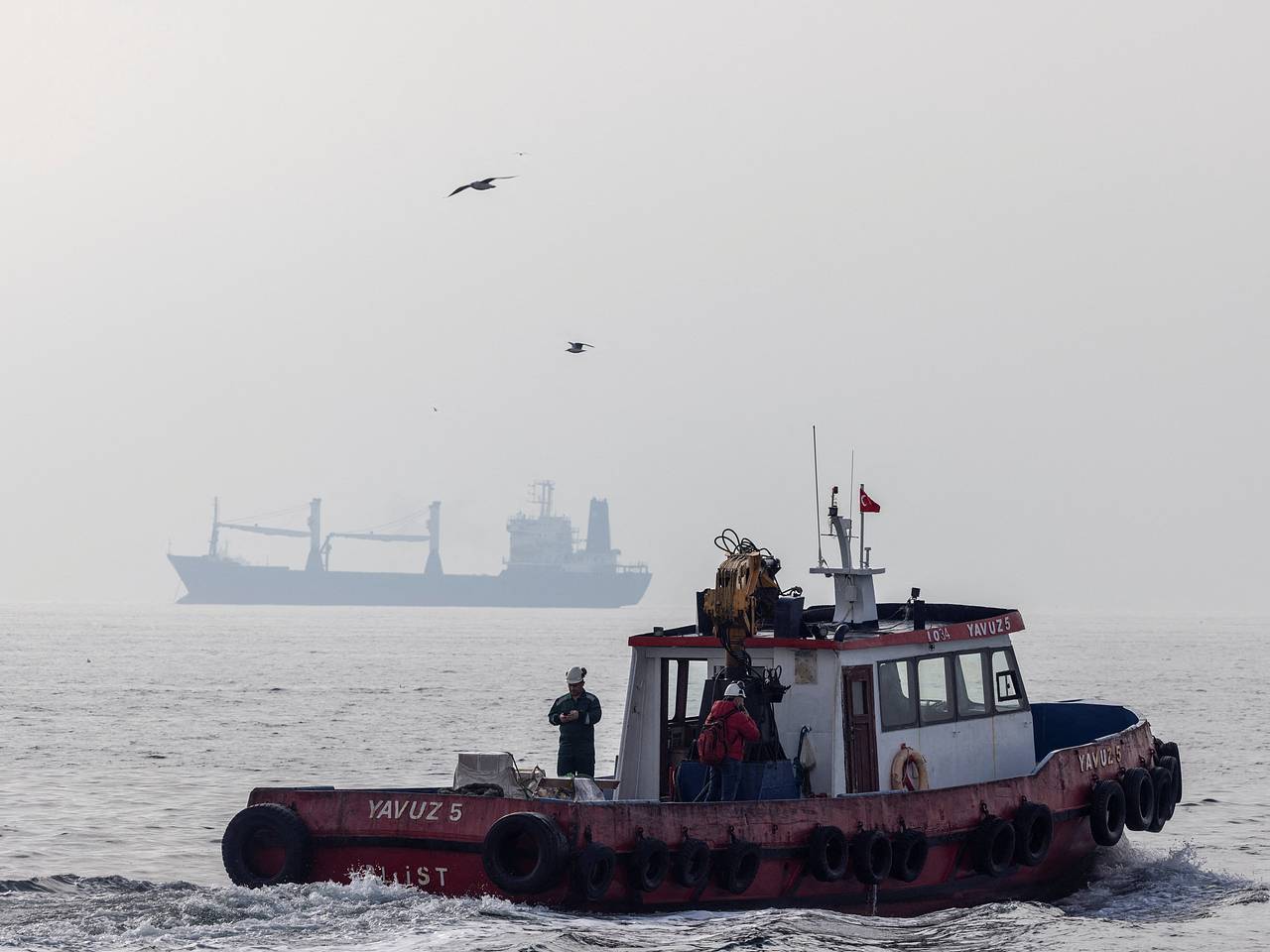
Turkiye continues to ensure the free passage of commercial vessels through the Bosphorus and Dardanelles despite growing threats to maritime shipping in the Black Sea amid the ongoing Russia-Ukraine conflict. Turkish authorities have emphasized that commercial traffic through the straits has not been suspended and that the measures taken by Ankara were temporary and related to security concerns.
Earlier, reports emerged that Turkiye might restrict commercial shipping toward the Black Sea following a series of attacks on vessels, including ships linked to Turkiye. However, Turkish officials clarified that the straits remain open to civilian shipping in accordance with the existing regime.
It should be noted that the legal framework governing passage through the Bosphorus and Dardanelles remains the 1936 Montreux Convention. The document establishes the special status of the Turkish straits and grants Ankara significant powers over the passage of military vessels. At the same time, civilian vessels are granted freedom of passage in peacetime.
The security situation surrounding Black Sea shipping has deteriorated noticeably in recent weeks. Attacks on port infrastructure, vessels and energy facilities have increased across the region. In particular, on August 12, a Ukrainian attack targeted the Russian Black Sea port of Novorossiysk, damaging military and port facilities. The attack also resulted in the temporary suspension of operations at several grain terminals.
Black Sea attacks are affecting not only maritime security but also international trade. The region plays an important role in global supplies of grain and energy resources. The increase in attacks on vessels, ports and export terminals has already caused disruptions to supplies, higher freight costs and increased insurance expenses for shipping companies. The economic consequences are also being felt in Turkiye. Due to disruptions to Russian oil exports through Black Sea ports, Turkiye reduced its imports of Russian oil from approximately 1.2 million tonnes in June to around 900,000 tonnes in July. Further reductions in supplies are expected in August.
Turkiye controls the Bosphorus and Dardanelles, the only maritime route connecting the Black Sea with the Mediterranean. Therefore, any serious disruption to maritime traffic directly affects trade routes, energy supplies and Turkiye’s own economic interests.
Turkish Foreign Minister Hakan Fidan stated that Ankara is calling on Russia and Ukraine to take measures to prevent attacks on commercial vessels and ensure the safety of navigation. Turkiye has also advocated a moratorium on attacks in the Black Sea.
At the same time, Moscow has so far rejected the idea of a separate ceasefire in the Black Sea. The Russian side has stated that it has not received an official proposal for such an agreement and has opposed what it describes as separate “partial” arrangements.
Turkiye is simultaneously supporting Ukraine’s territorial integrity, maintaining working relations with Russia and seeking to prevent further military risks from spreading to Black Sea trade routes.
Thus, maintaining free navigation through the Turkish straits allows Ankara to preserve its role as one of the key intermediaries between Russia, Ukraine and the international trading community. However, a further expansion of attacks on vessels and port infrastructure could create new risks for trade, energy supplies and global food security.
Ankara is seeking to keep the Bosphorus and Dardanelles open to international commercial shipping while intensifying diplomatic efforts to reduce risks in the Black Sea. For Turkiye, the security of maritime routes is becoming not only a matter of regional stability but also an important economic priority.
CCBS Research Desk


 Latest news
Latest news
Latest newsGeorgia’s Constitutional Court Continues Case on Banning Opposition Parties: Political Pluralism at Stake
12.Oct.2026
Azerbaijan and Iran Step Up Security Contacts Amid Hijab Protests
12.Oct.2026
Personnel Shortages Complicate Ukrainian Forces’ Rotation: Ukraine Faces Long-Term Challenges on the Front Line
11.Oct.2026
Trump Eases Sanctions on Russian Fuel After Talks with Putin: Kyiv Fears Boost to Moscow’s War Revenues
10.Oct.2026
Putin Seeks to Strengthen Russia’s Influence in the Post-Soviet Space Through the CIS
10.Oct.2026
Russia and the South Caucasus: External Pressure, Political Competition and a Crisis of Trust
10.Oct.2026
Peaceful Settlement Between Armenia and Azerbaijan: Moving from Declarations to Implementation
10.Oct.2026
Moldova Ready to Accept as Many Ukrainians as Necessary if Situation Worsens This Winter
09.Oct.2026
Turkmenistan Turns Avaza into a Regional Diplomatic Hub as Caspian, Central Asian and CIS Agendas Converge
08.Oct.2026
Romania Scrambles Spanish F-18s After Aerial Targets Detected Near Ukrainian Border
07.Oct.2026
Berlin Deepens Defence Partnership with Kyiv: Germany to Provide Ukraine with €1 Billion in Military Aid
07.Oct.2026
European Parliament Against Georgian Dream: EU Prepares New Response to Tbilisi
06.Oct.2026
Bulgarian Foreign Minister to Discuss European Security and International Law in the Netherlands
05.Oct.2026
Rheinmetall in Bulgaria: Sofia Emerges as a New NATO Defence-Industrial Hub in the Balkans
05.Oct.2026
The Cost of a Long War: Moscow Expands Spending Plans Through 2029
05.Oct.2026