
 13 Oct 2026









Political Battle During Wartime: Zelensky Opposes Elections
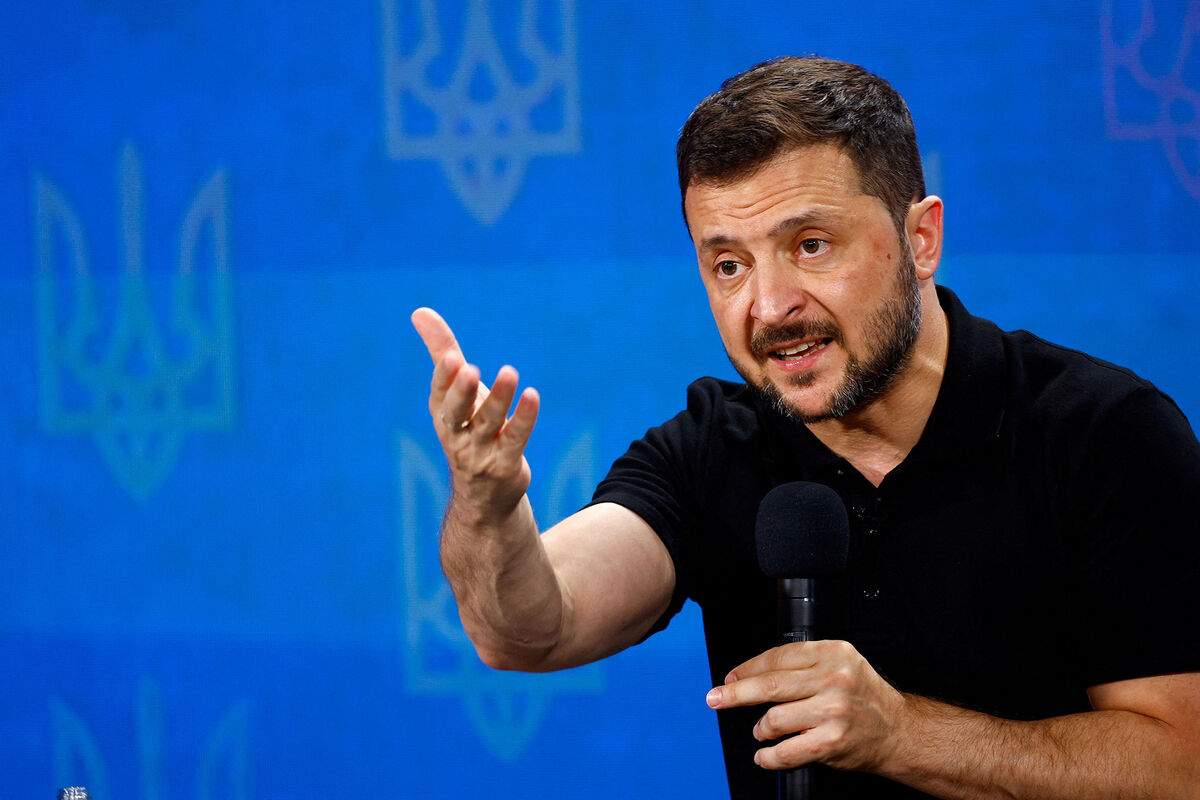
Ukrainian President Volodymyr Zelensky has said that holding nationwide elections while the country remains at war could lead to deep internal divisions and further destabilize the state.
According to the Ukrainian leader, an election campaign under wartime conditions would create additional political and social risks at a time when a significant part of the population is abroad, millions of citizens have been displaced, some territories remain under Russian control, and hundreds of thousands of Ukrainians are involved in the war.
“Elections now would be a tsunami for the state that would divide Ukraine”, Zelensky said. He also stressed that holding a vote under the current circumstances could, in his view, destroy the country.
The statement came amid calls from former Ukrainian Defense Minister Mykhailo Fedorov to hold elections during the war. His resignation had previously sparked protests, but the proposal to organize a nationwide vote failed to gain broad support, even among some of those who had advocated for his return.
Zelensky’s position reflects concerns within the Ukrainian leadership that premature elections could trigger several parallel crises. Political competition could weaken internal unity, while organizing a nationwide vote would require resolving complex issues related to security, the participation of military personnel, citizens living abroad, and residents of territories not controlled by Kyiv. In addition, Ukrainian law prohibits the holding of elections under martial law.
At the same time, the debate highlights the distinction between the need for political renewal and the question of when elections should be held. According to a poll conducted by the Kyiv International Institute of Sociology on August 5, 57% of Ukrainians believe that elections should take place only after the end of hostilities.
Zelensky said that elections could be considered if reliable international security guarantees were in place, but noted that no concrete mechanism for ensuring such conditions currently exists. He identified ending the war and preserving Ukraine as an independent and sovereign state as the country’s main priorities.
From an analytical perspective, Zelensky’s arguments have a practical basis. Elections can function as a democratic instrument only when participation is free, safe, and as inclusive as possible. Ensuring these conditions is extremely difficult during a war: some citizens are serving on the front lines, millions are living abroad, and significant territories remain under Russian control. Under such circumstances, the results of any vote could inevitably face questions about their representativeness and legitimacy. Moreover, a large-scale election campaign during ongoing hostilities could intensify political polarization at a time when the state needs internal unity most. From this perspective, postponing elections under the current circumstances can be seen not as a rejection of democratic procedures, but as an attempt to preserve the conditions under which they can eventually be held fully and without posing additional risks to the stability of the state.
CCBS Research Desk


 Latest news
Latest news
Latest newsGeorgia’s Constitutional Court Continues Case on Banning Opposition Parties: Political Pluralism at Stake
12.Oct.2026
Azerbaijan and Iran Step Up Security Contacts Amid Hijab Protests
12.Oct.2026
Personnel Shortages Complicate Ukrainian Forces’ Rotation: Ukraine Faces Long-Term Challenges on the Front Line
11.Oct.2026
Trump Eases Sanctions on Russian Fuel After Talks with Putin: Kyiv Fears Boost to Moscow’s War Revenues
10.Oct.2026
Putin Seeks to Strengthen Russia’s Influence in the Post-Soviet Space Through the CIS
10.Oct.2026
Russia and the South Caucasus: External Pressure, Political Competition and a Crisis of Trust
10.Oct.2026
Peaceful Settlement Between Armenia and Azerbaijan: Moving from Declarations to Implementation
10.Oct.2026
Moldova Ready to Accept as Many Ukrainians as Necessary if Situation Worsens This Winter
09.Oct.2026
Turkmenistan Turns Avaza into a Regional Diplomatic Hub as Caspian, Central Asian and CIS Agendas Converge
08.Oct.2026
Romania Scrambles Spanish F-18s After Aerial Targets Detected Near Ukrainian Border
07.Oct.2026
Berlin Deepens Defence Partnership with Kyiv: Germany to Provide Ukraine with €1 Billion in Military Aid
07.Oct.2026
European Parliament Against Georgian Dream: EU Prepares New Response to Tbilisi
06.Oct.2026
Bulgarian Foreign Minister to Discuss European Security and International Law in the Netherlands
05.Oct.2026
Rheinmetall in Bulgaria: Sofia Emerges as a New NATO Defence-Industrial Hub in the Balkans
05.Oct.2026
The Cost of a Long War: Moscow Expands Spending Plans Through 2029
05.Oct.2026