
 13 Oct 2026









Former Ukrainian Defense Minister Warns of Risk of Gradual Defeat in War with Russia
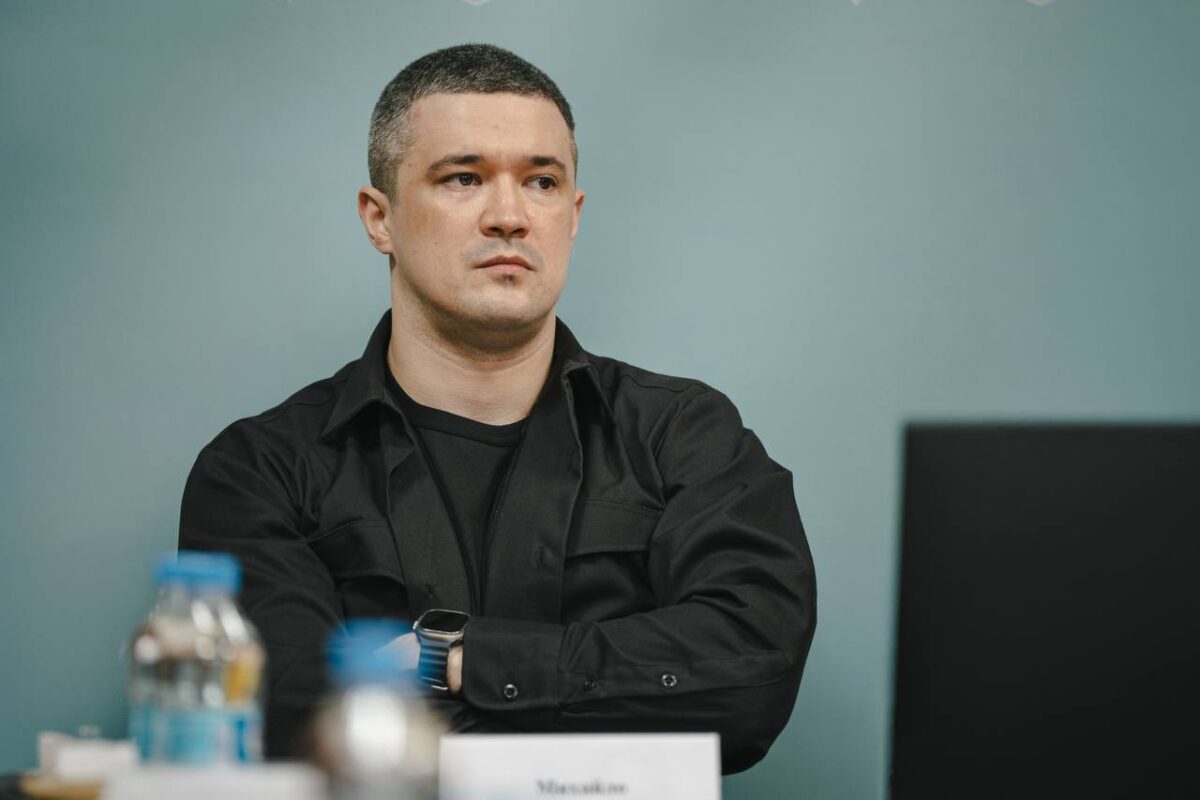
Kyiv must make key decisions and change its approach to the war in the coming months, or Ukraine risks gradually losing the conflict with Russia, former Ukrainian Defense Minister Mykhailo Fedorov said in an interview with Reuters.
According to Fedorov, Ukraine has reached a turning point that could determine the future course of the war. The former defense chief believes that Kyiv has only a few months left to make decisions capable of changing the situation in its favor.
“We are now reaching a turning point that will determine our future trajectory, but it looks as though we are gradually, slowly losing”, Fedorov said.
At the same time, he stressed that Ukraine still has a chance to win, but said the country needs a clear strategy for its next steps and systemic changes in both government and defense.
Fedorov identified the lack of a unified vision of how Ukraine intends to achieve success in a conflict that has now lasted for more than four years as one of the country’s main problems. In his view, the situation is further complicated by the slow adoption of new technologies, corruption, the influence of informal interest groups and the insufficient independence of state institutions.
The former minister also placed particular emphasis on the technological development of the armed forces. He said Ukraine should more actively develop autonomous drone systems incorporating artificial intelligence, low-cost interceptor missiles to counter Russian air attacks, as well as its own ballistic missile program.
Fedorov said the necessary technologies already exist and are being developed by Ukrainian manufacturers, but the country lacks a unified strategy for their large-scale and coordinated deployment.
“The technologies that could completely stop the Russians already exist, but the lack of vision means that we are not using them”, he said.
In his view, the front line should eventually be saturated with electronic systems capable of detecting enemy forces, drones and automated technologies, reducing the need for the constant presence of military personnel in the most dangerous areas.
The former minister also sharply criticized the effectiveness of state governance. According to his assessment, Ukraine’s state system is operating at only about 5% of its potential.
Fedorov’s remarks came amid continuing challenges on the battlefield and shortages of air defense capabilities. Russia continues to strike Ukrainian industrial facilities and warehouses using ballistic missiles, while Ukraine faces a shortage of interceptor missiles.
At the same time, Russian forces continue to make gradual advances in certain areas of the Donbas. Ukraine, meanwhile, has intensified drone and missile strikes against targets inside Russia, including military facilities and oil-refining infrastructure.
Fedorov also spoke about the campaign of strikes against Russian military and fuel infrastructure, which he considers one of the key instruments of pressure on Moscow. According to him, Ukraine has only a few months to develop this strategy and attempt to isolate Crimea, which remains under Russian control, before Moscow is able to adapt to the new tactics.
Defense financing was another key issue. Ukrainian President Volodymyr Zelensky previously said that bringing forward a significant portion of military spending had created a defense budget shortfall of about $27 billion.
Fedorov disputed that assessment, saying the financial plan developed under his leadership had envisaged a deficit of approximately $5 billion, which was expected to be covered through procurement savings and international assistance.
“By the end of the year, the budget deficit under our planning was around $5 billion, and we understood where we could get the money”, the former minister said.
Fedorov was dismissed six months after being appointed defense minister. His removal became one of the most notable political developments of recent weeks and was accompanied by protests. He later called for elections to be held during the war, prompting a sharp reaction from Ukrainian authorities.
Zelensky said that holding elections while hostilities continue could lead to destabilization and deepen divisions within the country. Fedorov himself rejected suggestions that his position was driven by outside influence.
Despite the political dispute, the former minister intends to continue working in the field of military technology. In particular, he plans to focus on developing innovative defense projects and creating an investment fund to finance new technologies.
Against this backdrop, Fedorov’s comments have become one of the sharpest public assessments of Ukraine’s position in the war made by a former senior Ukrainian official. His assessment differs markedly from Kyiv’s official rhetoric and reflects the growing pressure on the Ukrainian authorities amid a prolonged conflict, financing problems, weapons shortages and the need to find new technological solutions.


 Latest news
Latest news
Latest newsGeorgia’s Constitutional Court Continues Case on Banning Opposition Parties: Political Pluralism at Stake
12.Oct.2026
Azerbaijan and Iran Step Up Security Contacts Amid Hijab Protests
12.Oct.2026
Personnel Shortages Complicate Ukrainian Forces’ Rotation: Ukraine Faces Long-Term Challenges on the Front Line
11.Oct.2026
Trump Eases Sanctions on Russian Fuel After Talks with Putin: Kyiv Fears Boost to Moscow’s War Revenues
10.Oct.2026
Putin Seeks to Strengthen Russia’s Influence in the Post-Soviet Space Through the CIS
10.Oct.2026
Russia and the South Caucasus: External Pressure, Political Competition and a Crisis of Trust
10.Oct.2026
Peaceful Settlement Between Armenia and Azerbaijan: Moving from Declarations to Implementation
10.Oct.2026
Moldova Ready to Accept as Many Ukrainians as Necessary if Situation Worsens This Winter
09.Oct.2026
Turkmenistan Turns Avaza into a Regional Diplomatic Hub as Caspian, Central Asian and CIS Agendas Converge
08.Oct.2026
Romania Scrambles Spanish F-18s After Aerial Targets Detected Near Ukrainian Border
07.Oct.2026
Berlin Deepens Defence Partnership with Kyiv: Germany to Provide Ukraine with €1 Billion in Military Aid
07.Oct.2026
European Parliament Against Georgian Dream: EU Prepares New Response to Tbilisi
06.Oct.2026
Bulgarian Foreign Minister to Discuss European Security and International Law in the Netherlands
05.Oct.2026
Rheinmetall in Bulgaria: Sofia Emerges as a New NATO Defence-Industrial Hub in the Balkans
05.Oct.2026
The Cost of a Long War: Moscow Expands Spending Plans Through 2029
05.Oct.2026