
 13 Oct 2026









CIA Director Visits Moscow: Trump Hopes for Results
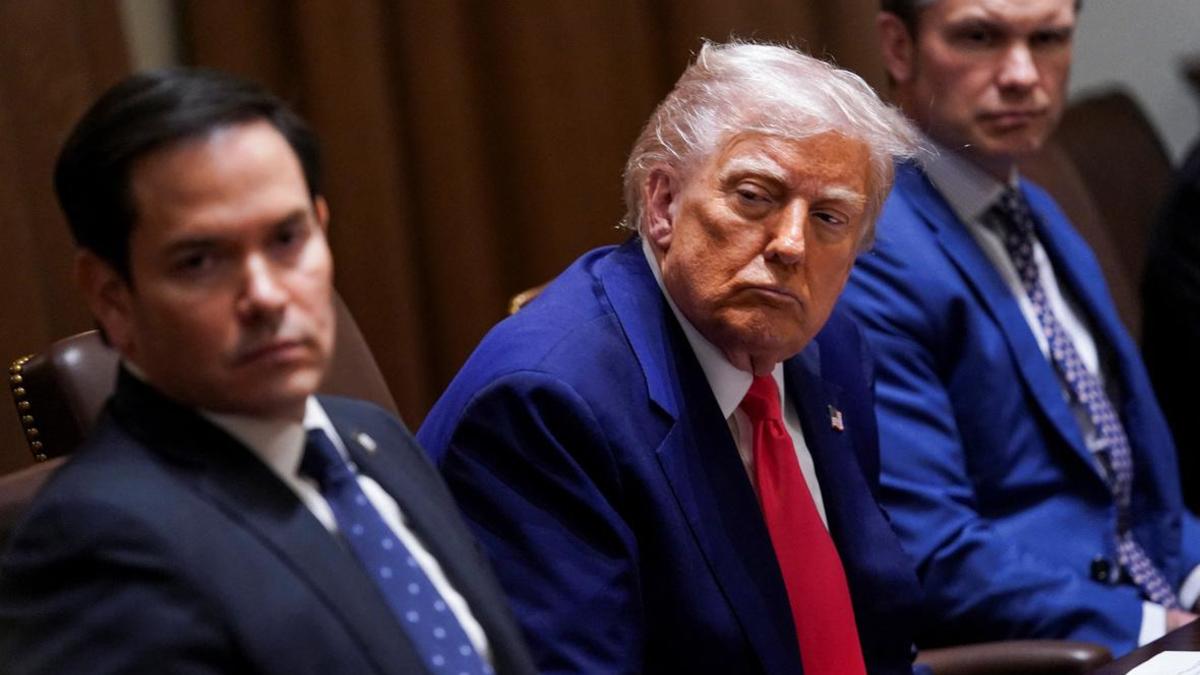
U.S. President Donald Trump said that CIA Director John Ratcliffe’s visit to Moscow was connected, at least in part, to Washington’s efforts to find ways to bring the war in Ukraine to an end.
Commenting on the previously unannounced trip by the CIA chief to Russia, Trump described the visit as “partly routine”. At the same time, the U.S. president stressed that his administration continues to work actively toward ending the war.
“We would like to see the war in Ukraine end. Maybe something will come of it”, Trump said, expressing hope that Ratcliffe’s visit to Moscow could produce results.
Earlier, Kremlin spokesman Dmitry Peskov confirmed that contacts had taken place between representatives of the Russian and U.S. intelligence services. According to him, Ratcliffe did not meet with Russian President Vladimir Putin, and the visit was related specifically to cooperation and contacts between the two countries’ intelligence agencies.
Peskov also said that contacts between Russian and U.S. intelligence services continue even during the most difficult periods in bilateral relations, describing such interaction as a “positive process”. At the same time, he noted that it was still too early to assess whether Ratcliffe’s visit could have any broader impact on relations between Moscow and Washington.
Reports of the CIA director’s presence in Moscow emerged after an American Boeing C-17A Globemaster III military aircraft was reported to have arrived in the Russian capital on August 25. According to media reports, Ratcliffe was in Moscow for talks, although official details and the agenda of the meetings were not disclosed.
CIA Director John Ratcliffe’s visit to Moscow is significant primarily because it demonstrates that direct channels of communication between the United States and Russia remain open despite the deep political crisis between the two countries. Officially, both sides have described the contacts as interaction “through intelligence channels”, but Trump’s remarks expressing hope for a possible outcome — and his reference to the war in Ukraine — suggest that the visit may have taken place within a broader political context.
At the same time, the absence of a meeting between Ratcliffe and Putin may indicate that the contacts have not yet reached the level of direct political dialogue between the two leaders. Intelligence channels are traditionally used to discuss the most sensitive issues, particularly when formal diplomacy is limited or when the parties are not yet prepared to reach public agreements. In this case, the discussions may have involved not only Ukraine, but also efforts to prevent direct escalation between Russia and the United States, exchange assessments of potential threats, and coordinate positions on specific crisis-related issues.
Trump’s reaction is also particularly significant. His statement that “maybe something will come of it” leaves room for political expectations while also suggesting that no concrete agreements may have been reached so far. Based on the president’s remarks, the White House appears to be seeking to preserve the possibility of direct dialogue with Moscow and to use all available channels to explore potential ways of ending the war.
Thus, Ratcliffe’s visit to Moscow should hardly be viewed as a diplomatic breakthrough. However, it could become an important indication of increased behind-the-scenes contacts between Washington and Moscow. If such meetings continue, they could help create a foundation for broader political negotiations. For now, however, the main outcome of the visit remains the very fact that direct communication between the two countries has been maintained — a development that carries significance in itself amid the ongoing conflict and heightened international tensions.


 Latest news
Latest news
Latest newsGeorgia’s Constitutional Court Continues Case on Banning Opposition Parties: Political Pluralism at Stake
12.Oct.2026
Azerbaijan and Iran Step Up Security Contacts Amid Hijab Protests
12.Oct.2026
Personnel Shortages Complicate Ukrainian Forces’ Rotation: Ukraine Faces Long-Term Challenges on the Front Line
11.Oct.2026
Trump Eases Sanctions on Russian Fuel After Talks with Putin: Kyiv Fears Boost to Moscow’s War Revenues
10.Oct.2026
Putin Seeks to Strengthen Russia’s Influence in the Post-Soviet Space Through the CIS
10.Oct.2026
Russia and the South Caucasus: External Pressure, Political Competition and a Crisis of Trust
10.Oct.2026
Peaceful Settlement Between Armenia and Azerbaijan: Moving from Declarations to Implementation
10.Oct.2026
Moldova Ready to Accept as Many Ukrainians as Necessary if Situation Worsens This Winter
09.Oct.2026
Turkmenistan Turns Avaza into a Regional Diplomatic Hub as Caspian, Central Asian and CIS Agendas Converge
08.Oct.2026
Romania Scrambles Spanish F-18s After Aerial Targets Detected Near Ukrainian Border
07.Oct.2026
Berlin Deepens Defence Partnership with Kyiv: Germany to Provide Ukraine with €1 Billion in Military Aid
07.Oct.2026
European Parliament Against Georgian Dream: EU Prepares New Response to Tbilisi
06.Oct.2026
Bulgarian Foreign Minister to Discuss European Security and International Law in the Netherlands
05.Oct.2026
Rheinmetall in Bulgaria: Sofia Emerges as a New NATO Defence-Industrial Hub in the Balkans
05.Oct.2026
The Cost of a Long War: Moscow Expands Spending Plans Through 2029
05.Oct.2026