
 13 Oct 2026









A New Economic Framework for Central Asia and the Caucasus: The Role of Azerbaijan and Uzbekistan
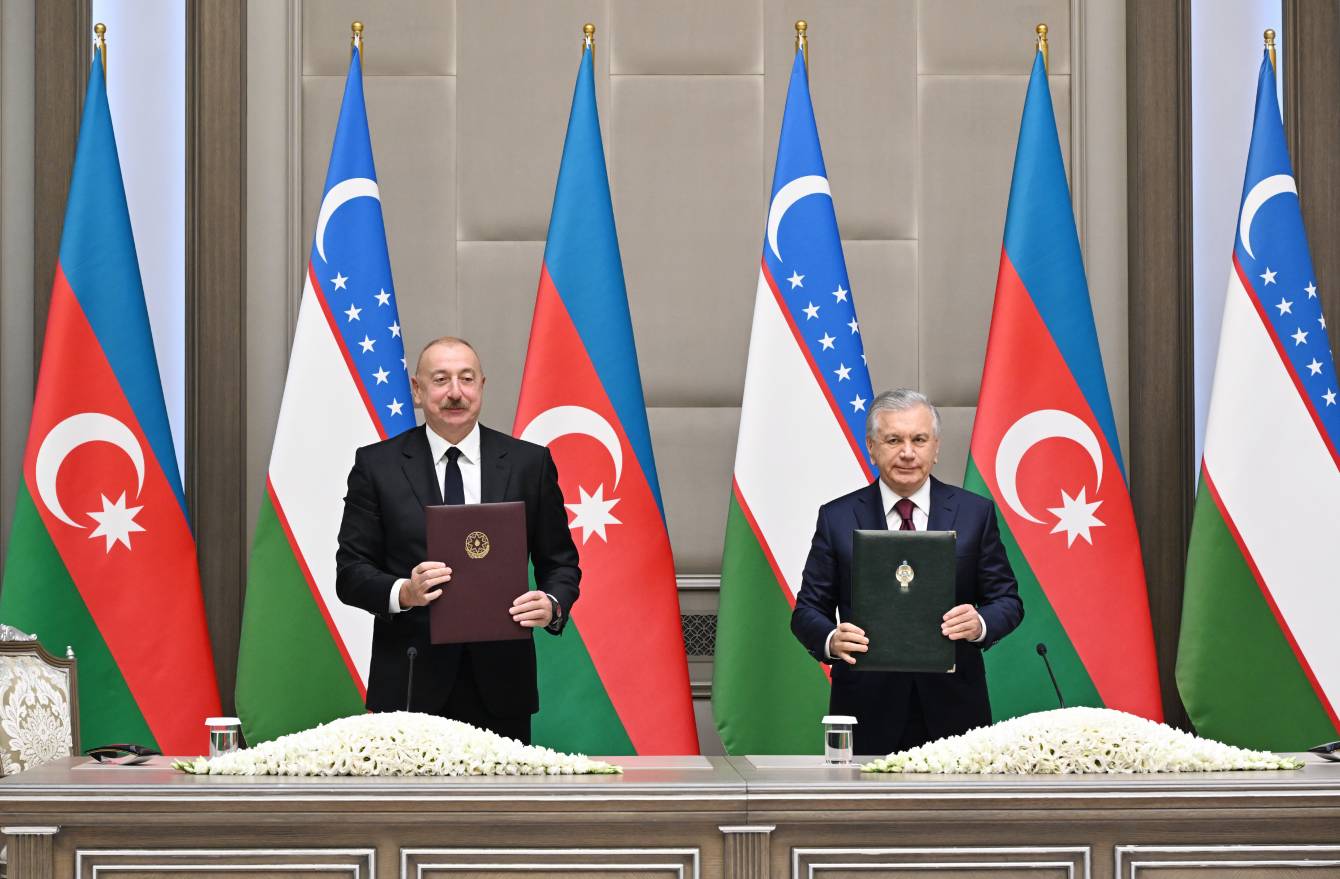
Azerbaijan
and Uzbekistan are gradually expanding their economic cooperation, shifting it
from traditional trade and investment toward the digital economy, financial
technologies, and innovative infrastructure. Recent contacts between the
central banks of the two countries demonstrate that fintech is emerging as a
new area of strategic cooperation between Baku and Tashkent.
On August 26, representatives
of the Central Bank of Azerbaijan and the Central Bank of Uzbekistan held a
meeting on the sidelines of the Silk Road Finance & Technology Forum in
Tashkent. The sides discussed the development of national fintech strategies,
infrastructure for financial innovation, mechanisms for venture financing, and
support for technology companies. Particular attention was paid to closer
integration of the financial and fintech ecosystems of the two countries.
This process has a broader
context. In recent years, Baku and Tashkent have been consistently expanding
their trade and economic ties. According to Uzbekistan’s Ministry of
Investment, Industry and Trade, bilateral trade reached $307.3 million in 2025,
increasing by 14.6%. In January–June 2026, trade turnover had already reached
$170.3 million, representing a 30.8% increase compared with the same period of
the previous year. The two countries are also working on a program aimed at
increasing bilateral trade to $1 billion by 2030.
Thus, digital finance is
becoming part of a broader process of economic rapprochement between Azerbaijan
and Uzbekistan.
Uzbekistan Bets on Becoming a
Regional Fintech Hub
Uzbekistan is currently
pursuing one of the most active digital finance development policies in Central
Asia. The country has adopted a National Fintech Development Strategy for
2026–2030, which provides for the modernization of digital financial
infrastructure, attracting investment, and developing human capital. One of the
key instruments is a regulatory sandbox that allows new financial products and
technologies to be tested in a controlled environment.
Tashkent’s ambitions extend
beyond the domestic market. In August 2026, the first Silk Road Finance &
Technology Forum was held in the Uzbek capital, organized by the Central Bank
of Uzbekistan together with the Global Finance & Technology Network. The
forum is positioned as a platform for developing a regional fintech ecosystem
and strengthening Uzbekistan’s role as one of Central Asia’s financial
technology centers.
At the same time, Tashkent is
developing open banking, payment infrastructure, regulatory mechanisms for
fintech companies, and instruments for attracting venture capital. The Central
Bank of Uzbekistan has also announced the creation of a FinTech Innovation Hub
and a specialized venture fund, as well as a program to train 5,000 young
specialists.
Another emerging area is the
central bank digital currency. The Central Bank of Uzbekistan has announced
preparations for a CBDC pilot project, demonstrating the country’s ambition not
only to expand digital payments but also to build the infrastructure of a
next-generation financial system.
The Next Stage: Cross-Border
Payments and Financial Interoperability
One of the most promising
areas of Azerbaijan-Uzbekistan cooperation could be the development of more
interoperable digital financial systems.
This includes cross-border
payments, digital identification, open banking, financial data exchange,
electronic wallets, and other instruments capable of reducing the cost and time
required for financial transactions between the two countries.
In January 2026, the Central
Bank of Azerbaijan and Uzbekistan’s National Agency for Perspective Projects
signed a memorandum of cooperation. The document covers the development and
regulation of capital and insurance markets, as well as the regulation of
crypto-assets and the development of innovative financial technologies.
In September 2025,
representatives of the central banks of Azerbaijan and Central Asian countries
also discussed the development of payment systems, digital financial
infrastructure, cybersecurity, fintech regulation, and the use of regulatory
sandboxes.
This demonstrates that the
current dialogue between Baku and Tashkent is not a one-off initiative but part
of a gradually emerging regional trend.
It is important to note that
Azerbaijan is located at the intersection of transport and trade routes
connecting Central Asia, the Caucasus, Turkiye, and European markets.
Uzbekistan, for its part, is seeking to strengthen its role in regional trade
and transport corridors.
In this context, the
development of digital finance could become a kind of “digital layer” of
economic corridors. While physical transport routes facilitate the movement of
goods, digital payment systems can accelerate the movement of capital, trade
financing, and settlements between companies.
A Broader Regional Trend Is
Emerging
The cooperation between
Azerbaijan and Uzbekistan is part of a broader trend in which countries across
Central Asia and the South Caucasus are gradually seeking to establish their
own digital financial links.
One of the possible next
stages could be greater interoperability between national payment systems,
mutual recognition of digital identification systems, and the development of
regional fintech platforms.
During discussions in
Tashkent, representatives of the regional fintech sector have already proposed
focusing on four key areas: payment-system interoperability, mutual recognition
of digital identification, compatible open-banking standards, and common principles
for data governance.
Overall,
relations between Azerbaijan and Uzbekistan demonstrate a gradual transition
from a traditional model of economic cooperation toward a more
technology-driven one. While trade, investment, industrial projects, and infrastructure
traditionally dominated the bilateral agenda, fintech, digital payments,
venture financing, crypto-assets, digital identification, and innovative
financial instruments are now becoming increasingly important. Therefore, the
current cooperation between Baku and Tashkent in financial technologies can be
viewed not simply as an exchange of experience between two central banks. It
could become part of the formation of a new economic space in which Central
Asia and the South Caucasus are increasingly connected not only through road,
rail, and maritime routes, but also through an integrated digital financial
infrastructure. If this process continues, Azerbaijan and Uzbekistan could
become key participants in the development of a transregional fintech system
along the routes connecting the Caspian Sea, Central Asia, the Caucasus, and Turkiye.


 Latest news
Latest news
Latest newsGeorgia’s Constitutional Court Continues Case on Banning Opposition Parties: Political Pluralism at Stake
12.Oct.2026
Azerbaijan and Iran Step Up Security Contacts Amid Hijab Protests
12.Oct.2026
Personnel Shortages Complicate Ukrainian Forces’ Rotation: Ukraine Faces Long-Term Challenges on the Front Line
11.Oct.2026
Trump Eases Sanctions on Russian Fuel After Talks with Putin: Kyiv Fears Boost to Moscow’s War Revenues
10.Oct.2026
Putin Seeks to Strengthen Russia’s Influence in the Post-Soviet Space Through the CIS
10.Oct.2026
Russia and the South Caucasus: External Pressure, Political Competition and a Crisis of Trust
10.Oct.2026
Peaceful Settlement Between Armenia and Azerbaijan: Moving from Declarations to Implementation
10.Oct.2026
Moldova Ready to Accept as Many Ukrainians as Necessary if Situation Worsens This Winter
09.Oct.2026
Turkmenistan Turns Avaza into a Regional Diplomatic Hub as Caspian, Central Asian and CIS Agendas Converge
08.Oct.2026
Romania Scrambles Spanish F-18s After Aerial Targets Detected Near Ukrainian Border
07.Oct.2026
Berlin Deepens Defence Partnership with Kyiv: Germany to Provide Ukraine with €1 Billion in Military Aid
07.Oct.2026
European Parliament Against Georgian Dream: EU Prepares New Response to Tbilisi
06.Oct.2026
Bulgarian Foreign Minister to Discuss European Security and International Law in the Netherlands
05.Oct.2026
Rheinmetall in Bulgaria: Sofia Emerges as a New NATO Defence-Industrial Hub in the Balkans
05.Oct.2026
The Cost of a Long War: Moscow Expands Spending Plans Through 2029
05.Oct.2026