
 13 Oct 2026









Kazakhstan Reviews Its Military System as Tokayev Orders Defense Reform Plan
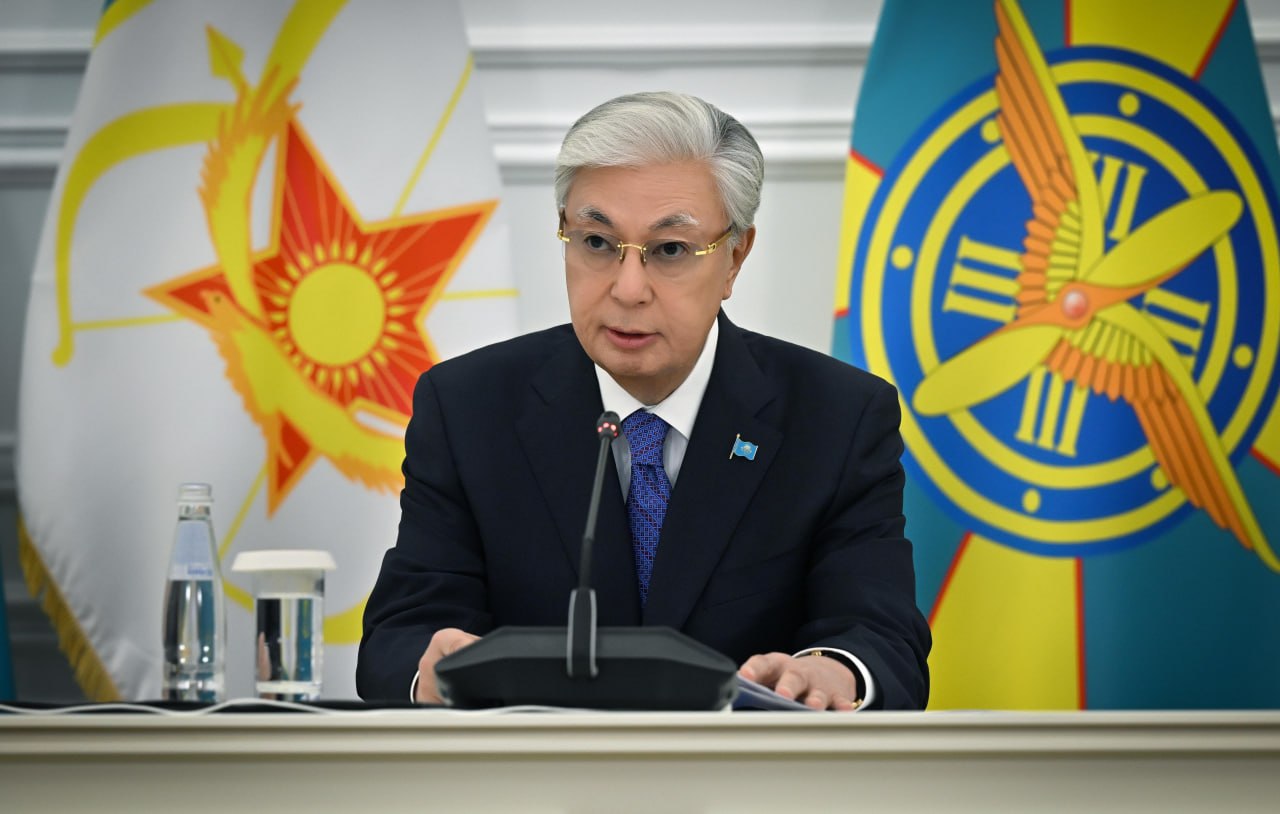
President of Kazakhstan Kassym-Jomart Tokayev has ordered the development of a reform plan for the Armed Forces following the deaths of servicemen during military exercises in the Caspian Sea. The head of state pointed to problems with providing personnel with the necessary equipment and called for a review of the military command system.
On September 27, Tokayev held a meeting with senior officials of the defense establishment and introduced the new Minister of Defense. The meeting began with a minute of silence in memory of the 14 servicemen who died during the exercises in the Mangystau Region.
The President instructed the leadership of the Ministry of Defense and the Security Council to submit a military reform plan within 10 days. At the same time, the new Defense Minister was tasked with improving the military command system.

Tokayev paid particular attention to the circumstances of the tragedy in the Caspian Sea. According to him, the servicemen were not provided with the necessary equipment, including marine life jackets, while carrying out their training and combat mission. This statement places the issue beyond the scope of an isolated emergency and into the broader context of military training and the provision of equipment to the armed forces.
The tragedy occurred on September 24 during the “Khazar Qorgany — 2026” military exercises in Kazakhstan’s sector of the Caspian Sea. After weather conditions deteriorated sharply and winds intensified, servicemen found themselves in the sea. A total of 14 people died, while three survived. The search and rescue operation was completed on September 25 after the bodies of the last two missing servicemen were recovered.
Tokayev’s directive has a broader significance, as it directly concerns the military command system rather than being limited to an investigation into the causes of the tragedy. Kazakhstan’s Military Doctrine already provides for the development of military command and control systems, the introduction of automated command systems, the strengthening of air defense capabilities, and the maintenance of a naval force capable of responding to threats in the Caspian Sea.
The future reform plan could therefore potentially cover several interconnected areas, including the organization of military exercises, safety-control mechanisms, personnel equipment, command training, unit management, and logistical support.
At the same time, the specific content of the reform has not yet been disclosed. It would therefore be premature to link the current directive to specific structural changes or large-scale rearmament. At this stage, the government has been tasked with preparing a plan to be submitted to the country’s leadership.
Kazakhstan’s Military Doctrine explicitly provides for the protection of national interests in its territorial waters and in the Kazakh sector of the Caspian Sea continental shelf, as well as maintaining the necessary combat capabilities of the naval force. This makes the tragedy during the maritime exercises particularly significant for the country’s broader defense planning. The Caspian Sea is simultaneously an area of concentration for energy infrastructure, maritime trade, and major transportation projects.
Tokayev’s directive indicates that the authorities intend to treat the incident not only as an isolated emergency but also as an opportunity to assess the effectiveness of existing military command and logistical mechanisms. The final parameters of the reform will depend on the results of the investigation and the content of the ten-day plan. At this stage, however, it is clear that particular attention will be focused on servicemen’s safety, the quality of military training, compliance with orders, and the adequacy of equipment for the tasks being performed.


 Latest news
Latest news
Latest newsGeorgia’s Constitutional Court Continues Case on Banning Opposition Parties: Political Pluralism at Stake
12.Oct.2026
Azerbaijan and Iran Step Up Security Contacts Amid Hijab Protests
12.Oct.2026
Personnel Shortages Complicate Ukrainian Forces’ Rotation: Ukraine Faces Long-Term Challenges on the Front Line
11.Oct.2026
Trump Eases Sanctions on Russian Fuel After Talks with Putin: Kyiv Fears Boost to Moscow’s War Revenues
10.Oct.2026
Putin Seeks to Strengthen Russia’s Influence in the Post-Soviet Space Through the CIS
10.Oct.2026
Russia and the South Caucasus: External Pressure, Political Competition and a Crisis of Trust
10.Oct.2026
Peaceful Settlement Between Armenia and Azerbaijan: Moving from Declarations to Implementation
10.Oct.2026
Moldova Ready to Accept as Many Ukrainians as Necessary if Situation Worsens This Winter
09.Oct.2026
Turkmenistan Turns Avaza into a Regional Diplomatic Hub as Caspian, Central Asian and CIS Agendas Converge
08.Oct.2026
Romania Scrambles Spanish F-18s After Aerial Targets Detected Near Ukrainian Border
07.Oct.2026
Berlin Deepens Defence Partnership with Kyiv: Germany to Provide Ukraine with €1 Billion in Military Aid
07.Oct.2026
European Parliament Against Georgian Dream: EU Prepares New Response to Tbilisi
06.Oct.2026
Bulgarian Foreign Minister to Discuss European Security and International Law in the Netherlands
05.Oct.2026
Rheinmetall in Bulgaria: Sofia Emerges as a New NATO Defence-Industrial Hub in the Balkans
05.Oct.2026
The Cost of a Long War: Moscow Expands Spending Plans Through 2029
05.Oct.2026