
 13 Oct 2026









PACE: Armenian Society has Chosen the European Path, but Serious Questions Remain about the Elections
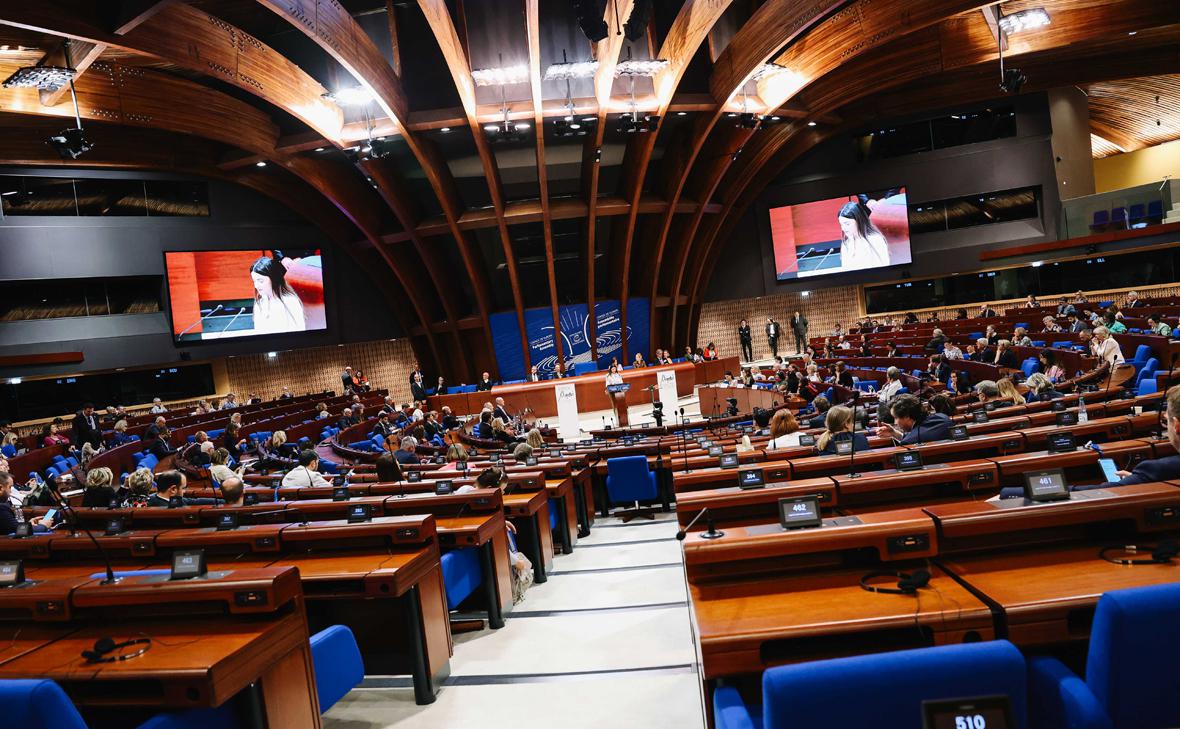
The Parliamentary Assembly of the Council of Europe (PACE) presented its final report on the parliamentary elections held in Armenia on 7 June. The document combines positive assessments of the organization of the vote with serious concerns regarding the conditions of political competition, the actions of the Central Electoral Commission (CEC), and law enforcement practices.
As a
result, the report provides arguments for both sides of Armenia’s political
divide. The ruling force can point to PACE’s recognition that the elections
were well organized and that the newly elected authorities received a “clear
mandate” from the public. The opposition, meanwhile, can refer to the problems
identified by observers, including the CEC decision that resulted in one opposition
party being left without parliamentary representation. This combination became
one of the key outcomes of the discussion of the report in Strasbourg.
However,
the main political conclusion of the PACE report on Armenia’s parliamentary
elections was the assertion that the results of the vote demonstrated Armenian
society’s choice in favor of a European path.
“The election results demonstrated the Armenian people’s choice of a pro-European path”, the concluding section of the PACE report, presented and discussed in Strasbourg on 28 September, states.
At the
same time, European observers pointed to a number of problems surrounding the
electoral process. The final PACE document therefore represents a combination
of two assessments: on the one hand, recognition of the political choice made
by society and the mandate received by the elected authorities; on the other,
critical observations regarding the conditions of political competition and
certain decisions by the electoral administration.
The
Armenian People Chose a Pro-European Path
The
observers linked the election results not only to the distribution of
parliamentary mandates but also to the country’s foreign-policy direction.
Following its assessment of the European choice, PACE noted that Armenian society
had demonstrated democratic resilience despite identified shortcomings and
external pressure, which observers described as unprecedented.
The
next conclusion concerns the elected authorities themselves: the newly elected authorities received a clear mandate from the people,
which they must now implement.
The
document therefore effectively establishes three interconnected conclusions:
society made a pro-European choice, demonstrated democratic resilience, and
gave the elected authorities a mandate to implement that choice.
“Clear
Mandate” — The Main Emphasis of the Authorities
Presenting
the report, Damien Cottier, Chair of the PACE delegation observing the
elections, said that the elections were generally well organized and that
voters were offered a genuine choice between political alternatives.
At the
same time, observers stressed that elections cannot be assessed solely on the
basis of election day itself: problems arose before the vote, during the campaign,
and after the elections. The report states that, despite identified
shortcomings and external pressure of unprecedented scale, Armenian society
demonstrated democratic resilience. The document also concludes that the newly
elected authorities received a clear mandate from the people.
This
conclusion became the main emphasis of representatives of the ruling political
force following the publication of the document. Ruben Rubinyan, Deputy Speaker
of the Armenian National Assembly, quoted this part of the report.
“Despite the identified shortcomings and unprecedented external pressure, society demonstrated its democratic resilience. Thus, the newly elected authorities received a clear mandate from the people, which they must now honorably implement”, Rubinyan wrote.
Hayk
Konjoryan, leader of the Civil Contract parliamentary faction, also highlighted
PACE’s positive assessments. According to him, the elections were pluralistic
and well organized, while voters were offered a genuine choice.
But
the Same Report Contains Serious Criticism
At the
same time, PACE identified a number of problems. Observers pointed to strong
political polarization, reports of vote-buying, the use of administrative
resources, and shortcomings in mechanisms for the effective and timely appeal
of violations. The document also refers to pressure on public-sector employees
to participate in events organized by the ruling party. At the same time,
observers recorded pressure from business representatives on employees in
connection with participation in opposition events.
PACE
also drew attention to the large number of criminal proceedings related to
vote-buying. According to data cited in the report, more than 200 proceedings
were initiated, predominantly against opposition representatives. Observers
linked this to the risk of creating an impression of selective application of
law-enforcement mechanisms.
In its
recommendations, PACE calls for an end to the electoral prosecution of
opposition representatives, guarantees of due process in election-related
cases, and stronger regulation of the use of administrative resources.
The
Most Controversial Issue — Three Polling Stations
The
most specific criticism by PACE concerns the decision of the Central Electoral
Commission to invalidate the voting results at three polling stations and not
hold repeat voting. According to the report, at two polling stations, military
personnel were allowed to vote after the officially established closing time.
At the third polling station, ballots for one of the opposition parties were
unavailable for most of the day.
PACE
considers it particularly problematic that, after invalidating the results, the
CEC did not organize repeat voting and, in the observers’ assessment, failed to
provide sufficient justification for the decision.
The
consequences of this decision were politically significant. Prosperous Armenia
received 3.99% of the vote, placing it just
below the four-percent threshold and leaving the party without parliamentary
representation. According to PACE observers, taking into account the results
from the annulled polling stations could potentially have allowed the party to
cross the threshold and secure parliamentary representation. As a result of the
redistribution of mandates, the ruling Civil Contract party obtained the
majority required to control three-fifths of the seats in parliament.
PACE
explicitly recommends amending the Electoral Code and establishing a clear
procedure for repeat voting in situations where the fundamental parliamentary
representation of a political force is at stake.
External
Pressure — Another Central Theme
Another
significant section of the report addresses foreign interference. PACE stated
that Russian interference and external information operations in a Council of
Europe member state had reached an unprecedented level.
Observers
also referred to trade restrictions, energy-related threats, diplomatic
pressure, and information operations which, in their assessment, could have
influenced electoral behavior.
At the
same time, the report does not focus exclusively on the Russian factor. It also
mentions public statements by Western and European politicians in support of
the incumbent authorities as a form of external interference, although
observers distinguish between such statements and what they assess as
significantly more serious coercive pressure from Russia.
Election
Day and the Pre-Election Campaign — Two Different Assessments
An
important feature of the document is the distinction between the assessment of
election day itself and the assessment of the electoral cycle as a whole.
Observers
generally assessed election day positively: voting was peaceful and well
organized, and the process received a positive assessment at the overwhelming
majority of polling stations observed.
At the
same time, PACE emphasized that the democratic character of an election cannot
be assessed solely on the basis of what occurred on election day.
According
to the observers, the main problems arose during the campaign period: polarization,
external pressure, violations of campaign-financing rules, the use of
administrative resources, vote-buying, pressure on campaign participants, and
problems with subsequent judicial remedies.
Why
the Report Proved Acceptable to Both Sides
This is
precisely what makes the current PACE assessment distinctive. For the
authorities, the most important conclusion is the recognition that Armenian society chose a pro-European path and that the
newly elected authorities received a clear mandate. For the opposition, other
provisions of the document are more important — above all, the criticism of the
CEC decision that affected Prosperous Armenia’s parliamentary representation,
as well as the observations concerning administrative resources, vote-buying, and
the application of law-enforcement mechanisms.
In
other words, the report did not reduce the elections to the simple formula that
they were either “good” or “problematic”.
PACE
simultaneously recognized the political significance of the election results and
pointed to institutional problems that need to be addressed.
The
European Choice — Now the Authorities’ Responsibility
The
final part of PACE’s formulation is also important. The observers did not limit
themselves to stating that Armenian society had chosen a European path. They
linked this choice to the responsibility of the new authorities, stating that
the mandate received from the people must now be implemented.
Thus,
in the interpretation of the report, the European choice is not merely a
foreign-policy orientation. It also implies further strengthening of democratic
institutions, improvement of electoral legislation, ensuring equal conditions
for political competition, and effective protection of electoral rights.
For
this reason, the final PACE report can be read simultaneously as political recognition of the direction chosen by Armenian society and a
set of requirements concerning the quality of democracy that should accompany
that direction.
Journalist
Marine KHARATYAN


 Latest news
Latest news
Latest newsGeorgia’s Constitutional Court Continues Case on Banning Opposition Parties: Political Pluralism at Stake
12.Oct.2026
Azerbaijan and Iran Step Up Security Contacts Amid Hijab Protests
12.Oct.2026
Personnel Shortages Complicate Ukrainian Forces’ Rotation: Ukraine Faces Long-Term Challenges on the Front Line
11.Oct.2026
Trump Eases Sanctions on Russian Fuel After Talks with Putin: Kyiv Fears Boost to Moscow’s War Revenues
10.Oct.2026
Putin Seeks to Strengthen Russia’s Influence in the Post-Soviet Space Through the CIS
10.Oct.2026
Russia and the South Caucasus: External Pressure, Political Competition and a Crisis of Trust
10.Oct.2026
Peaceful Settlement Between Armenia and Azerbaijan: Moving from Declarations to Implementation
10.Oct.2026
Moldova Ready to Accept as Many Ukrainians as Necessary if Situation Worsens This Winter
09.Oct.2026
Turkmenistan Turns Avaza into a Regional Diplomatic Hub as Caspian, Central Asian and CIS Agendas Converge
08.Oct.2026
Romania Scrambles Spanish F-18s After Aerial Targets Detected Near Ukrainian Border
07.Oct.2026
Berlin Deepens Defence Partnership with Kyiv: Germany to Provide Ukraine with €1 Billion in Military Aid
07.Oct.2026
European Parliament Against Georgian Dream: EU Prepares New Response to Tbilisi
06.Oct.2026
Bulgarian Foreign Minister to Discuss European Security and International Law in the Netherlands
05.Oct.2026
Rheinmetall in Bulgaria: Sofia Emerges as a New NATO Defence-Industrial Hub in the Balkans
05.Oct.2026
The Cost of a Long War: Moscow Expands Spending Plans Through 2029
05.Oct.2026