
 13 Oct 2026









Tokayev Discusses Expanded Cooperation with Germany in Raw Materials, Industry and Energy
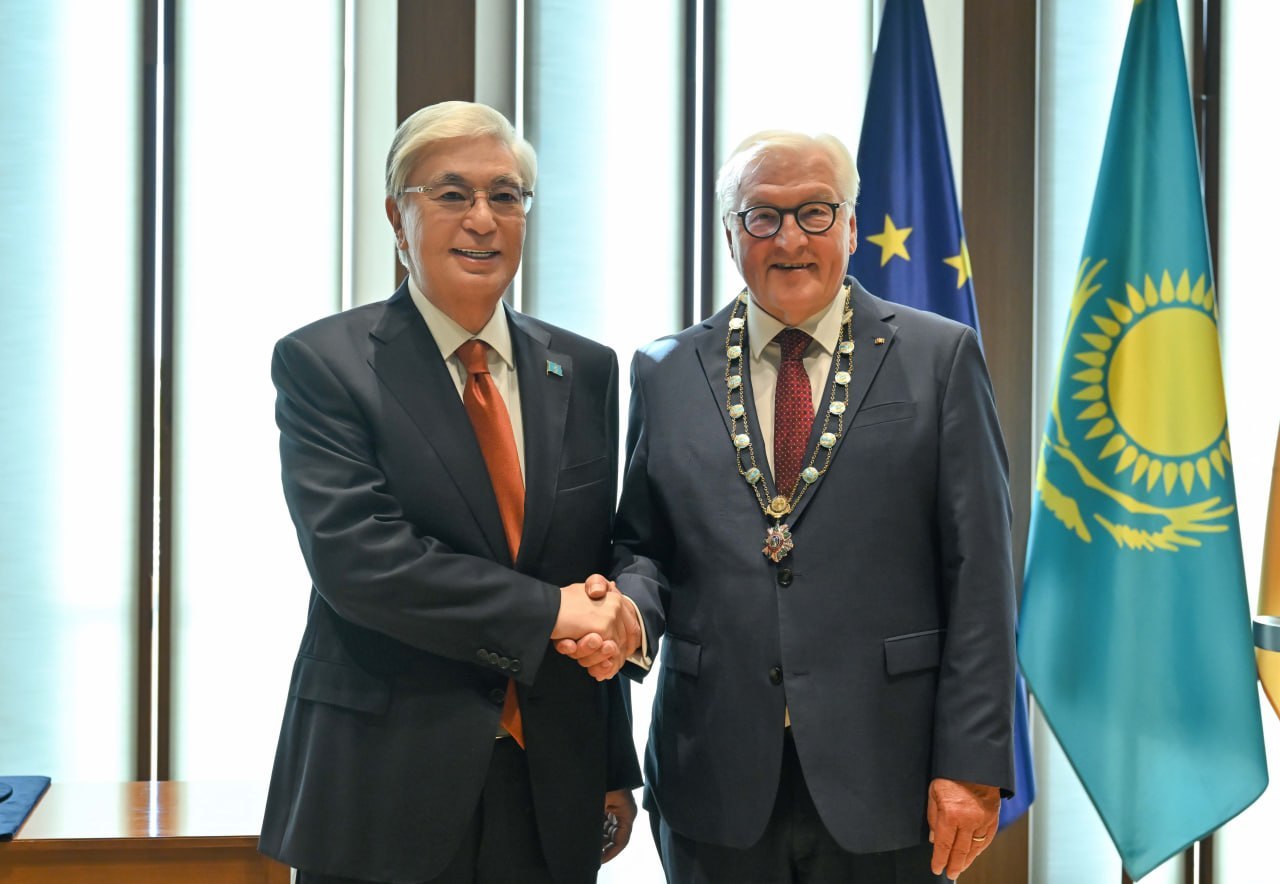
President
of Kazakhstan Kassym-Jomart Tokayev arrived in Germany on September 29 for an
official visit, where he held talks with Federal Chancellor Friedrich Merz in
Berlin. The discussions focused on expanding bilateral economic cooperation,
energy, critical raw materials, industrial cooperation, technology and
transport connectivity.
Following
the talks, Kazakhstan and Germany agreed to implement a roadmap for 2026–2028
aimed at deepening cooperation in industry, technology and the raw materials
sector. The two sides also intend to conduct joint analysis of supply chains
and develop more resilient logistics links between Kazakhstan and European
markets.
Particular
attention during the talks was paid to critical raw materials. Kazakhstan
possesses significant reserves of strategic minerals and regards their
development and subsequent processing as a promising area of cooperation with
European partners. Astana is interested not only in exporting raw materials but
also in developing production chains with higher added value.
Tokayev
also called on German companies to increase investment in Kazakhstan and
establish production facilities in the country. According to Tokayev, Germany’s
Mittelstand, with its technological expertise and industrial capabilities, is
of particular interest to Kazakhstan. The Kazakh president noted that the
potential for economic cooperation between the two countries has not yet been
fully utilized.
Energy
was another key area of the discussions. Tokayev expressed Kazakhstan’s
intention to increase oil supplies to Germany and emphasized the country’s
readiness to remain a reliable supplier to the German market. Merz, in turn,
highlighted Kazakhstan’s importance for diversifying European oil supplies amid
the reduction of Russian energy imports.
Kazakhstan
also proposed expanding cooperation in renewable energy and green hydrogen
production. Tokayev cited projects involving German companies Linde and Siemens
Energy as examples of existing industrial cooperation.
Transport
infrastructure also featured prominently in the talks. Kazakhstan aims to
increase the volume of cargo transported along the Trans-Caspian International
Transport Route, also known as the Middle Corridor, to 20 million tonnes.
Astana is interested in attracting German companies to the development of transport
and logistics infrastructure, including the use of Kazakhstan’s Caspian Sea
ports, particularly the Port of Aktau.
Berlin
also regards Kazakhstan as an important partner in Central Asia. According to
Merz, Kazakhstan is Germany’s largest trading partner in the region. Germany
and Kazakhstan are marking the 35th anniversary of the establishment of
diplomatic relations, while Tokayev’s current visit comes amid expanding
economic ties between the two countries.
Following
the talks in Berlin, Tokayev’s visit continued in Munich, where he held
meetings with representatives of German business. The discussions focused
primarily on implementing the agreements reached in Berlin and attracting
investment into projects in Kazakhstan.
Overall,
Tokayev’s visit reflects Kazakhstan’s efforts to strengthen economic ties with
Germany and the European Union across several areas — from oil supplies and
critical minerals to industrial cooperation, raw-material processing, logistics
and green energy. Germany is seeking to use Kazakhstan as a source for
diversifying its raw-material and energy supplies, while for Astana,
cooperation with German companies provides an opportunity to attract investment
and technology and expand the domestic processing of its own resources.


 Latest news
Latest news
Latest newsGeorgia’s Constitutional Court Continues Case on Banning Opposition Parties: Political Pluralism at Stake
12.Oct.2026
Azerbaijan and Iran Step Up Security Contacts Amid Hijab Protests
12.Oct.2026
Personnel Shortages Complicate Ukrainian Forces’ Rotation: Ukraine Faces Long-Term Challenges on the Front Line
11.Oct.2026
Trump Eases Sanctions on Russian Fuel After Talks with Putin: Kyiv Fears Boost to Moscow’s War Revenues
10.Oct.2026
Putin Seeks to Strengthen Russia’s Influence in the Post-Soviet Space Through the CIS
10.Oct.2026
Russia and the South Caucasus: External Pressure, Political Competition and a Crisis of Trust
10.Oct.2026
Peaceful Settlement Between Armenia and Azerbaijan: Moving from Declarations to Implementation
10.Oct.2026
Moldova Ready to Accept as Many Ukrainians as Necessary if Situation Worsens This Winter
09.Oct.2026
Turkmenistan Turns Avaza into a Regional Diplomatic Hub as Caspian, Central Asian and CIS Agendas Converge
08.Oct.2026
Romania Scrambles Spanish F-18s After Aerial Targets Detected Near Ukrainian Border
07.Oct.2026
Berlin Deepens Defence Partnership with Kyiv: Germany to Provide Ukraine with €1 Billion in Military Aid
07.Oct.2026
European Parliament Against Georgian Dream: EU Prepares New Response to Tbilisi
06.Oct.2026
Bulgarian Foreign Minister to Discuss European Security and International Law in the Netherlands
05.Oct.2026
Rheinmetall in Bulgaria: Sofia Emerges as a New NATO Defence-Industrial Hub in the Balkans
05.Oct.2026
The Cost of a Long War: Moscow Expands Spending Plans Through 2029
05.Oct.2026