
 13 Oct 2026









Romanian Parliament Rejects Siegfried Muresan Government as Political Crisis Continues
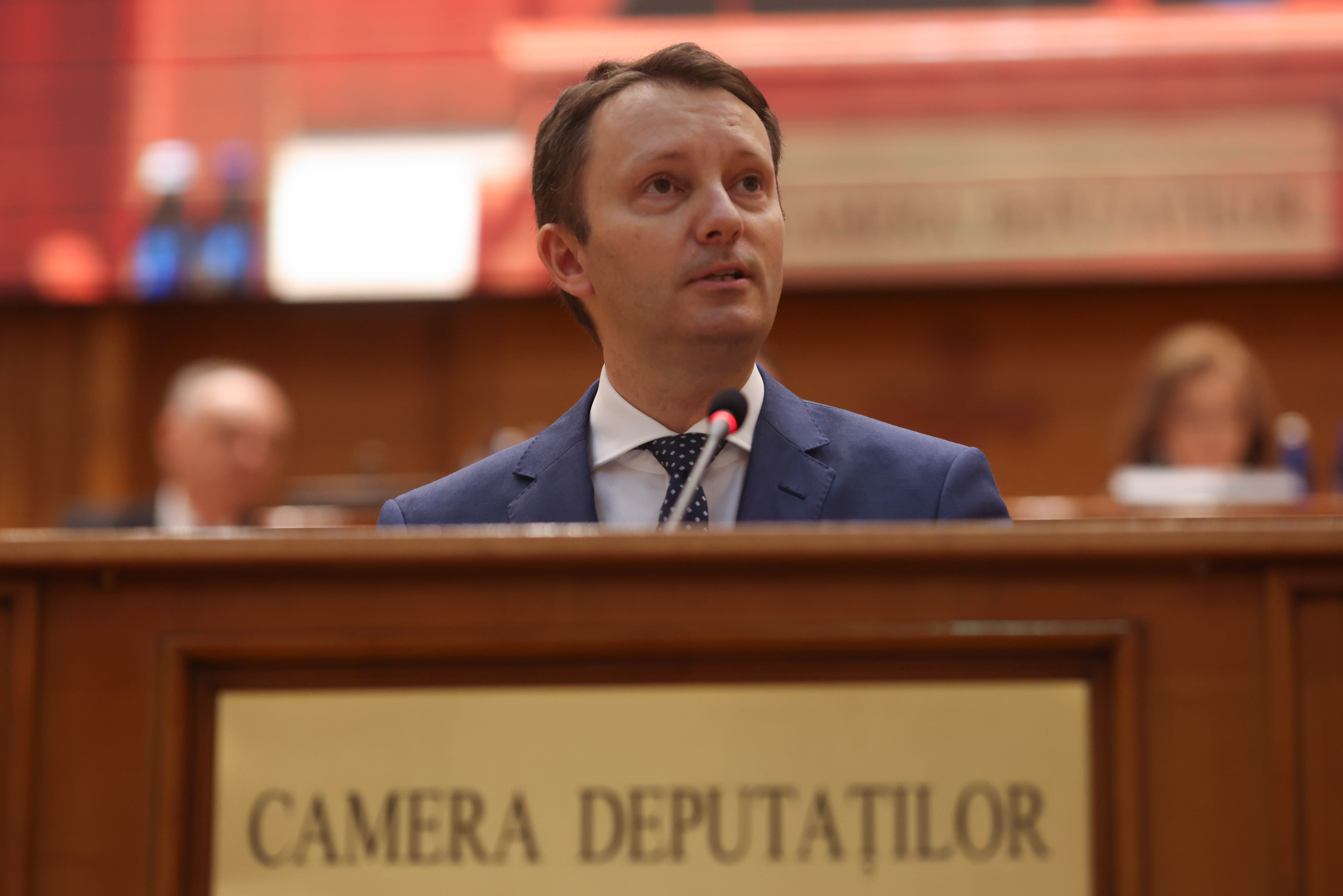
Romania’s
Parliament on September 30 rejected the government proposed by Prime
Minister-designate Siegfried Muresan, prolonging the country’s ongoing
political crisis.
At a
joint session of the Chamber of Deputies and the Senate, 182 lawmakers voted in
favor of the proposed cabinet, while 233 votes were required for approval.
Fifteen lawmakers voted against. A total of 321 out of 464 parliamentarians
attended the session, with 197 votes declared valid.
The
vote demonstrated the absence of the parliamentary majority needed to form a
new government. Lawmakers from the right-wing Alliance for the Union of
Romanians (AUR) did not participate in the session, while representatives of
the Social Democratic Party (PSD) attended but did not vote. The Muresan
cabinet was mainly supported by the political forces involved in its formation,
including the National Liberal Party (PNL), the Save Romania Union (USR), and
the Democratic Alliance of Hungarians in Romania (UDMR).

Romanian Parliament Rejects Muresan Government in Confidence Vote
Following
the vote, Muresan said that the proposed cabinet was intended to provide a way
out of the political crisis and ensure the implementation of necessary state
reforms. According to Muresan, the parties that had previously contributed to
the emergence of the crisis effectively prolonged political uncertainty through
their conduct in Parliament.
The
next step now rests with Romanian President Nicusor Dan. Following the
rejection of Muresan’s candidacy, the president announced a new round of
consultations with parliamentary parties. According to his plan, the
consultations will take place on Monday, after which the president intends to
nominate a new candidate for prime minister.
For
now, Bucharest is pursuing the formation of a new government rather than
immediately moving toward early parliamentary elections. However, following
another failure to form a government, the dissolution of Parliament and the
organization of early elections remain among the constitutionally available
options. Under the existing procedure, the president may dissolve Parliament if
the constitutional conditions are met, including the rejection of two attempts
to form a government within the prescribed period.
Romania’s
political crisis has already lasted several months. The previous government,
led by Ilie Bolojan, lost parliamentary support following a no-confidence vote
in May. Since then, attempts to establish a stable parliamentary coalition have
failed to produce a fully functioning government.
The
prolonged political uncertainty is increasing pressure on financial markets and
raising concerns about Bucharest’s ability to continue reducing its budget
deficit. Against the backdrop of the political crisis, international
credit-rating agencies are also closely assessing the prospects for Romania to
maintain its investment-grade rating.
Moreover,
for Romania, a member of both the European Union and NATO and a country
directly bordering Ukraine, the prolonged political crisis is unfolding
alongside significant economic and security challenges. In these circumstances,
the president’s key task is to find a parliamentary formula capable of ensuring
the functioning of the government and the adoption of necessary budgetary and
structural measures.


 Latest news
Latest news
Latest newsGeorgia’s Constitutional Court Continues Case on Banning Opposition Parties: Political Pluralism at Stake
12.Oct.2026
Azerbaijan and Iran Step Up Security Contacts Amid Hijab Protests
12.Oct.2026
Personnel Shortages Complicate Ukrainian Forces’ Rotation: Ukraine Faces Long-Term Challenges on the Front Line
11.Oct.2026
Trump Eases Sanctions on Russian Fuel After Talks with Putin: Kyiv Fears Boost to Moscow’s War Revenues
10.Oct.2026
Putin Seeks to Strengthen Russia’s Influence in the Post-Soviet Space Through the CIS
10.Oct.2026
Russia and the South Caucasus: External Pressure, Political Competition and a Crisis of Trust
10.Oct.2026
Peaceful Settlement Between Armenia and Azerbaijan: Moving from Declarations to Implementation
10.Oct.2026
Moldova Ready to Accept as Many Ukrainians as Necessary if Situation Worsens This Winter
09.Oct.2026
Turkmenistan Turns Avaza into a Regional Diplomatic Hub as Caspian, Central Asian and CIS Agendas Converge
08.Oct.2026
Romania Scrambles Spanish F-18s After Aerial Targets Detected Near Ukrainian Border
07.Oct.2026
Berlin Deepens Defence Partnership with Kyiv: Germany to Provide Ukraine with €1 Billion in Military Aid
07.Oct.2026
European Parliament Against Georgian Dream: EU Prepares New Response to Tbilisi
06.Oct.2026
Bulgarian Foreign Minister to Discuss European Security and International Law in the Netherlands
05.Oct.2026
Rheinmetall in Bulgaria: Sofia Emerges as a New NATO Defence-Industrial Hub in the Balkans
05.Oct.2026
The Cost of a Long War: Moscow Expands Spending Plans Through 2029
05.Oct.2026