
 13 Oct 2026









Iran denies U.S. seizure of Iranian arms on way to Houthis in Yemen
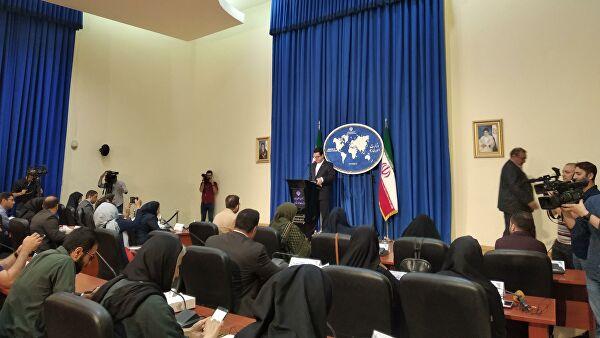
According to Reuters, Iran on Thursday denied that U.S. forces had seized a boat carrying Iranian weapons to Houthi rebels in Yemen, saying the charge was aimed at extending a U.N. arms embargo on Tehran.
U.S. Secretary of State Mike Pompeo said in Washington on Wednesday that U.S. and unidentified allied forces had interdicted a vessel off Yemen’s coast on June 28 that was carrying Iranian arms to the Houthis.
“Lying, accusations and spreading hatred are key elements of America’s foreign policy, especially in the current regime,” Iran’s Foreign Ministry spokesman Abbas Mousavi said, quoted by state television. “Pompeo’s remarks stem from this approach.”
U.S. President Donald Trump’s administration has taken a hardline with the United Nations to push it to strengthen the embargo on Iran, saying that lifting it would allow Tehran to acquire weapons that could fuel conflicts in the Middle East.
“Americans are trying to provide excuses to continue their maximum pressure on Iran, advance their malicious goals and to extend the arms embargo on Iran,” Mousavi said.
Relations between the longtime foes have worsened since 2018 when Trump abandoned an international accord under which Iran agreed to curb its nuclear work in return for the lifting of sanctions.
The United States has reimposed sanctions to throttle Iran’s oil trade and pressure Tehran to renegotiate the deal, give up its ballistic missiles, and cease its involvement in regional wars.
Iran-aligned Houthi rebels have been fighting the Yemeni government, backed by a Saudi-led coalition, since 2015. It denies charges by Saudi Arabia and the United States that it gives financial and military support to the Houthis.
“The United States and Saudi Arabia have imposed a siege on the Yemeni people,” Mousavi said. “With such baseless accusations, they are trying to evade accountability and responsibility for their crimes in Yemen.”


 Latest news
Latest news
Latest newsGeorgia’s Constitutional Court Continues Case on Banning Opposition Parties: Political Pluralism at Stake
12.Oct.2026
Azerbaijan and Iran Step Up Security Contacts Amid Hijab Protests
12.Oct.2026
Personnel Shortages Complicate Ukrainian Forces’ Rotation: Ukraine Faces Long-Term Challenges on the Front Line
11.Oct.2026
Trump Eases Sanctions on Russian Fuel After Talks with Putin: Kyiv Fears Boost to Moscow’s War Revenues
10.Oct.2026
Putin Seeks to Strengthen Russia’s Influence in the Post-Soviet Space Through the CIS
10.Oct.2026
Russia and the South Caucasus: External Pressure, Political Competition and a Crisis of Trust
10.Oct.2026
Peaceful Settlement Between Armenia and Azerbaijan: Moving from Declarations to Implementation
10.Oct.2026
Moldova Ready to Accept as Many Ukrainians as Necessary if Situation Worsens This Winter
09.Oct.2026
Turkmenistan Turns Avaza into a Regional Diplomatic Hub as Caspian, Central Asian and CIS Agendas Converge
08.Oct.2026
Romania Scrambles Spanish F-18s After Aerial Targets Detected Near Ukrainian Border
07.Oct.2026
Berlin Deepens Defence Partnership with Kyiv: Germany to Provide Ukraine with €1 Billion in Military Aid
07.Oct.2026
European Parliament Against Georgian Dream: EU Prepares New Response to Tbilisi
06.Oct.2026
Bulgarian Foreign Minister to Discuss European Security and International Law in the Netherlands
05.Oct.2026
Rheinmetall in Bulgaria: Sofia Emerges as a New NATO Defence-Industrial Hub in the Balkans
05.Oct.2026
The Cost of a Long War: Moscow Expands Spending Plans Through 2029
05.Oct.2026