
 13 Oct 2026









UN Security Council Members Support Georgia’s Sovereignty, Territorial Integrity
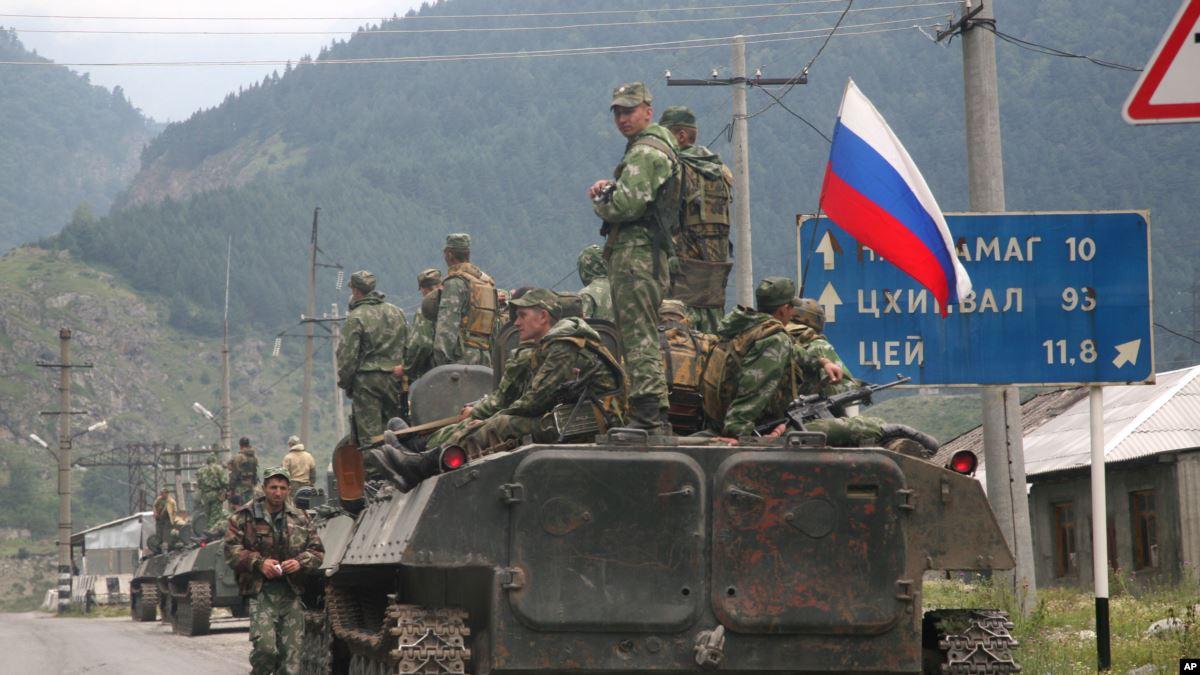
In relation to the 12th anniversary of the Russia-Georgia war in August 2008, the UN Security Council members have released a joint statement, expressing full support to Georgia's independence, sovereignty and territorial integrity within its internationally recognized borders.
The joint statement by Belgium, Estonia, France, Germany, the US, the UK, Norway and Ireland was adopted after the UN Security Council's closed-door meeting, where the counterparts discussed the situation in Georgia after the August 2008 war.
"This week marks 12 years since the beginning of the conflict between Russia and Georgia on 7 August 2008. Today, the Security Council heard a briefing by Assistant-Secretary-General Miroslav Jenča (DPPA), and discussed developments since then. We remember those who died and those who lost their homes, and regret that little progress has been made towards resolving the conflict since concluding the Agreements of 12 August and 8 September 2008. We firmly support Georgia’s independence, sovereignty and territorial integrity within its internationally recognized borders.
"The continuing Russian military presence in the Georgian regions of Abkhazia and South Ossetia as well as Russia’s recognition of the so-called independence of these regions violates the territorial integrity of Georgia and undermines Georgia’s sovereignty, as well as the Rules Based International Order. It further divides communities and puts at risk the health and lives of the conflict-affected population. We are extremely concerned about the intensification of the so-called “borderisation process” over the past year, including during the global COVID-19 pandemic. Throughout this already challenging time, the de-facto authorities exercising effective control over the Georgian regions of Abkhazia and South Ossetia have continued the practice of arbitrary detentions along the Administrative Boundary Lines. De facto South Ossetian authorities have repeatedly denied emergency medical evacuations and incoming humanitarian aid. We are also concerned about the ongoing disinformation campaign by Russia about the pandemic and related health issues as well as false propaganda about the life-saving work of the Lugar Center.
"These acts prolong the conflict, threaten peace and stability, interfere with the enjoyment of human rights and fundamental freedoms, and negatively impact the health and safety of people across Georgia, destabilizing the region as a whole. Today we call again on the Russian Federation to fully implement her obligation and commitments under the Agreements of 12 August and 8 September 2008. The Six Point Agreement of 12 August includes an obligation by Russia to withdraw its armed forces to positions held before hostilities began. The ceasefire agreement also committed the parties to establish an international security mechanism.
"We reiterate our support for the respect and protection of human rights, including the rights of forcibly displaced persons, as well as the importance of enabling their safe, voluntary, dignified and unhindered return to their homes in accordance with international law. The topic of refugees and internally displaced persons (IDPs) remains a core issue of discussion within the Geneva International Discussions (GID). Despite the initial promise of significant progress towards reconciliation, we regret the lack of commitment on the part of the Russian Federation and resulting lack of progress achieved in the GID format. We further call on the de-facto authorities exercising effective control over the Georgian regions of Abkhazia and South Ossetia to facilitate unhindered access to these regions, including religious sites, for relevant humanitarian and human rights actors and other individuals.
"We remain steadfast in our support for a peaceful resolution of the conflict in Georgia and encourage all parties to redouble their efforts within the Geneva International Discussions", reads the statement.
This year marks the 11th anniversary of the Russia-Georgia war, when in 2008, the Russian Federation invaded the country and occupied two Georgian regions, Abkhazia and Tskhinvali, so-called South Ossetia.


 Latest news
Latest news
Latest newsGeorgia’s Constitutional Court Continues Case on Banning Opposition Parties: Political Pluralism at Stake
12.Oct.2026
Azerbaijan and Iran Step Up Security Contacts Amid Hijab Protests
12.Oct.2026
Personnel Shortages Complicate Ukrainian Forces’ Rotation: Ukraine Faces Long-Term Challenges on the Front Line
11.Oct.2026
Trump Eases Sanctions on Russian Fuel After Talks with Putin: Kyiv Fears Boost to Moscow’s War Revenues
10.Oct.2026
Putin Seeks to Strengthen Russia’s Influence in the Post-Soviet Space Through the CIS
10.Oct.2026
Russia and the South Caucasus: External Pressure, Political Competition and a Crisis of Trust
10.Oct.2026
Peaceful Settlement Between Armenia and Azerbaijan: Moving from Declarations to Implementation
10.Oct.2026
Moldova Ready to Accept as Many Ukrainians as Necessary if Situation Worsens This Winter
09.Oct.2026
Turkmenistan Turns Avaza into a Regional Diplomatic Hub as Caspian, Central Asian and CIS Agendas Converge
08.Oct.2026
Romania Scrambles Spanish F-18s After Aerial Targets Detected Near Ukrainian Border
07.Oct.2026
Berlin Deepens Defence Partnership with Kyiv: Germany to Provide Ukraine with €1 Billion in Military Aid
07.Oct.2026
European Parliament Against Georgian Dream: EU Prepares New Response to Tbilisi
06.Oct.2026
Bulgarian Foreign Minister to Discuss European Security and International Law in the Netherlands
05.Oct.2026
Rheinmetall in Bulgaria: Sofia Emerges as a New NATO Defence-Industrial Hub in the Balkans
05.Oct.2026
The Cost of a Long War: Moscow Expands Spending Plans Through 2029
05.Oct.2026