
 13 Oct 2026









Russia Warns NATO It is Ready to Use Its Entire Arsenal in the Event of a Threat to Kaliningrad
Russia
has warned that any attempt to isolate Kaliningrad from the rest of the country
could lead to a direct military confrontation and the potential use of nuclear
weapons. NATO has rejected claims that it is preparing to blockade the Russian
exclave and has criticized Moscow's nuclear rhetoric.
Russian
President Vladimir Putin said on October 1 that Moscow would be prepared to use
"all available means" if Russia or its territory came under a direct
military attack. Referring specifically to the Kaliningrad region, Putin said
that in the event of an attack, the question of using Russia's entire arsenal
would "inevitably" be placed on the agenda. He made the remarks
during a plenary session of the Valdai Discussion Club in Moscow.
"If it comes to a direct attack on the Russian Federation — in this case, we are talking about Kaliningrad, and possibly other territories — the issue of the Russian Federation using all the means at its disposal will, of course, inevitably and immediately arise", the Russian president said. He also acknowledged the possibility of a confrontation with NATO, which he described as a significantly larger adversary, while claiming that Russia possesses "competitive advantages" in the military sphere.
Putin's
statement followed a diplomatic escalation surrounding Kaliningrad that began
in late September. On September 30, Russia sent a diplomatic document to NATO
warning that any attempt by the Western alliance to isolate the Kaliningrad
region from the rest of Russia could result in the use of "the entire
arsenal of forces and means", including nuclear weapons. Moscow also
warned that it could strike decision-making centers in NATO member states from
the very beginning of a potential conflict.
Russia
has said that its concerns are linked to increased NATO military activity in
the Baltic region. Russian diplomatic missions in several European countries
have previously claimed that Moscow has information indicating that NATO could
be preparing for an air and maritime blockade of Kaliningrad. These Russian
claims have been cited as one of the reasons behind the latest series of
warnings. However, no public evidence confirming the existence of a NATO plan
to blockade Kaliningrad has been presented.
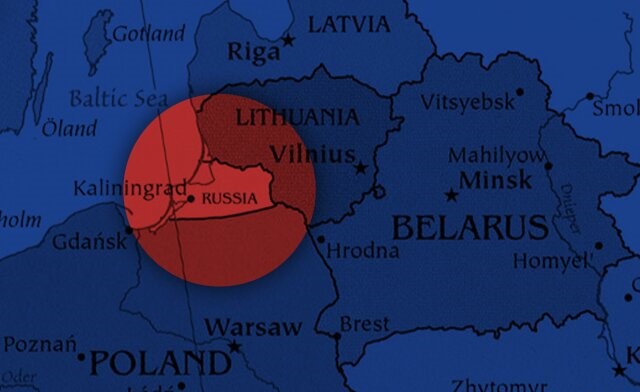
Kaliningrad
has particular military and strategic importance for Russia. The region is
located between Poland and Lithuania, both NATO members, and is separated from
mainland Russia by the territories of other countries. It also contains
significant military infrastructure and is regarded by Moscow as a key element
of Russia's military presence in the Baltic region. According to the Associated
Press, Russian weapons systems deployed in Kaliningrad include Iskander
missiles capable of carrying nuclear warheads.
Any
attempt to physically restrict air or maritime access to the region could
potentially affect Russia's ability to maintain its military grouping there and
sustain its connection with the rest of the country. For this reason, Russian
authorities view a potential isolation of Kaliningrad not merely as a
logistical challenge but as a potential threat to national security and
territorial integrity.
NATO,
however, has rejected claims that the alliance is preparing military action
against Kaliningrad. NATO Secretary General Mark Rutte has said that the
alliance is defensive in nature and that its exercises and activities do not
pose a threat to Russian territory. He has also called on Moscow to refrain
from nuclear rhetoric.
"NATO is a defensive alliance", Rutte said when commenting on Russia's warning. He argued that statements concerning the use of nuclear weapons do not contribute to reducing tensions. NATO has also called on Russia to end its war against Ukraine and refrain from further escalation of its rhetoric toward NATO member states.
At
the same time, NATO maintains its own nuclear deterrence policy. According to
the alliance's official position, nuclear forces form part of its broader
deterrence and defense posture alongside conventional forces and missile
defense. NATO states that the circumstances in which it might have to use
nuclear weapons are "extremely remote", while maintaining that the
fundamental security of its members remains at the core of its nuclear
deterrence policy.
The
current situation surrounding Kaliningrad is unfolding against a broader
deterioration in relations between Russia and European countries. In recent
months, European governments have increasingly accused Moscow of engaging in
hybrid activities, including sabotage, cyberattacks and other forms of pressure.
Russian authorities reject these accusations and, in turn, accuse NATO of
increasing its military activity near Russia's borders.
The
latest statements from Moscow therefore currently represent primarily a warning
about the consequences of a possible change in the military status quo around
Kaliningrad rather than an announcement of a specific NATO operation against
the Russian exclave. However, bringing the possibility of nuclear weapons use
into the discussion raises the stakes of any potential incident in the Baltic
region. Russia links the nuclear scenario to a direct attack or an attempt to
isolate Kaliningrad, while NATO denies having such plans and describes its
activities in the region as defensive.


 Latest news
Georgia’s Constitutional Court Continues Case on Banning Opposition Parties: Political Pluralism at Stake
12.Oct.2026
Azerbaijan and Iran Step Up Security Contacts Amid Hijab Protests
12.Oct.2026
Personnel Shortages Complicate Ukrainian Forces’ Rotation: Ukraine Faces Long-Term Challenges on the Front Line
11.Oct.2026
Trump Eases Sanctions on Russian Fuel After Talks with Putin: Kyiv Fears Boost to Moscow’s War Revenues
10.Oct.2026
Putin Seeks to Strengthen Russia’s Influence in the Post-Soviet Space Through the CIS
10.Oct.2026
Russia and the South Caucasus: External Pressure, Political Competition and a Crisis of Trust
10.Oct.2026
Peaceful Settlement Between Armenia and Azerbaijan: Moving from Declarations to Implementation
10.Oct.2026
Moldova Ready to Accept as Many Ukrainians as Necessary if Situation Worsens This Winter
09.Oct.2026
Turkmenistan Turns Avaza into a Regional Diplomatic Hub as Caspian, Central Asian and CIS Agendas Converge
08.Oct.2026
Romania Scrambles Spanish F-18s After Aerial Targets Detected Near Ukrainian Border
07.Oct.2026
Berlin Deepens Defence Partnership with Kyiv: Germany to Provide Ukraine with €1 Billion in Military Aid
07.Oct.2026
European Parliament Against Georgian Dream: EU Prepares New Response to Tbilisi
06.Oct.2026
Bulgarian Foreign Minister to Discuss European Security and International Law in the Netherlands
05.Oct.2026
Rheinmetall in Bulgaria: Sofia Emerges as a New NATO Defence-Industrial Hub in the Balkans
05.Oct.2026
The Cost of a Long War: Moscow Expands Spending Plans Through 2029
05.Oct.2026