
 13 Oct 2026









Azerbaijan Expands Defense Industry as Growing Production Increases Military Burden on the Economy
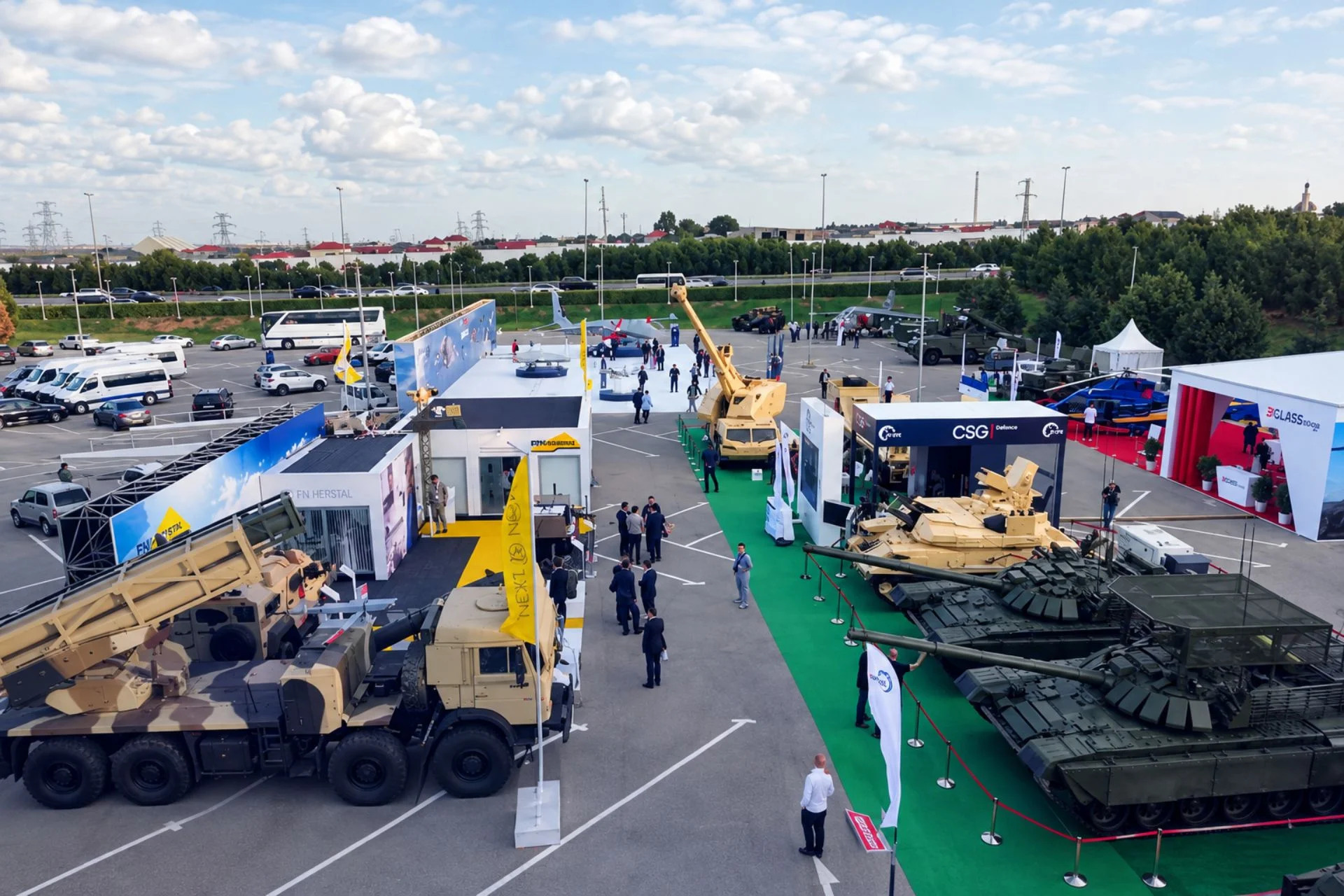
Against the backdrop of ADEX-2026, Azerbaijan continues to demonstrate the expansion of its national defense-industrial complex. The development of ammunition production and an increasing local component strengthen the country’s defense capabilities, while simultaneously creating additional financial and technological pressure on the state.
At ADEX-2026, Azerbaijan presented new areas of development for its domestic defense-industrial production. One of the announced projects involves the assembly of AZ-122 ammunition, which is being presented by the authorities as another step toward increasing the share of domestically produced defense equipment.
The expansion of local production allows Baku to reduce its reliance on foreign purchases of certain categories of weapons. At the same time, the transition from purchasing finished products to manufacturing them domestically requires significant investment in production facilities, technological infrastructure, workforce training, and access to the necessary components.

Azerbaijan Showcases Glide Bombs at ADEX
Therefore, an increase in domestic production does not in itself mean that the defense sector has achieved full technological independence. Even where final assembly is carried out locally, significant parts of the production chain may remain dependent on foreign technologies, equipment, materials, or components.
Another factor is the cost of maintaining an expanding defense industry. Production facilities require continuous spending on modernization, equipment maintenance, research and development, and the creation of new products. In the absence of sustained commercial demand, a significant portion of this burden may continue to fall on the state.
The development of the defense industry is taking place alongside the large-scale modernization of Azerbaijan’s armed forces and continued purchases of foreign weapons. As a result, two parallel tracks are emerging: the import of advanced weapons systems and the gradual expansion of domestic production.
This model allows Azerbaijan to accelerate the technological modernization of its armed forces, but it also increases the overall cost of its defense policy. The state must finance not only the purchase of finished systems but also the creation of its own industrial base, its technological modernization, and further expansion. Over time, this could increase the role of the military-industrial sector within the country’s economic structure.
Another challenge concerns the commercial viability of domestic defense production. For the sector to develop sustainably, Azerbaijan would need either to maintain strong domestic demand or expand exports of weapons and ammunition.
However, entering international markets requires compliance with technical standards, reliable production chains, and the ability to compete with established defense companies from other countries. In addition, arms exports are subject to additional political and regulatory restrictions.
ADEX-2026 demonstrates Azerbaijan’s effort to move from a predominantly procurement-based model toward a more comprehensive system that includes domestic production. However, the expansion of the defense industry also entails higher long-term costs, continued technological dependence in certain areas, and a growing role for the military-industrial sector in the national economy. Therefore, an increase in production volumes alone should not be regarded as a direct indicator of full defense and technological self-sufficiency.


 Latest news
Georgia’s Constitutional Court Continues Case on Banning Opposition Parties: Political Pluralism at Stake
12.Oct.2026
Azerbaijan and Iran Step Up Security Contacts Amid Hijab Protests
12.Oct.2026
Personnel Shortages Complicate Ukrainian Forces’ Rotation: Ukraine Faces Long-Term Challenges on the Front Line
11.Oct.2026
Trump Eases Sanctions on Russian Fuel After Talks with Putin: Kyiv Fears Boost to Moscow’s War Revenues
10.Oct.2026
Putin Seeks to Strengthen Russia’s Influence in the Post-Soviet Space Through the CIS
10.Oct.2026
Russia and the South Caucasus: External Pressure, Political Competition and a Crisis of Trust
10.Oct.2026
Peaceful Settlement Between Armenia and Azerbaijan: Moving from Declarations to Implementation
10.Oct.2026
Moldova Ready to Accept as Many Ukrainians as Necessary if Situation Worsens This Winter
09.Oct.2026
Turkmenistan Turns Avaza into a Regional Diplomatic Hub as Caspian, Central Asian and CIS Agendas Converge
08.Oct.2026
Romania Scrambles Spanish F-18s After Aerial Targets Detected Near Ukrainian Border
07.Oct.2026
Berlin Deepens Defence Partnership with Kyiv: Germany to Provide Ukraine with €1 Billion in Military Aid
07.Oct.2026
European Parliament Against Georgian Dream: EU Prepares New Response to Tbilisi
06.Oct.2026
Bulgarian Foreign Minister to Discuss European Security and International Law in the Netherlands
05.Oct.2026
Rheinmetall in Bulgaria: Sofia Emerges as a New NATO Defence-Industrial Hub in the Balkans
05.Oct.2026
The Cost of a Long War: Moscow Expands Spending Plans Through 2029
05.Oct.2026