
 13 Oct 2026









Berlin Deepens Defence Partnership with Kyiv: Germany to Provide Ukraine with €1 Billion in Military Aid
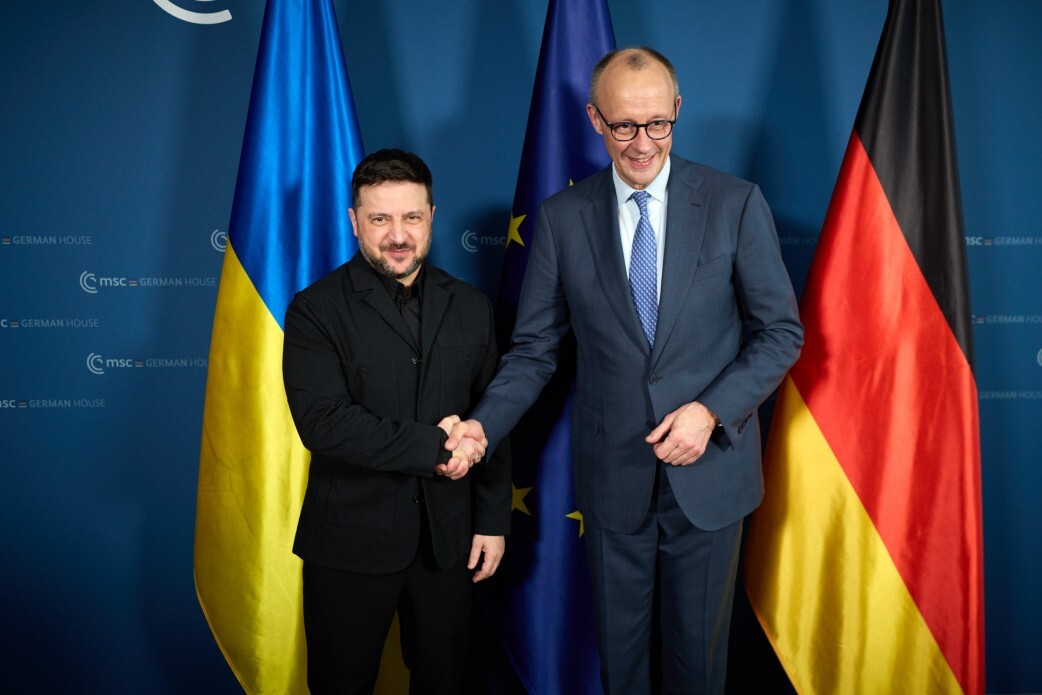
Germany has announced a new package of military and energy support for Ukraine worth more than €1.3 billion. Against the backdrop of intensified Russian air attacks, Berlin is also expanding cooperation with Ukraine’s defence sector, including joint production of drones, air defence systems, radars and interceptor systems.
German Chancellor Friedrich Merz announced an additional aid package for Ukraine worth more than €1.3 billion during his visit to Kyiv on October 4. Around €1 billion is earmarked for military needs, while another €350 million will be allocated to the restoration and protection of Ukraine’s energy infrastructure ahead of the winter period.
The military component of the package includes support for the production and supply of long-range weapons, combat drones and satellite technologies. Berlin is paying particular attention to countering new types of Russian drones equipped with jet engines, which, according to the Ukrainian side, are becoming increasingly difficult targets for existing air defence systems.
Germany intends to finance the joint production of interceptor drones directly in Ukraine. According to Ukrainian and German sources, the project envisages the production of tens of thousands of such systems. The initiative is being implemented with the participation of German company Quantum Systems and Ukrainian partners and is intended to enable Ukraine to adapt its air defence capabilities more rapidly to the changing nature of Russian air attacks.
In addition, German and Ukrainian defence companies reached a number of agreements during Merz’s visit. In particular, Ukraine signed agreements with Diehl Defence on missiles and IRIS-T air defence systems, with Hensoldt on radar equipment, and with Quantum Systems on interceptor drones. In total, German companies and their Ukrainian partners concluded 14 agreements worth approximately €6.6 billion, according to figures cited by Reuters.
The Ukrainian side, however, put the combined value of the agreements and other documents signed during the visit at more than €8.5 billion. This figure includes not only defence contracts but also a broader range of agreements between government institutions and companies from the two countries.
The €350 million energy component of the German package is intended to help restore damaged infrastructure, including power grids and substations, as well as provide Ukraine with generators. For Kyiv, this assistance is particularly important amid continued Russian strikes on the country’s energy and transport infrastructure.
Merz stressed that Germany’s support for Ukraine is viewed not only as assistance to an individual country but also as an element of European security. He said Germany would continue supporting Kyiv until the war ends and intends to further develop cooperation in the defence industry.
At the same time, the current format of cooperation differs from the traditional model of military assistance. Germany is not simply transferring already-produced weapons to Ukraine, but is also participating in the creation of new production capabilities directly on Ukrainian territory. This is particularly evident in the field of unmanned systems and counter-drone technologies.
Ukraine, in turn, is providing Germany with experience gained during the full-scale war, as well as technological expertise and data on modern methods of drone warfare. This is why Merz described the cooperation as mutually beneficial: Germany is strengthening Ukraine’s defence capabilities, while Ukraine is simultaneously becoming a source of practical experience and technology for the European defence industry. Joint production of radars, missiles, drones and air defence systems could both strengthen Ukraine’s defence capabilities and expand the production capacity of the European defence industry.
Merz’s visit took place against the backdrop of another escalation in Russian air attacks on Ukraine. Air-raid alerts were reported in Kyiv during the chancellor’s visit, while Russian strikes targeted infrastructure in the Ukrainian capital. The package announced by Berlin therefore carries not only financial but also political significance: Germany is demonstrating its readiness to maintain support for Kyiv even amid a further escalation of the war.


 Latest news
Georgia’s Constitutional Court Continues Case on Banning Opposition Parties: Political Pluralism at Stake
12.Oct.2026
Azerbaijan and Iran Step Up Security Contacts Amid Hijab Protests
12.Oct.2026
Personnel Shortages Complicate Ukrainian Forces’ Rotation: Ukraine Faces Long-Term Challenges on the Front Line
11.Oct.2026
Trump Eases Sanctions on Russian Fuel After Talks with Putin: Kyiv Fears Boost to Moscow’s War Revenues
10.Oct.2026
Putin Seeks to Strengthen Russia’s Influence in the Post-Soviet Space Through the CIS
10.Oct.2026
Russia and the South Caucasus: External Pressure, Political Competition and a Crisis of Trust
10.Oct.2026
Peaceful Settlement Between Armenia and Azerbaijan: Moving from Declarations to Implementation
10.Oct.2026
Moldova Ready to Accept as Many Ukrainians as Necessary if Situation Worsens This Winter
09.Oct.2026
Turkmenistan Turns Avaza into a Regional Diplomatic Hub as Caspian, Central Asian and CIS Agendas Converge
08.Oct.2026
Romania Scrambles Spanish F-18s After Aerial Targets Detected Near Ukrainian Border
07.Oct.2026
Berlin Deepens Defence Partnership with Kyiv: Germany to Provide Ukraine with €1 Billion in Military Aid
07.Oct.2026
European Parliament Against Georgian Dream: EU Prepares New Response to Tbilisi
06.Oct.2026
Bulgarian Foreign Minister to Discuss European Security and International Law in the Netherlands
05.Oct.2026
Rheinmetall in Bulgaria: Sofia Emerges as a New NATO Defence-Industrial Hub in the Balkans
05.Oct.2026
The Cost of a Long War: Moscow Expands Spending Plans Through 2029
05.Oct.2026