
 13 Oct 2026









-
The Baltic states are strengthening the training of reservists and creating territorial defense systems.
-
Sweden and Finland, after decades of neutrality, have joined NATO and are actively integrating their forces into the broader security architecture.
-
Investments in cybersecurity, AI, and unmanned systems are expanding.
-
Preparations are underway for "next-generation" warfare, where traditional fronts will be combined with cyber and information operations.
-
Particular attention is being paid to air defense systems (for example, the European Sky Shield initiative).
-
Increased tensions: Active militarization could trigger an arms race, especially with Russia, and raise the risk of escalation in local conflicts.
-
Security sovereignty: Europe aims to reduce its dependence on the United States in defense matters, which could alter dynamics within NATO.
-
Economic challenges: Higher defense spending requires the reallocation of resources, which may impact the funding of social programs.
Militarization of Europe: New Trends and Their Consequences
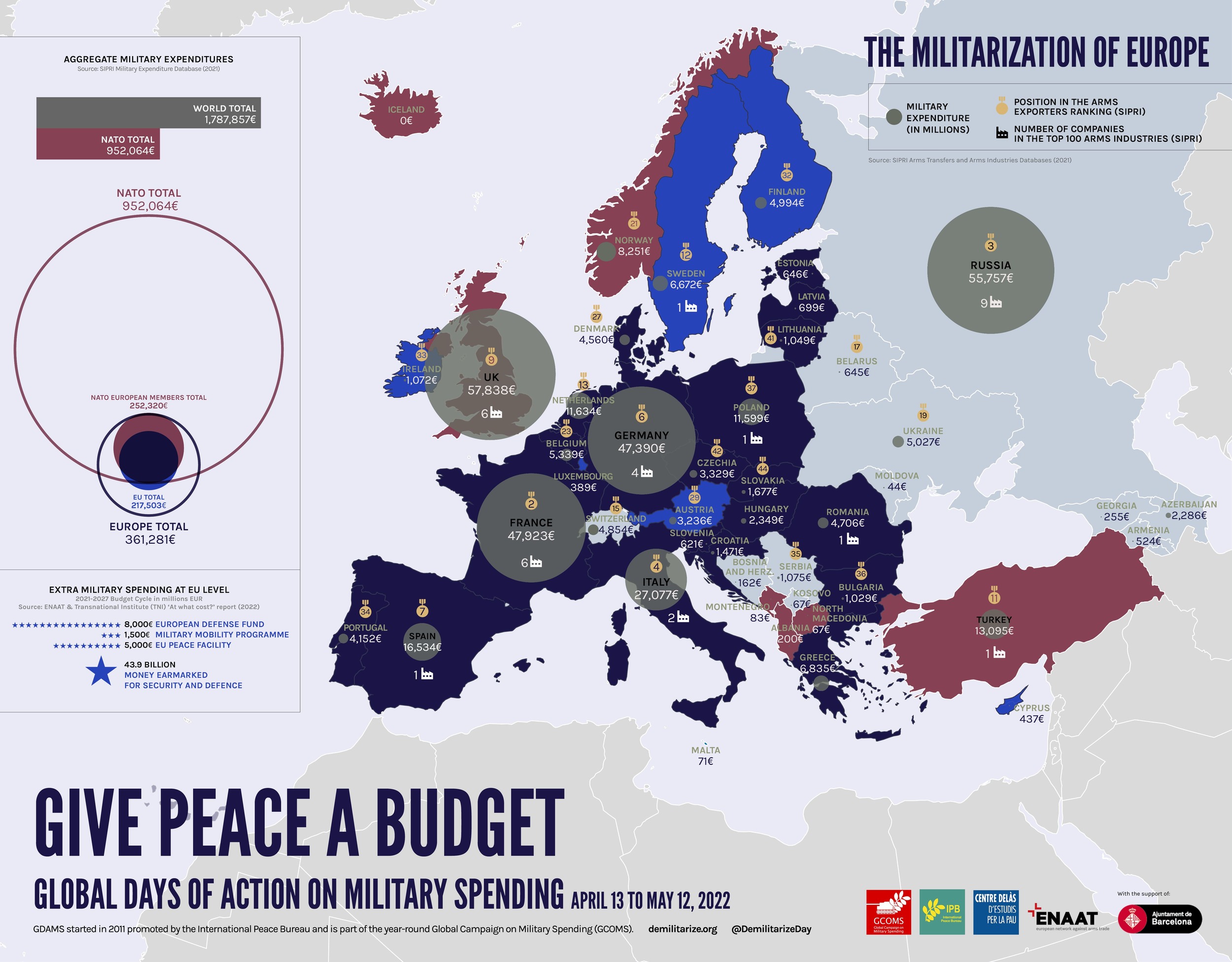
In recent years, Europe has been experiencing a noticeable shift in defense policy. What for a long time seemed to be a zone of stability and pacifism is now becoming a region of active militarization. This process accelerated especially after 2022 amid growing geopolitical threats, a reassessment of security strategies, and changing public opinion.
One of the most striking indicators of militarization has been the sharp increase in military spending:
- Germany announced the creation of a special defense fund worth 100 billion euros, marking the largest investment in the Bundeswehr since World War II.
- Poland increased its defense budget to more than 4% of its GDP, making it one of NATO’s largest military contributors.
- France, the United Kingdom, Sweden, and other EU countries are also steadily increasing their military investments.
This reflects a radical rethinking of priorities, where security takes precedence, even at the expense of social or environmental programs.
Previously, European armies mainly focused on participating in missions outside the continent (for example, in the Middle East or Africa). Now, attention is once again concentrated on defending their own territory:
In addition to the quantitative growth of troops and equipment, Europe is focusing on qualitative rearmament:
A remarkable trend is that militarization no longer provokes as much public resistance as in the past. Fears of threats (primarily from Russia) have radically changed Europeans' attitudes toward military and security issues. Support for increased defense spending in countries like Germany and Sweden has reached record levels.
Thus, the following conclusions can be drawn regarding the possible consequences of Europe's militarization:
Militarization of Europe today is not a temporary phenomenon but a long-term trend. The changes affect not only armies and budgets but also the very perception of security by society. Europe is rapidly preparing for a new world where military power once again becomes a key factor in political stability.


 Latest news
Georgia’s Constitutional Court Continues Case on Banning Opposition Parties: Political Pluralism at Stake
12.Oct.2026
Azerbaijan and Iran Step Up Security Contacts Amid Hijab Protests
12.Oct.2026
Personnel Shortages Complicate Ukrainian Forces’ Rotation: Ukraine Faces Long-Term Challenges on the Front Line
11.Oct.2026
Trump Eases Sanctions on Russian Fuel After Talks with Putin: Kyiv Fears Boost to Moscow’s War Revenues
10.Oct.2026
Putin Seeks to Strengthen Russia’s Influence in the Post-Soviet Space Through the CIS
10.Oct.2026
Russia and the South Caucasus: External Pressure, Political Competition and a Crisis of Trust
10.Oct.2026
Peaceful Settlement Between Armenia and Azerbaijan: Moving from Declarations to Implementation
10.Oct.2026
Moldova Ready to Accept as Many Ukrainians as Necessary if Situation Worsens This Winter
09.Oct.2026
Turkmenistan Turns Avaza into a Regional Diplomatic Hub as Caspian, Central Asian and CIS Agendas Converge
08.Oct.2026
Romania Scrambles Spanish F-18s After Aerial Targets Detected Near Ukrainian Border
07.Oct.2026
Berlin Deepens Defence Partnership with Kyiv: Germany to Provide Ukraine with €1 Billion in Military Aid
07.Oct.2026
European Parliament Against Georgian Dream: EU Prepares New Response to Tbilisi
06.Oct.2026
Bulgarian Foreign Minister to Discuss European Security and International Law in the Netherlands
05.Oct.2026
Rheinmetall in Bulgaria: Sofia Emerges as a New NATO Defence-Industrial Hub in the Balkans
05.Oct.2026
The Cost of a Long War: Moscow Expands Spending Plans Through 2029
05.Oct.2026