
 13 Oct 2026









Bulgaria Strengthens Defense: First American Stryker Vehicles Delivered
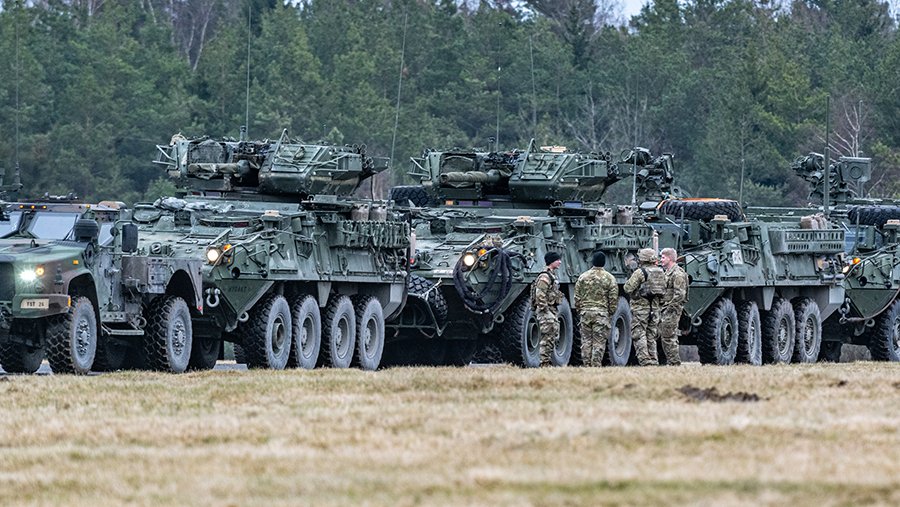
Bulgaria has received its first American-made Stryker armored vehicles, marking the practical launch of one of the largest modernization projects of the Bulgarian Land Forces in decades. Five vehicles arrived on February 14 at the port of Burgas and will soon undergo final outfitting, technical inspection, and integration into the country’s armed forces. The delivery is being carried out under a government-to-government agreement between Bulgaria and the United States through the Foreign Military Sales program and is seen in Sofia as a key step toward aligning the army with NATO standards.
The contract provides for the procurement of 183 armored vehicles in various configurations, with an estimated total value of approximately $1.4–1.5 billion. The acquisition includes not only basic combat variants for mechanized infantry but also command-and-control, reconnaissance, engineering, and medical evacuation versions, enabling the formation of fully capable next-generation battalion tactical groups. Deliveries are planned over several years — approximately until 2028 — and will be carried out in stages. Part of the final assembly, equipment installation, and testing is expected to take place at Bulgarian defense industry facilities, ensuring technology transfer and the training of national specialists.
The Stryker is an 8×8 wheeled armored vehicle designed to provide high mobility, crew protection, and operational flexibility. Depending on the configuration, it can be equipped with remotely operated weapon stations with heavy machine guns or automatic cannons, as well as modern communications systems and digital battlefield management tools. According to military experts, the introduction of this platform will significantly enhance the operational interoperability of Bulgarian units with NATO allies, facilitate participation in joint exercises and missions, and accelerate response to crisis situations in the Black Sea region.
For Sofia, this program carries not only military but also political significance. For many years, Bulgaria relied on Soviet-era equipment, including BTR-60s and their variants, many of which are nearing the end of their service life. The transition to Western weapon systems symbolizes a definitive shift toward full integration into the Euro-Atlantic security system. Authorities emphasize that the army’s modernization is occurring against the backdrop of increasing tensions in Eastern Europe and the need to strengthen national defense capabilities.
In parallel with the acquisition of Strykers, Bulgaria is pursuing other military modernization projects, ranging from the procurement of F-16 fighter jets to the upgrade of naval platforms. Together, these initiatives form a phased rearmament strategy planned for the coming decade. The arrival of the first Strykers on Bulgarian soil is a tangible confirmation that the ambitious modernization program is moving from political declarations into practical implementation, transforming the national army and reinforcing its role in NATO’s collective security framework.


 Latest news
Georgia’s Constitutional Court Continues Case on Banning Opposition Parties: Political Pluralism at Stake
12.Oct.2026
Azerbaijan and Iran Step Up Security Contacts Amid Hijab Protests
12.Oct.2026
Personnel Shortages Complicate Ukrainian Forces’ Rotation: Ukraine Faces Long-Term Challenges on the Front Line
11.Oct.2026
Trump Eases Sanctions on Russian Fuel After Talks with Putin: Kyiv Fears Boost to Moscow’s War Revenues
10.Oct.2026
Putin Seeks to Strengthen Russia’s Influence in the Post-Soviet Space Through the CIS
10.Oct.2026
Russia and the South Caucasus: External Pressure, Political Competition and a Crisis of Trust
10.Oct.2026
Peaceful Settlement Between Armenia and Azerbaijan: Moving from Declarations to Implementation
10.Oct.2026
Moldova Ready to Accept as Many Ukrainians as Necessary if Situation Worsens This Winter
09.Oct.2026
Turkmenistan Turns Avaza into a Regional Diplomatic Hub as Caspian, Central Asian and CIS Agendas Converge
08.Oct.2026
Romania Scrambles Spanish F-18s After Aerial Targets Detected Near Ukrainian Border
07.Oct.2026
Berlin Deepens Defence Partnership with Kyiv: Germany to Provide Ukraine with €1 Billion in Military Aid
07.Oct.2026
European Parliament Against Georgian Dream: EU Prepares New Response to Tbilisi
06.Oct.2026
Bulgarian Foreign Minister to Discuss European Security and International Law in the Netherlands
05.Oct.2026
Rheinmetall in Bulgaria: Sofia Emerges as a New NATO Defence-Industrial Hub in the Balkans
05.Oct.2026
The Cost of a Long War: Moscow Expands Spending Plans Through 2029
05.Oct.2026