
 13 Oct 2026









- Troop mobility has sharply declined — even simple movement across open terrain can end in disaster.
- Medical evacuations can take days, as traditional routes are constantly exposed to aerial threats.
- Logistics, resupply, maneuver, and defense — every element of combat operations now depends on the ability to counter drones.
- Information-driven battlespace. Traditional battles involving massed armored columns and concentrated artillery are giving way to information-saturated, network-centric warfare, where the speed of detection, data processing, and target engagement matters more than armor thickness.
- Economic efficiency. FPV drones can cost only hundreds of dollars, while the equipment they destroy may be worth hundreds of thousands or even millions. This creates an asymmetric advantage for the side that can technologically optimize and scale its capabilities.
- Erosion of strategic reserves. Beyond FPV strike drones, larger unmanned systems are being developed that can operate over long distances, conduct reconnaissance, and sustain prolonged missions.
- Further automation of weapons systems, including the integration of AI for tactical and operational decision-making with minimal human involvement.
- The expansion of specialized counter-drone units focused not only on destruction but on predictive detection and neutralization of threats before launch.
- The integration of big data and real-time analytics to anticipate and suppress enemy strikes, including their logistics and operational planning.
Drones Are Rewriting the Rules of War: How Unmanned Systems Dominate
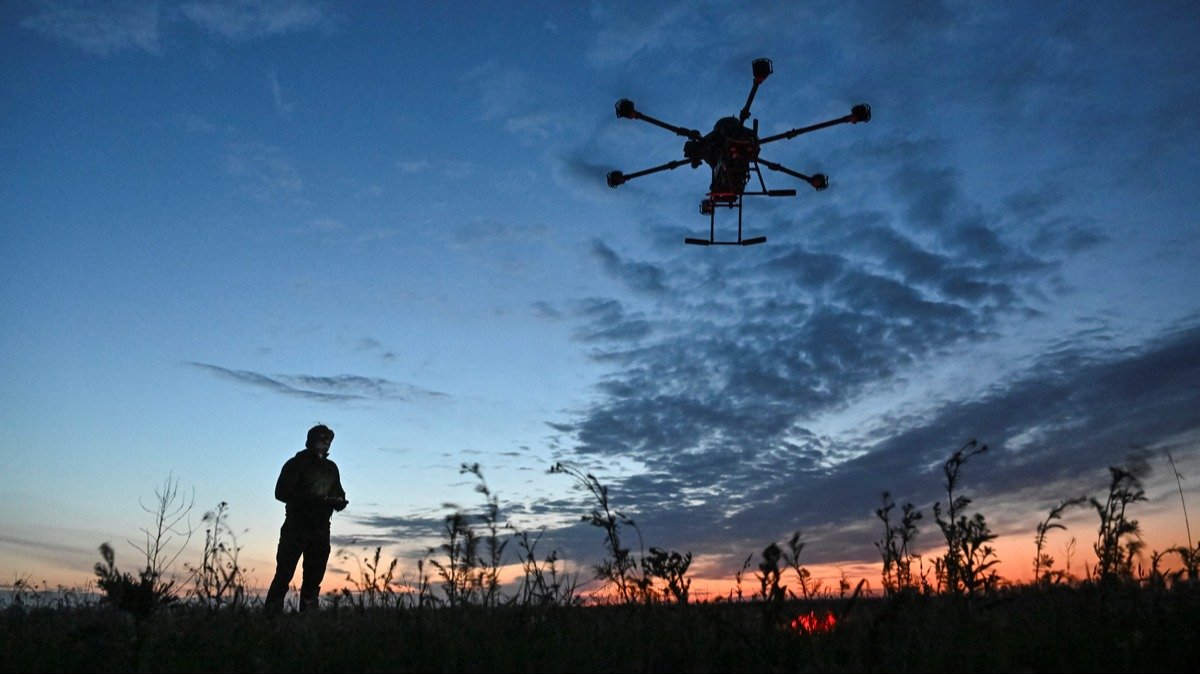
Four years after the start of the full-scale conflict between Russia and Ukraine, the character of hostilities has changed beyond recognition. In the first months of the war, armored vehicles and artillery were the main “heroes” of the battlefield. Today, however, dominance has shifted to an entirely different domain — mass unmanned systems, which have become the primary source of destruction, threat, and tactical transformation on both sides of the front.
FPV drones (first-person-view — controlled by an operator in real time) and other unmanned systems have turned large-scale maneuver warfare into a dangerous and slow process. Tanks, long considered symbols of ground power, are now often forced to “sit in trenches” and operate as stationary artillery platforms, because open maneuvers under skies saturated with drones have become lethally risky.
Tank assaults, armored clashes, and sweeping breakthroughs across open terrain are gradually becoming relics of the past. Commanders are now compelled to completely rethink their tactics, as strikes are delivered not only by heavy combat vehicles but by thousands of small, fast-moving, and often autonomous drones.
80% of Losses Caused by Drones: The Scale of Impact
One of the most striking figures today is the share of losses attributed to unmanned systems. In 2022, drones accounted for less than 10% of total combat losses. By 2025, that share had reportedly risen to 80% — a dramatic indicator of the growing role of a relatively inexpensive yet highly effective instrument of war.
This shift has radically altered battlefield priorities:
Tactical Transformation on the Ground
Tanks no longer engage freely in open battle; instead, they are increasingly used as stationary support platforms. FPV attack reports have become so frequent and intense that movement outside covered positions is nearly impossible, and risks to personnel have grown substantially.
Mobile counter-drone units have become critically important — their mission is not only to repel attacks but to preserve the integrity of supply and movement routes. In addition, unmanned ground robots are now being used to evacuate wounded soldiers, reducing human risk, as well as to deliver ammunition and supplies.
Strategic Consequences: The Army of the Future Is a Network, Not a Column
From a military science perspective, the prominence of drones in Ukraine reflects a profound shift not only in tactics but in the very concept of warfare.
Analysts identify several key trends:

Looking Ahead
The current state of the conflict demonstrates that unmanned systems are not a temporary factor but a permanent feature of future warfare. Even major armies equipped with advanced armor and air power are being forced to adapt their strategies under pressure from systems that cost only a fraction of traditional weapons.
Three likely scenarios can be outlined:
The world has entered a new phase of warfare, where technology, speed, and adaptability outweigh sheer numbers or heavy armor. Drones on the Ukrainian battlefield have not merely altered individual engagements — they have transformed the very nature of armed conflict. This is not simply a tactical adjustment but a deep technological revolution, the consequences of which will be studied for decades in both military science and international politics.


 Latest news
Georgia’s Constitutional Court Continues Case on Banning Opposition Parties: Political Pluralism at Stake
12.Oct.2026
Azerbaijan and Iran Step Up Security Contacts Amid Hijab Protests
12.Oct.2026
Personnel Shortages Complicate Ukrainian Forces’ Rotation: Ukraine Faces Long-Term Challenges on the Front Line
11.Oct.2026
Trump Eases Sanctions on Russian Fuel After Talks with Putin: Kyiv Fears Boost to Moscow’s War Revenues
10.Oct.2026
Putin Seeks to Strengthen Russia’s Influence in the Post-Soviet Space Through the CIS
10.Oct.2026
Russia and the South Caucasus: External Pressure, Political Competition and a Crisis of Trust
10.Oct.2026
Peaceful Settlement Between Armenia and Azerbaijan: Moving from Declarations to Implementation
10.Oct.2026
Moldova Ready to Accept as Many Ukrainians as Necessary if Situation Worsens This Winter
09.Oct.2026
Turkmenistan Turns Avaza into a Regional Diplomatic Hub as Caspian, Central Asian and CIS Agendas Converge
08.Oct.2026
Romania Scrambles Spanish F-18s After Aerial Targets Detected Near Ukrainian Border
07.Oct.2026
Berlin Deepens Defence Partnership with Kyiv: Germany to Provide Ukraine with €1 Billion in Military Aid
07.Oct.2026
European Parliament Against Georgian Dream: EU Prepares New Response to Tbilisi
06.Oct.2026
Bulgarian Foreign Minister to Discuss European Security and International Law in the Netherlands
05.Oct.2026
Rheinmetall in Bulgaria: Sofia Emerges as a New NATO Defence-Industrial Hub in the Balkans
05.Oct.2026
The Cost of a Long War: Moscow Expands Spending Plans Through 2029
05.Oct.2026