
 13 Oct 2026









Ukraine Eyes Japanese Arms After Tokyo Eases Export Rules
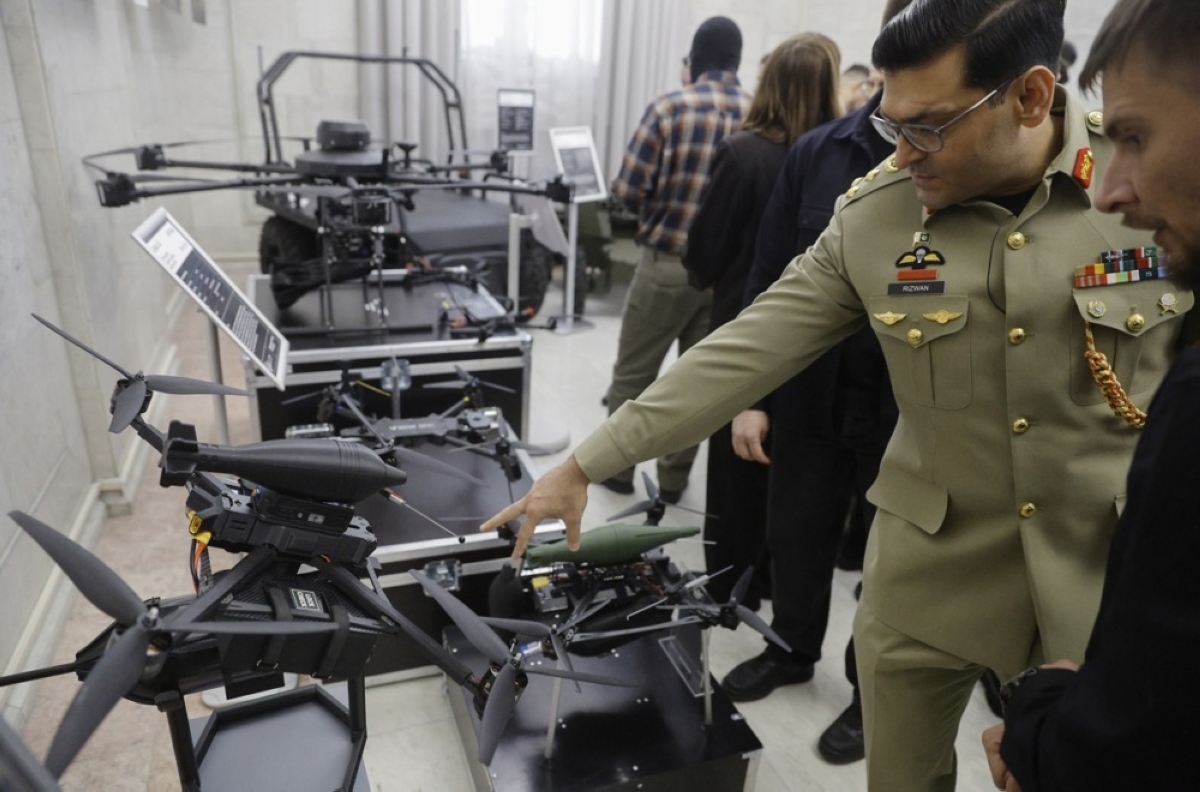
Ukraine is seeking to expand military-technical cooperation with Japan after Tokyo decided to relax long-standing restrictions on arms exports — a move widely seen as one of the most significant shifts in the country’s defense policy since the end of World War II. The discussion was prompted by statements from Ukrainian officials suggesting that the updated rules create a “window of opportunity” for negotiations, albeit still largely theoretical at this stage. The focus is less on immediate weapons deliveries and more on gradually building a dialogue that was previously almost impossible due to Japan’s strict pacifist stance.
Historically, Japan has maintained highly restrictive policies on arms exports, effectively ruling out the supply of lethal weapons abroad. However, changes in the international environment — rising tensions in the Indo-Pacific, China’s growing military power, North Korea’s missile tests, and the broader erosion of global security — have pushed Tokyo to reconsider its approach. Against this backdrop, Japanese officials have increasingly drawn parallels between the war in Ukraine and potential threats in East Asia, emphasizing that developments in Europe could serve as a precedent for other regions.
The changes adopted in 2026 allow for the export of a wider range of defense equipment, including lethal systems, although a formal ban on supplying arms to active conflict zones remains in place. This legal framework — a ban with potential exceptions — is seen by Kyiv as a possible pathway for future cooperation. Ukrainian diplomats stress that even the mere fact that dialogue with Japan on defense matters is now possible represents a significant shift.
In practical terms, discussions are focused on several areas that appear more feasible than direct weapons supplies. These include joint projects in dual-use technologies, Japanese investment in Ukraine’s defense industry, and participation in international funding mechanisms for military assistance. Particular interest centers on Japanese microelectronics and high-precision components, which could be used in the production of drones and communication systems. For Ukraine, this is critically important as it seeks to reduce dependence on Chinese components and diversify supply chains.
Another potential avenue is the involvement of Japanese companies in modernizing Ukraine’s air defense systems, as well as the development of joint production facilities. This format allows both sides to sidestep the politically sensitive issue of direct arms exports to a war zone while still giving Kyiv access to advanced technologies. In this sense, it represents a more flexible and long-term model of cooperation compared to traditional arms transfers.
Despite these opportunities, significant constraints remain. Japan continues to act with caution, taking into account both domestic political limitations and external risks. In particular, Tokyo must consider the possible reaction from China, for whom closer military cooperation between Japan and Ukraine could become an additional source of tension. Japan’s economic ties with Russia, especially in the energy sector, also continue to influence its decision-making.
From a geopolitical perspective, these developments reflect a broader transformation of the global security architecture. Japan is gradually stepping beyond its traditional role and positioning itself as a more active participant in the global arms market. This could intensify competition with other exporters, including South Korea and European countries, while also reducing allies’ dependence on the United States.
For Ukraine, potential cooperation with Japan is part of a broader strategy to expand its network of partners amid a prolonged conflict and limited production capacity in Western countries. Kyiv is increasingly seeking new sources of technology, investment, and political support, including in Asia and the Middle East. In this context, Japan stands out as a particularly attractive partner due to its advanced technological base and strong industrial capacity.
More broadly, the rapprochement between Ukraine and Japan symbolizes the emergence of a new linkage between the European and Indo-Pacific regions, where security issues are increasingly viewed as interconnected. This suggests that local conflicts are taking on a more global dimension, involving a growing number of actors and deepening interdependence across regions.
Thus, while it is still premature to speak of imminent deliveries of Japanese weapons to Ukraine, the shift in Tokyo’s policy and the opening of dialogue with Kyiv already constitute an important signal. In the long term, this could lead to new forms of military-technical cooperation, strengthen Ukraine’s defense capabilities, and further transform Japan’s role in global politics and the international security system.


 Latest news
Georgia’s Constitutional Court Continues Case on Banning Opposition Parties: Political Pluralism at Stake
12.Oct.2026
Azerbaijan and Iran Step Up Security Contacts Amid Hijab Protests
12.Oct.2026
Personnel Shortages Complicate Ukrainian Forces’ Rotation: Ukraine Faces Long-Term Challenges on the Front Line
11.Oct.2026
Trump Eases Sanctions on Russian Fuel After Talks with Putin: Kyiv Fears Boost to Moscow’s War Revenues
10.Oct.2026
Putin Seeks to Strengthen Russia’s Influence in the Post-Soviet Space Through the CIS
10.Oct.2026
Russia and the South Caucasus: External Pressure, Political Competition and a Crisis of Trust
10.Oct.2026
Peaceful Settlement Between Armenia and Azerbaijan: Moving from Declarations to Implementation
10.Oct.2026
Moldova Ready to Accept as Many Ukrainians as Necessary if Situation Worsens This Winter
09.Oct.2026
Turkmenistan Turns Avaza into a Regional Diplomatic Hub as Caspian, Central Asian and CIS Agendas Converge
08.Oct.2026
Romania Scrambles Spanish F-18s After Aerial Targets Detected Near Ukrainian Border
07.Oct.2026
Berlin Deepens Defence Partnership with Kyiv: Germany to Provide Ukraine with €1 Billion in Military Aid
07.Oct.2026
European Parliament Against Georgian Dream: EU Prepares New Response to Tbilisi
06.Oct.2026
Bulgarian Foreign Minister to Discuss European Security and International Law in the Netherlands
05.Oct.2026
Rheinmetall in Bulgaria: Sofia Emerges as a New NATO Defence-Industrial Hub in the Balkans
05.Oct.2026
The Cost of a Long War: Moscow Expands Spending Plans Through 2029
05.Oct.2026