
 13 Oct 2026









Russia and China Expand Military Cooperation: Secret Military Training Program Exposed
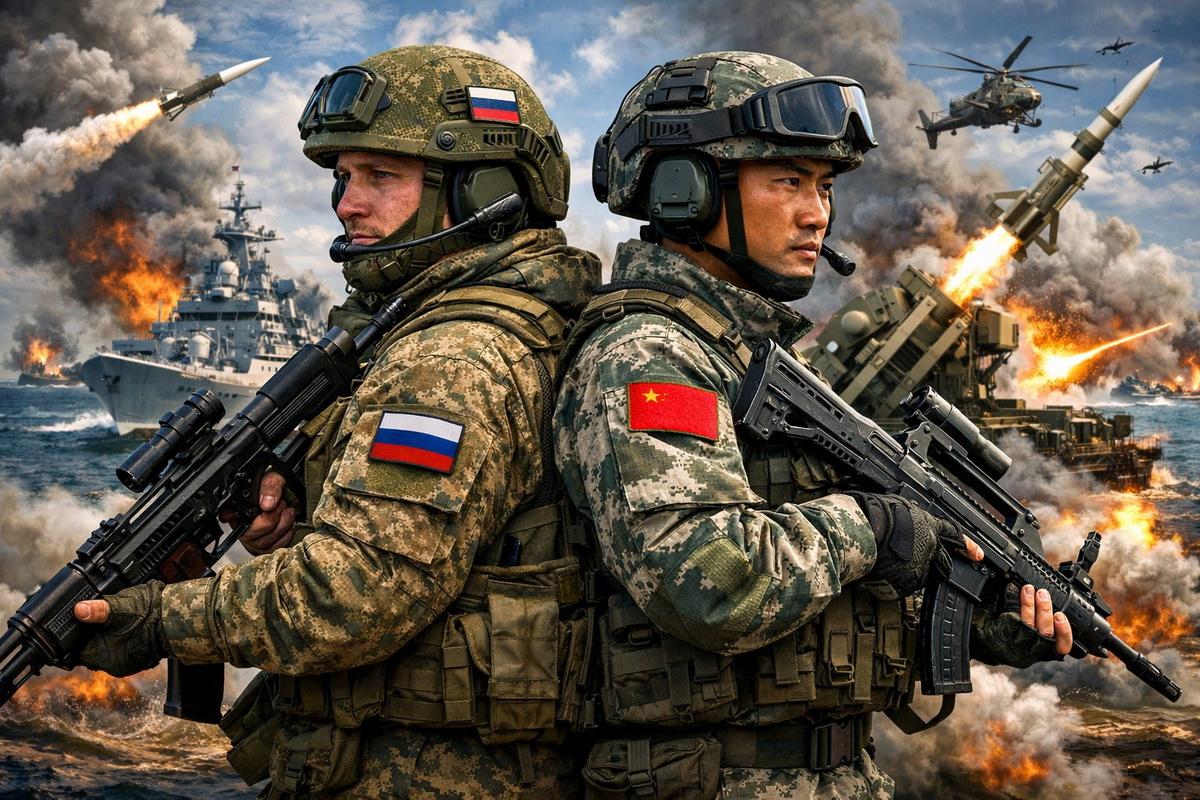
Military cooperation between Moscow and Beijing, previously associated primarily with joint exercises and defense-technical collaboration, may have reached a new level. According to a Reuters investigation based on internal documents and information provided by three European intelligence services, Russia and China carried out a secret program in 2025 to train Russian military personnel on Chinese territory. The program was reportedly approved at the highest levels and conducted under strict confidentiality.
The bilateral agreement was signed in Beijing on July 2, 2025. Under the arrangement, approximately 200 Russian servicemen were trained at facilities of the People's Liberation Army in Beijing, Nanjing, and several other cities. In exchange, several hundred Chinese military personnel were expected to undergo training at Russian military bases. One of the key provisions of the agreement was a complete ban on media coverage and the disclosure of any information to third parties.
The training focused primarily on modern methods of warfare, particularly the use of unmanned systems. Russian personnel received instruction in FPV drone operations, electronic warfare, counter-drone tactics, army aviation, combat engineering, mine clearance, explosive ordnance handling, and the integration of drones with artillery. One course reportedly trained soldiers to adjust 82-mm mortar fire using reconnaissance UAVs, while another involved simulators for operating strike drones and advanced counter-UAV systems.
According to European intelligence services, many of those who completed the training were not ordinary soldiers but instructors and officers ranging in rank from junior sergeant to lieutenant colonel. Analysts believe this indicates an effort not only to improve the capabilities of individual units but also to disseminate newly acquired expertise throughout the Russian military training system. Some participants in the program were reportedly later involved in drone operations in Crimea and the Zaporizhzhia region.
It is worth noting that previous reports alleged that Chinese specialists had worked with the Russian defense company Kupol on the development and testing of strike drones, as well as on projects aimed at manufacturing Russian UAVs using Chinese technologies and components.
Despite these reports, Beijing has continued to maintain that it remains neutral regarding the war in Ukraine and has not provided military assistance to Russia. Following the publication of the investigation, China's Ministry of Foreign Affairs reiterated that the country supports a peaceful resolution of the conflict. Meanwhile, Kremlin spokesman Dmitry Peskov dismissed the allegations as false, stating that Western media outlets regularly spread disinformation about Russia-China relations.
Military analysts note that if the reported information proves accurate, it would represent more than an expansion of the Russia-China strategic partnership — it would mark a transition to a fundamentally new model of military cooperation. Until now, bilateral defense ties have largely been limited to joint strategic exercises, exchanges of experience, technology transfers, and cooperation in the defense industry. Training Russian military personnel directly at Chinese military facilities would amount to the institutionalization of operational and tactical combat knowledge-sharing.
Particular attention has been drawn to the focus on unmanned systems. The war in Ukraine has become the largest modern conflict in which drones have emerged as one of the decisive elements of warfare. China possesses one of the world's most advanced drone manufacturing industries and continues to invest heavily in military UAV technologies. Russia, meanwhile, has accumulated extensive combat experience in employing drones under real battlefield conditions. Such cooperation could therefore provide Moscow with access to China's technological expertise, advanced training infrastructure, and industrial capabilities, while giving Beijing valuable insights into the practical application of drone warfare in a high-intensity conflict.


 Latest news
Georgia’s Constitutional Court Continues Case on Banning Opposition Parties: Political Pluralism at Stake
12.Oct.2026
Azerbaijan and Iran Step Up Security Contacts Amid Hijab Protests
12.Oct.2026
Personnel Shortages Complicate Ukrainian Forces’ Rotation: Ukraine Faces Long-Term Challenges on the Front Line
11.Oct.2026
Trump Eases Sanctions on Russian Fuel After Talks with Putin: Kyiv Fears Boost to Moscow’s War Revenues
10.Oct.2026
Putin Seeks to Strengthen Russia’s Influence in the Post-Soviet Space Through the CIS
10.Oct.2026
Russia and the South Caucasus: External Pressure, Political Competition and a Crisis of Trust
10.Oct.2026
Peaceful Settlement Between Armenia and Azerbaijan: Moving from Declarations to Implementation
10.Oct.2026
Moldova Ready to Accept as Many Ukrainians as Necessary if Situation Worsens This Winter
09.Oct.2026
Turkmenistan Turns Avaza into a Regional Diplomatic Hub as Caspian, Central Asian and CIS Agendas Converge
08.Oct.2026
Romania Scrambles Spanish F-18s After Aerial Targets Detected Near Ukrainian Border
07.Oct.2026
Berlin Deepens Defence Partnership with Kyiv: Germany to Provide Ukraine with €1 Billion in Military Aid
07.Oct.2026
European Parliament Against Georgian Dream: EU Prepares New Response to Tbilisi
06.Oct.2026
Bulgarian Foreign Minister to Discuss European Security and International Law in the Netherlands
05.Oct.2026
Rheinmetall in Bulgaria: Sofia Emerges as a New NATO Defence-Industrial Hub in the Balkans
05.Oct.2026
The Cost of a Long War: Moscow Expands Spending Plans Through 2029
05.Oct.2026