
 13 Oct 2026









Poland Confirms Russian Kh-101 Cruise Missile Crashed on Its Territory Following Massive Attack on Ukraine
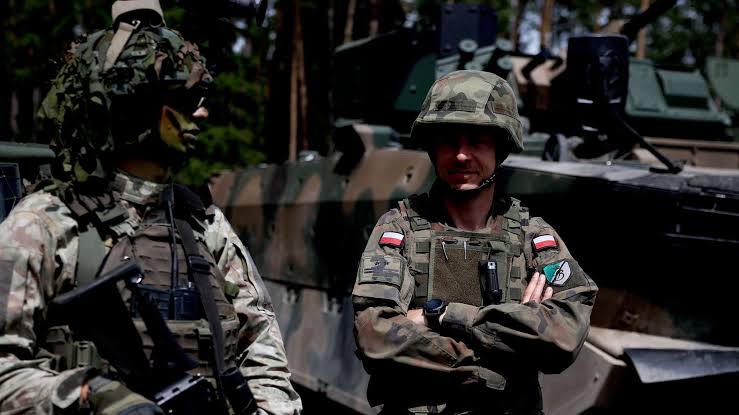
Polish authorities have officially confirmed that during one of Russia's latest large-scale missile attacks on Ukraine, a Russian Kh-101 cruise missile violated Polish airspace and crashed in the Lublin Voivodeship. The incident is one of the most serious cases of Russian military ordnance entering the territory of a NATO member state since the start of Russia's full-scale invasion of Ukraine.
According to the Polish Armed Forces, the missile entered Polish airspace during a large-scale Russian strike targeting Ukraine's military and energy infrastructure. After the aerial target was detected, Poland's air defense units and military aircraft were placed on high alert. A subsequent investigation confirmed that the recovered debris belonged to a Russian Kh-101 strategic cruise missile, a long-range precision-guided weapon launched from Tu-95MS and Tu-160 strategic bombers.
 Russian Missile Crash in Poland on July 30: Warsaw Confirms It Was a Kh-101 Cruise Missile
The Polish Ministry of National Defence described the incident as extremely serious, emphasizing that it involved a violation of the airspace of a NATO member state. Polish authorities are conducting a thorough investigation into the circumstances surrounding the incident while continuing consultations with NATO allies on possible response measures.
Following the incident, Warsaw once again called for strengthening NATO's air defense capabilities along the Alliance's eastern flank and expanding military assistance to Ukraine. Polish officials stressed that reinforcing Ukraine's air defense network remains one of the most effective ways to prevent similar incidents in the future. Discussions are underway regarding the delivery of additional Patriot interceptor missiles and the acceleration of other air defense system transfers to Kyiv.
 A Kh-101 cruise missile violated Polish airspace and crashed in the Lublin Voivodeship
NATO headquarters stated that the Alliance is closely monitoring the situation and remains in constant contact with the Polish authorities. Alliance officials reiterated that protecting the airspace of member states remains a top priority and emphasized NATO's readiness to take all necessary measures to safeguard Allied territory and prevent similar incidents.
According to defense analysts, the incident is likely to strengthen arguments in favor of further reinforcing NATO's integrated air and missile defense along its eastern flank. Over the past several years, Poland has significantly increased its defense spending, acquiring U.S.-made Patriot air defense systems and F-35 fighter jets, as well as South Korean K2 main battle tanks and K239 Chunmoo multiple launch rocket systems. Against the backdrop of persistent regional security threats, Warsaw continues to advocate for a larger permanent Allied military presence on its territory and deeper integration of Poland's national air defense network into Europe's broader missile defense architecture.
The incident could also influence the pace of future military assistance to Ukraine. Polish and Western security experts argue that the more effectively Ukraine intercepts Russian missiles before they approach NATO borders, the lower the risk of missiles or debris crossing into neighboring countries. In this context, additional deliveries of Patriot, SAMP/T, IRIS-T, and NASAMS air defense systems are increasingly viewed not only as support for Ukraine but also as an important contribution to Europe's collective security.
Despite the seriousness of the incident, most analysts consider it unlikely to trigger a direct military confrontation between NATO and Russia. The Alliance has consistently sought to assess similar incidents carefully while avoiding uncontrolled escalation, even as it continues to strengthen deterrence and military readiness along its eastern flank. Nevertheless, repeated violations of NATO airspace could increase pressure on Allied governments to adopt more robust air defense measures and accelerate the delivery of advanced air defense systems to Ukraine.


 Latest news
Georgia’s Constitutional Court Continues Case on Banning Opposition Parties: Political Pluralism at Stake
12.Oct.2026
Azerbaijan and Iran Step Up Security Contacts Amid Hijab Protests
12.Oct.2026
Personnel Shortages Complicate Ukrainian Forces’ Rotation: Ukraine Faces Long-Term Challenges on the Front Line
11.Oct.2026
Trump Eases Sanctions on Russian Fuel After Talks with Putin: Kyiv Fears Boost to Moscow’s War Revenues
10.Oct.2026
Putin Seeks to Strengthen Russia’s Influence in the Post-Soviet Space Through the CIS
10.Oct.2026
Russia and the South Caucasus: External Pressure, Political Competition and a Crisis of Trust
10.Oct.2026
Peaceful Settlement Between Armenia and Azerbaijan: Moving from Declarations to Implementation
10.Oct.2026
Moldova Ready to Accept as Many Ukrainians as Necessary if Situation Worsens This Winter
09.Oct.2026
Turkmenistan Turns Avaza into a Regional Diplomatic Hub as Caspian, Central Asian and CIS Agendas Converge
08.Oct.2026
Romania Scrambles Spanish F-18s After Aerial Targets Detected Near Ukrainian Border
07.Oct.2026
Berlin Deepens Defence Partnership with Kyiv: Germany to Provide Ukraine with €1 Billion in Military Aid
07.Oct.2026
European Parliament Against Georgian Dream: EU Prepares New Response to Tbilisi
06.Oct.2026
Bulgarian Foreign Minister to Discuss European Security and International Law in the Netherlands
05.Oct.2026
Rheinmetall in Bulgaria: Sofia Emerges as a New NATO Defence-Industrial Hub in the Balkans
05.Oct.2026
The Cost of a Long War: Moscow Expands Spending Plans Through 2029
05.Oct.2026