
 13 Oct 2026









Ukraine Turns Ground Robots into a New Tool in the Fight Against Russia
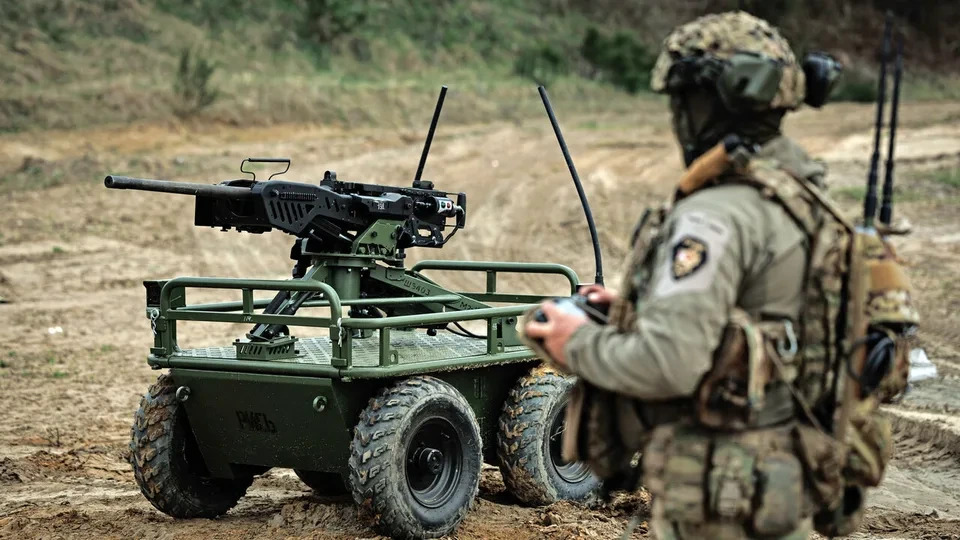
Ground robots are gradually ceasing to be an experimental technology and are becoming a fully-fledged element of modern warfare. Ukraine is actively deploying robotic systems on the front line, seeking to replace soldiers in the most dangerous areas of the battlefield.
Ground robotic systems are not yet formally recognized as a separate branch of the armed forces, but they are already being integrated into Ukrainian combat units. Their use goes far beyond testing individual models: the machines are being used to deliver ammunition, water and equipment, evacuate wounded personnel, conduct mining and demining operations, carry out reconnaissance, provide fire support and participate in assault operations.
The development of systems capable of being sent into areas where the presence of personnel entails a high risk is advancing particularly rapidly. During the first six months of 2026, ground robotic systems reportedly carried out more than 66,300 missions, including 16,676 in June alone. Kyiv has also set a target of deploying at least 50,000 such systems in 2026.
One of the most notable examples is the Ukrainian Gnom-2 robot, which has reportedly earned the nickname “bodyguard” among servicemen. The system can perform multiple tasks, including providing fire support, conducting reconnaissance, deploying smoke screens, laying mines and evacuating wounded personnel. In this way, a single robotic platform can perform tasks that previously required the participation of several soldiers.
At the same time, Ukraine does not yet possess fully autonomous combat robots capable of independently making decisions to destroy targets. Modern systems can use autopilot functions, automated navigation and elements of machine-based target recognition, but in most cases the final decision to use weapons remains with a human operator.
A particularly illustrative example of this shift in tactics was an operation reported by the Ukrainian side in April. According to Kyiv, Russian positions in northeastern Kharkiv region were captured using ground robotic systems and drones without the direct involvement of Ukrainian infantry. One robot reportedly destroyed the entrance to a fortified position, while another blocked the exit, after which Russian servicemen surrendered.
However, it is still premature to speak of the complete replacement of humans on the battlefield. Robots face challenges related to communications, electronic warfare, minefields, difficult terrain and the need to accurately identify people in real combat conditions.
Nevertheless, developments in Ukraine could become one of the most significant technological turning points in modern warfare. The conflict is no longer simply a confrontation involving drones: a multi-layered system is emerging in which aerial drones conduct reconnaissance and strike targets, ground robots deliver ammunition and evacuate wounded personnel, while humans are gradually moving from the immediate combat zone to protected control positions.
Thus, the next stage of warfare may not be a “war of robots instead of humans,” but rather a war in which humans fight through robotic systems. And the Ukrainian front is becoming one of the key testing grounds for this new model of warfare.


 Latest news
Georgia’s Constitutional Court Continues Case on Banning Opposition Parties: Political Pluralism at Stake
12.Oct.2026
Azerbaijan and Iran Step Up Security Contacts Amid Hijab Protests
12.Oct.2026
Personnel Shortages Complicate Ukrainian Forces’ Rotation: Ukraine Faces Long-Term Challenges on the Front Line
11.Oct.2026
Trump Eases Sanctions on Russian Fuel After Talks with Putin: Kyiv Fears Boost to Moscow’s War Revenues
10.Oct.2026
Putin Seeks to Strengthen Russia’s Influence in the Post-Soviet Space Through the CIS
10.Oct.2026
Russia and the South Caucasus: External Pressure, Political Competition and a Crisis of Trust
10.Oct.2026
Peaceful Settlement Between Armenia and Azerbaijan: Moving from Declarations to Implementation
10.Oct.2026
Moldova Ready to Accept as Many Ukrainians as Necessary if Situation Worsens This Winter
09.Oct.2026
Turkmenistan Turns Avaza into a Regional Diplomatic Hub as Caspian, Central Asian and CIS Agendas Converge
08.Oct.2026
Romania Scrambles Spanish F-18s After Aerial Targets Detected Near Ukrainian Border
07.Oct.2026
Berlin Deepens Defence Partnership with Kyiv: Germany to Provide Ukraine with €1 Billion in Military Aid
07.Oct.2026
European Parliament Against Georgian Dream: EU Prepares New Response to Tbilisi
06.Oct.2026
Bulgarian Foreign Minister to Discuss European Security and International Law in the Netherlands
05.Oct.2026
Rheinmetall in Bulgaria: Sofia Emerges as a New NATO Defence-Industrial Hub in the Balkans
05.Oct.2026
The Cost of a Long War: Moscow Expands Spending Plans Through 2029
05.Oct.2026